
Last Updated – August 2026
As a mobile sports and therapeutic massage therapist in York, I treat a lot of clients with jaw pain, TMJ issues, and bruxism (teeth grinding or clenching).
Many people don’t realise that tight muscles in the jaw, face, neck, and shoulders are often a major driver of their symptoms. Stress, poor posture, desk work, and long hours of clenching can all contribute to pain around the jaw joint, headaches, clicking, or restricted movement.
With qualifications in sports massage and Advanced Personal Training, and having dealt with my own long-term chronic pain, I take a targeted approach. I focus on releasing the specific muscles that are overworking and contributing to TMJ problems, rather than just treating the jaw in isolation.
In this article, I explain the common causes of TMJ and jaw pain I see in my clients, the symptoms to look out for, and exactly how I treat them with sports massage at your home.
Table Of Contents
Symptoms of TMJ Disorder
Jaw pain or discomfort in the facial muscles is the most common symptom I see, but not everyone experiences pain in exactly the same way. Some clients only notice mild tightness, while others have more severe and disruptive symptoms.
Common signs of TMJ issues include:
- Clicking, popping, or grinding sounds when opening or closing the mouth
- Pain or tightness in the jaw, face, or around the temples
- Headaches (often tension-type or around the temples and forehead)
- Pain or muscle spasms that radiate into the neck and shoulders
- Discomfort when chewing, talking, or yawning
- Difficulty opening the mouth fully or a feeling that the jaw is “stuck”
- Ringing in the ears (tinnitus) or a feeling of fullness in the ear
- Dizziness or a general sense of imbalance in some cases
In my experience, many people live with these symptoms for months or even years before realising they are linked to the jaw. They often assume the headaches or neck pain are separate problems, when in reality the tight jaw muscles are referring pain into those areas.Some clients only notice symptoms after periods of stress or long days at a desk, while others have constant low-level discomfort that flares up with certain activities.

Causes Of TMJ Disorder
TMJ problems rarely have just one cause. In most of the clients I see in York, several factors are usually working together.
The most common that I come across are:
Stress and anxiety
Many people hold tension in the jaw, neck, and shoulders when they’re stressed. Over time this leads to chronic tightness in the masseter, temporalis, and surrounding muscles. Even low-level daily stress can keep the jaw in a semi-clenched state.
Bruxism (teeth grinding or clenching)
This can happen during the day or, more commonly, at night while sleeping. The constant pressure overworks the jaw muscles and can irritate the joint itself. Many clients only realise they’ve been grinding when their partner mentions it or they wake up with a sore jaw.
Poor posture
Forward head posture from desk work, phone use, or driving shortens the muscles at the front of the neck and places extra strain on the jaw. This is one of the most frequent patterns I see.
Previous injury
Whiplash, falls, or old neck injuries can change how the head and jaw sit, leading to ongoing muscle imbalance and TMJ symptoms years later.
Repetitive habits
Frequent gum chewing, nail biting, or always resting the phone between the ear and shoulder can overwork the jaw muscles on one or both sides.
In practice, I often find that the jaw is only part of the picture. Tight neck and shoulder muscles, restricted upper back mobility, and even lower back issues can all contribute to the problem. This is why treating the jaw in isolation often only gives temporary relief.
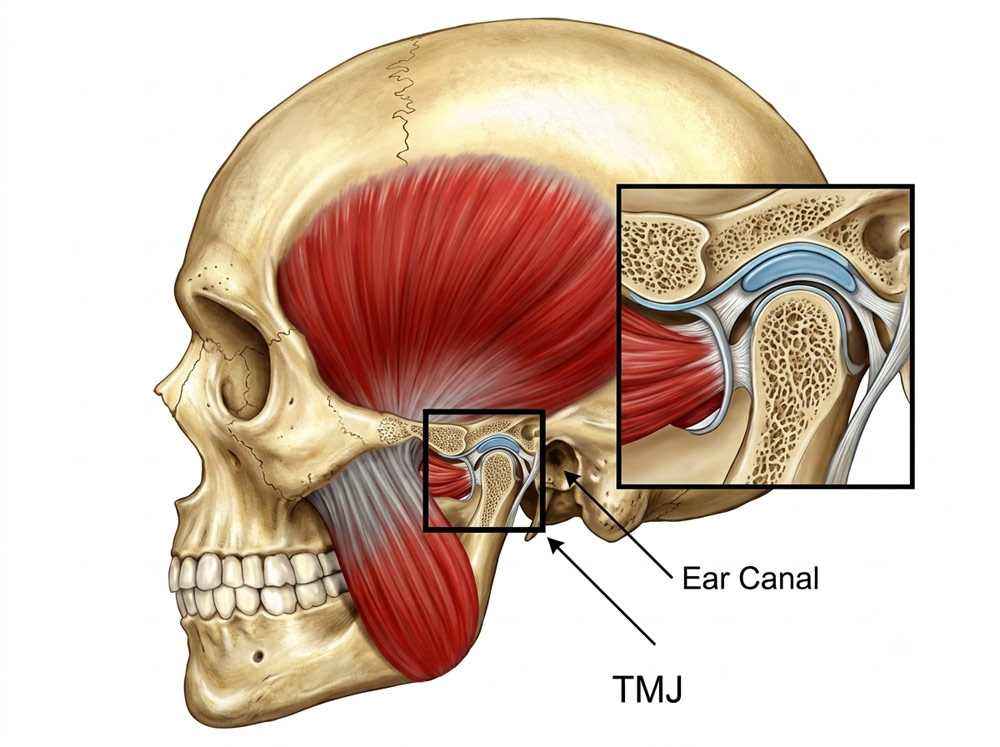
How I Treat TMJ And Jaw Pain
When a client comes to me with jaw pain or TMJ issues, I never just treat the jaw in isolation. I look at the whole chain, including jaw, neck, shoulders, and the upper back, because these areas are usually linked.
During the session I use targeted sports and therapeutic massage techniques to release the main muscles involved: the masseter, temporalis, pterygoids, and the muscles at the base of the skull and upper neck. I also work on the upper trapezius, levator scapulae, and any tight areas in the shoulders that are contributing to the problem.
If posture is a major factor (which it often is), I address the forward head position and any restrictions in the upper back. In some cases lower back or pelvic issues are also involved, so I treat those as well when needed.
After the massage I give clients simple self-release techniques and postural advice they can use at home or at their desk. Many people notice reduced jaw tightness, fewer headaches, and easier mouth opening after just a few sessions.
The goal is not just temporary relief, it’s to reduce the muscular tension that keeps feeding the TMJ symptoms so the improvement lasts longer.
Frequently Asked Questions
Common signs include clicking or grinding when you open and close your mouth, pain around the jaw joint or temples, headaches that start near the sides of the head, difficulty chewing, or tightness that radiates into the neck and shoulders. Some people also experience ear ringing or a feeling that the jaw is restricted. During your first session I can assess the jaw muscles, neck, and posture to see how much they are contributing.
Yes, for many people. Targeted massage releases the overworked muscles around the jaw, face, and neck that are often the main drivers of the symptoms. It can reduce clenching tension, ease referred pain into the head and shoulders, and improve jaw mobility. Results are usually better when we also address posture and daily habits that keep the problem going.
Many clients notice improvement after 2–4 sessions. For longer-standing TMJ issues or heavy night-time grinding, I usually recommend an initial block of 4–6 sessions. After that, most people move to maintenance sessions once a month. I’ll give you a clear recommendation after the first assessment.
The jaw and facial muscles can be tender when they’ve been tight for a long time. I always work within your comfort level and check with you regularly. Most clients describe the pressure as intense but relieving rather than sharp pain. The goal is effective release without leaving you sore the next day.
Yes. After working on the jaw, neck, and shoulders, sitting in a car or driving can quickly re-tighten the muscles. Having the session at home allows you to rest properly and keep the jaw relaxed afterwards, which helps the results last longer.
Massage reduces the muscle tension that makes clenching worse, but it doesn’t always stop the habit completely overnight. Many clients find the intensity and frequency of grinding reduces as the muscles loosen and they become more aware of daytime clenching. I also give practical advice on posture and self-awareness techniques to support this.
I usually show clients simple self-release techniques for the jaw and neck, postural resets they can do at their desk, and ways to reduce daytime clenching. Avoiding excessive gum chewing, managing stress, and improving upper body posture also make a noticeable difference.
It’s rarely too late. Even long-term jaw issues often respond well once we release the chronic muscle tightness and improve the related posture and movement patterns. I’ve helped many clients who had been dealing with the problem for years.
Summary
TMJ and jaw pain are often driven by tight muscles in the jaw, face, neck, and shoulders rather than the joint itself. Stress, clenching, poor posture, and daily habits all play a role.
My approach focuses on releasing these overworked muscles and improving the related posture and movement patterns. Many clients in York experience reduced pain, less clicking, and fewer associated headaches once we address the full picture.
If you’re dealing with ongoing jaw pain, bruxism, or related symptoms and want a practical, hands-on solution, I’d be happy to help with a personalised mobile sports massage at your home.
Book A Mobile Massage
If you would like to book a mobile massage in York please contact me on 07713 250352 or email david@massageinyork.co.uk. Includes sports massage, deep tissue massage and Swedish massage. For more information on booking click here

This is a great article, massages can be so helpful in battling TMJ, thank you for sharing!
Thank you