
Last Updated – July 2026
As a mobile sports and therapeutic massage therapist in York, I treat a lot of clients with shoulder pain caused by rotator cuff issues, whether it’s from desk work, driving, lifting, or sports.
The rotator cuff is a group of four small but very important muscles that stabilise the shoulder joint. When they become tight, weak, or injured, it can cause pain, weakness, and restricted movement that often gets worse over time. Many people try to push through it or just rest, but without addressing the specific muscles involved the problem usually keeps returning.
With qualifications in sports massage and Advanced Personal Training, and having dealt with my own long-term pain issues, I take a targeted approach that focuses on identifying which rotator cuff muscles are causing the problem and treating them properly.
In this article, I explain how rotator cuff issues cause shoulder pain and exactly how I treat them with sports massage and corrective work at your home in York.
Table Of Contents
What Is The Rotator Cuff?
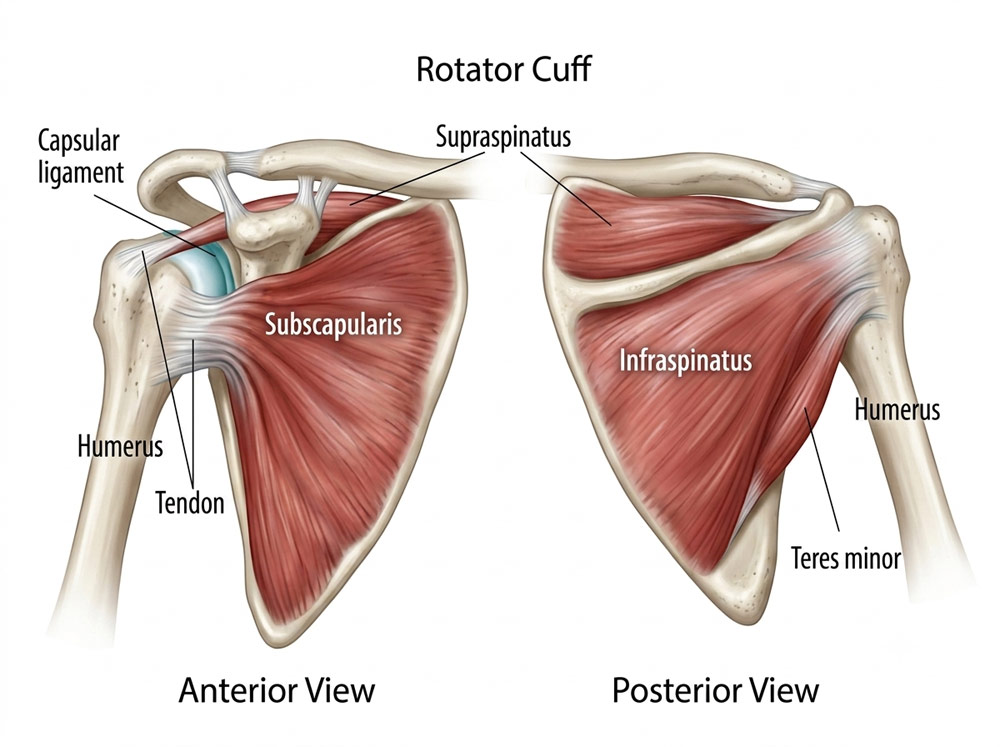
The rotator cuff is a group of four small but very important muscles and their tendons that stabilise your shoulder joint and allow it to move properly. They connect your upper arm bone (humerus) to your shoulder blade (scapula) and work together to keep the ball of the shoulder joint centred while you lift, rotate, or reach.
The four main muscles are:
- Supraspinatus – helps lift your arm out to the side
- Infraspinatus and Teres Minor – externally rotate your arm
- Subscapularis – internally rotates your arm
These muscles are constantly working to stabilise the shoulder during everyday activities like reaching overhead, lifting, driving, or even sleeping in certain positions. Because the shoulder joint is very mobile, it relies heavily on these muscles for stability. When they become tight, weak, or injured, it can quickly lead to pain, weakness, and restricted movement.
In my experience, many shoulder problems I see in my clients start with one or more of these rotator cuff muscles becoming overworked or imbalanced, often from repetitive movements, poor posture, or sudden increases in activity.
How The Rotator Cuff Can Cause Shoulder Pain
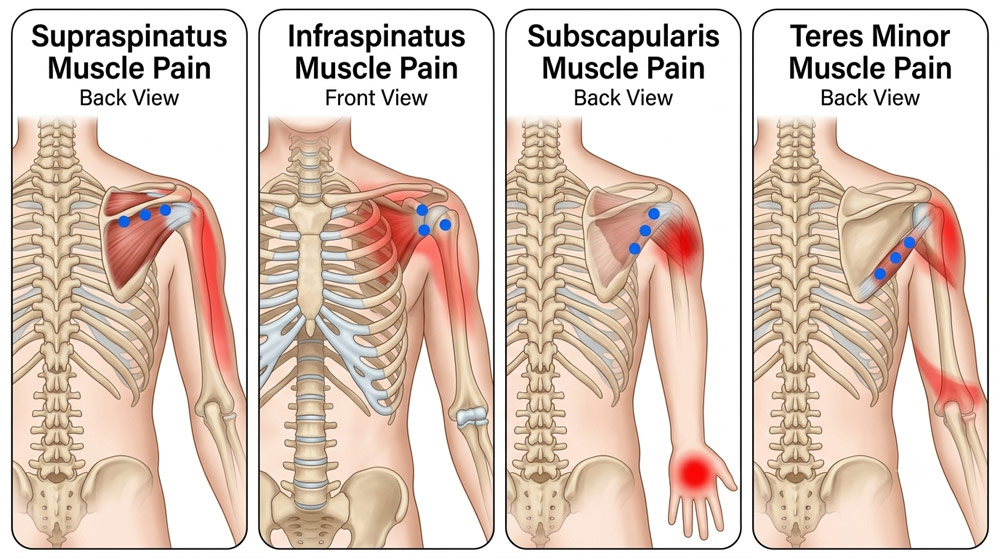
The rotator cuff muscles and tendons are responsible for keeping the shoulder joint stable during movement. When they become tight, inflamed, or injured, they can cause a wide range of shoulder problems that I see regularly in my York clients.Common ways the rotator cuff causes pain include:
- Repetitive strain from overhead activities, sports (tennis, swimming, throwing), weight training, or jobs that involve repetitive arm movements. This often leads to inflammation of the tendons (tendinopathy) and can irritate nearby nerves.
- Acute strain or tear from a sudden movement, fall, or heavy lifting. This can cause sharp pain, weakness, and a feeling that the arm is “not quite right” or wants to drop.
- Impingement — when tight or inflamed rotator cuff muscles reduce the space in the shoulder joint, pinching tendons or the bursa during movement.
The pain is often felt in the front or side of the shoulder, can radiate down the arm, and is frequently worse at night or when lifting the arm overhead. Many clients also notice weakness when reaching or lifting, or a clicking/grinding sensation.
In my experience, a large number of shoulder problems start small, perhaps from poor posture or repetitive desk work, and gradually worsen because the rotator cuff muscles are never properly released or strengthened. Treating only the symptoms without addressing the specific rotator cuff muscles involved usually leads to the pain returning.
How I Treat Rotator Cuff Shoulder Pain
When a client comes to me with rotator cuff-related shoulder pain, I never use a generic approach. I start with a detailed assessment of the shoulder’s range of motion, strength, and which specific rotator cuff muscles are tight, weak, or inflamed.
During the session I use targeted therapeutic and sports massage to release the tight muscles (especially supraspinatus, infraspinatus, and subscapularis) and reduce inflammation around the tendons. I also work on the surrounding muscles including the upper trapezius, levator scapulae, and pectorals, because they often become tight and contribute to the problem.
After the massage I give clients specific exercises and mobility drills tailored to their particular issue. This usually includes gentle rotator cuff strengthening, scapular stability work, and stretches that help restore proper range of motion without aggravating the joint.
Many clients notice reduced pain and improved shoulder movement after the first couple of sessions. With consistent treatment (typically 4–6 sessions) and the right home exercises, most people see significant long-term improvement and are able to return to their normal activities or training with much less discomfort.
The key is addressing both the tight/inflamed rotator cuff muscles and the compensatory patterns in the neck, upper back, and chest. This is why many clients get better results than with general massage or stretching alone.
Other Causes Of Shoulder Pain
While the rotator cuff is one of the most common sources of shoulder pain I see, it’s not the only one. Several other muscles and structures around the shoulder can cause similar symptoms, especially in people who spend long hours at a desk, drive a lot, or train with weights.
The deltoid muscles (particularly the anterior deltoid at the front of the shoulder) are frequently involved. They can become tight and painful from repetitive overhead movements, front raises, or even poor posture while working at a computer. Pain from the deltoids is often felt when lifting the arm forward or overhead.
The pectoral muscles (chest) are another common culprit. When they become tight, which is very common from sitting with rounded shoulders or doing bench press work, they pull the shoulders forward and can refer pain into the front of the shoulder and upper arm. Many clients feel this pain most when doing pressing movements or reaching across their body.
Other muscles that can contribute include the biceps tendon and various structures in the front of the shoulder. These areas often become tight from a combination of poor posture, repetitive work, and training without enough mobility work.
In my experience, many shoulder problems are a combination of rotator cuff issues plus tightness in the deltoids, pectorals, and upper back. Treating only one area usually gives incomplete results. That’s why I assess and treat the whole shoulder complex, rotator cuff, deltoids, pectorals, and upper back, to get better and longer-lasting relief.
Frequently Asked Questions
Common signs include pain when lifting the arm overhead or out to the side, pain at night when lying on the affected shoulder, weakness when reaching or lifting, and a catching or grinding sensation. During your first session I can assess which specific rotator cuff muscles are involved and whether they are the main cause of your pain.
Yes, for most people. Targeted sports and remedial massage helps release tight rotator cuff muscles, reduce inflammation, and restore better shoulder mechanics. Many of my clients in York see reduced pain and improved strength and range of motion after a few sessions, especially when combined with the right home exercises.
Many clients notice improvement after 2–4 sessions. For more significant rotator cuff issues or long-standing pain, I usually recommend an initial block of 4–6 sessions. I’ll give you an honest recommendation after the first assessment based on what I find.
The rotator cuff area can be tender when inflamed or tight. I always work within your comfort level and adjust pressure immediately. Most clients describe it as intense but relieving rather than sharp pain.
Yes. After working on the shoulder, neck, and upper back, sitting in a car or driving can quickly re-tighten the muscles. Having the session at home allows you to rest properly and keep the shoulder in a good position afterwards, which helps the results last longer.
Usually yes, with some modifications. I’ll give you honest advice after assessing you. Many clients continue light training or daily activities while we gradually release the tightness and strengthen the rotator cuff to prevent re-injury.
I usually show clients specific rotator cuff strengthening exercises, scapular stability drills, and gentle mobility work they can do at home. Avoiding aggravating movements (especially overhead or repetitive reaching) for a short period and maintaining good posture also helps.
It’s rarely too late. Even long-term rotator cuff issues often respond well to consistent release work and the right strengthening exercises. I’ve helped many clients in their 40s, 50s and beyond who had been dealing with shoulder pain for years.
Summary
Shoulder pain from rotator cuff issues is common but often improves significantly with the right approach.
My treatment focuses on releasing the specific tight or inflamed rotator cuff muscles, restoring proper shoulder mechanics, and addressing contributing tightness in the deltoids, pectorals, and upper back. Combined with targeted exercises, this helps reduce pain, improve strength and range of motion, and lower the chance of the problem returning.
If you’re dealing with ongoing shoulder pain, weakness, or restricted movement and want a practical, hands-on solution, I’d be happy to assess and treat it with a personalised mobile sports massage at your home in York.
Book A Mobile Massage
If you would like to book a mobile massage in York please contact me on 07713 250352 or email david@massageinyork.co.uk. Includes sports massage, deep tissue massage and Swedish massage. For more information on booking click here
