
Last Updated – September 2026
As a mobile sports massage therapist in York, I work with a number of clients who are dealing with carpal tunnel symptoms such as pain, numbness, tingling, or weakness in the hand and wrist that can travel up the forearm.
Carpal tunnel syndrome develops when the median nerve becomes compressed as it passes through the narrow tunnel at the wrist. While the pain is felt in the hand and wrist, the problem often starts further up the chain. Tight forearm muscles, restricted shoulders, and tension in the neck and upper back frequently contribute to the pressure on the nerve.
Many people try resting the wrist, using a splint, exercising or stretching the forearm, but if the surrounding muscles remain tight the symptoms often return. With qualifications in sports massage and Advanced Personal Training, I take a wider approach that addresses the wrist, forearm, shoulder and neck together.
In this article, I explain what carpal tunnel syndrome is, the common causes I see, and exactly how I treat it with targeted massage at your home in York.
Table Of Contents
What Is Carpal Tunnel Syndrome
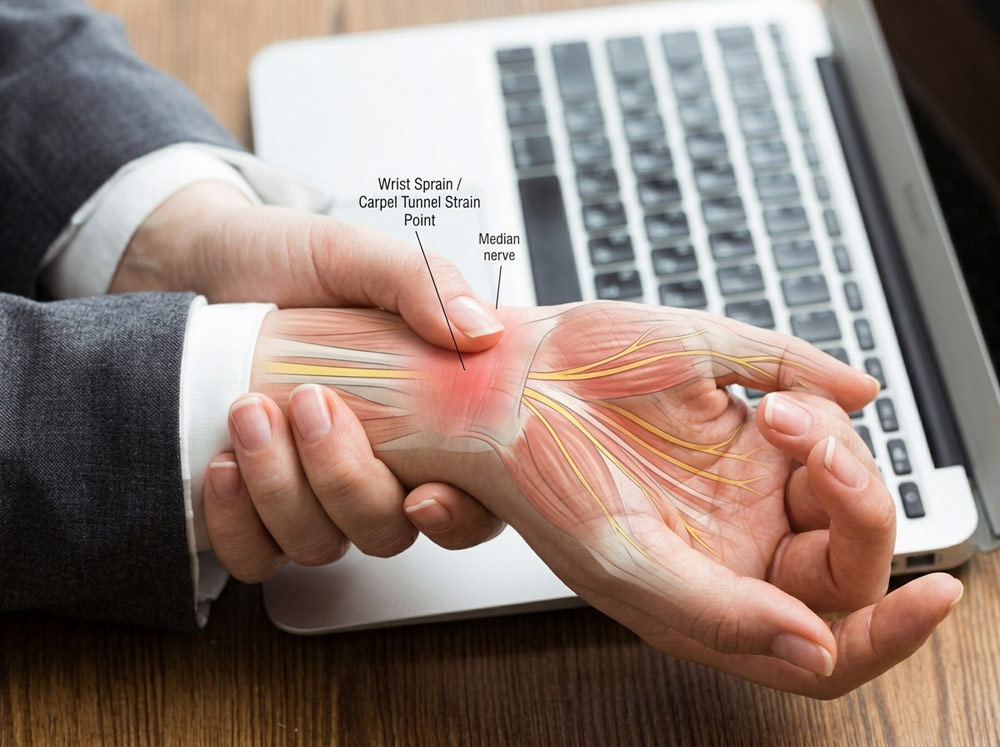
Carpal tunnel syndrome occurs when the median nerve becomes compressed as it passes through a narrow passage at the wrist known as the carpal tunnel. This tunnel is formed by the carpal bones on one side and a strong ligament (the flexor retinaculum) on the other. Several tendons also travel through the same space.
Because the tunnel has very little room to expand, any swelling, thickening of the tendons, or increased tension in the surrounding tissues can put pressure on the nerve. This pressure is what produces the classic symptoms: pain, numbness, tingling, or weakness in the hand and fingers (particularly the thumb, index and middle fingers). In some cases the discomfort can travel up the forearm and even into the shoulder.
In the clients I see, the problem is rarely isolated to the wrist alone. Tight forearm muscles, restricted movement in the shoulder, and tension in the neck and upper back frequently contribute to the load on the carpal tunnel. This is why treating only the wrist often gives incomplete or short-lived relief.
What Causes Carpal Tunnel Syndrome
Carpal tunnel symptoms usually develop from a combination of factors rather than one single cause. In the clients I treat, the most common are:
Repetitive Hand And Wrist Use
Long hours of typing, using a mouse, manual work, or gripping tools place repeated load on the tendons that pass through the carpal tunnel. Over time this can lead to irritation, thickening, and reduced space for the median nerve. Sports and training that involve a lot of gripping or wrist loading (such as weight training, racket sports, or cycling) can have the same effect.
Tight Forearm Muscles
The muscles of the forearm often become chronically tight from repetitive use or poor recovery. When these muscles are restricted, they increase the tension through the tendons that travel into the wrist, adding further pressure inside the carpal tunnel.
Posture And Shoulder Position
Rounded shoulders and forward head posture (common in desk workers and drivers) cause the arms to sit in a more internally rotated position. This alters the way force is transferred through the shoulder, elbow and forearm, and frequently contributes to wrist and hand symptoms. Tension in the neck and upper back can also affect nerve mobility further down the arm.
Previous Injury
An old wrist, elbow or shoulder injury can change movement patterns and leave residual tightness that continues to load the carpal tunnel years later.
Other Contributing Factors
Pregnancy, fluid retention, diabetes, and certain inflammatory conditions can also reduce space in the tunnel or increase sensitivity of the nerve. In these cases massage can still help with the muscular component, but medical advice should be followed as well.
In practice, I rarely find that carpal tunnel symptoms exist in isolation. The wrist is usually the place where the problem is felt, but the contributing tension often starts further up the arm and shoulder.
How I Treat Carpal Tunnel Syndrome
When a client comes to me with carpal tunnel symptoms, I don’t just work on the wrist. The pain, numbness or tingling is felt in the hand and wrist, but the contributing tension is often found further up the chain in the forearm, upper arm, shoulder and sometimes the neck.
Initial Approach
I start by assessing the wrist, forearm, elbow and shoulder to identify which muscles are restricted and how they are affecting the carpal tunnel. Many people have very tight forearm flexors and extensors that increase the load on the tendons passing through the tunnel. Others have restricted shoulder movement or rounded posture that places the arm in a disadvantaged position.
The Treatment
I use targeted sports and therapeutic massage techniques to release the tight forearm muscles and improve mobility around the wrist. I also work on the upper arm, shoulder girdle and, when needed, the neck and upper back. Reducing tension in these areas helps take pressure off the median nerve and improves the way force is transferred through the arm.
Where posture is contributing, which it often is, I address the rounded shoulder and forward head pattern that causes internal rotation of the arms. This is an important part of reducing the ongoing load on the wrist.
What To Expect
Many clients notice reduced tingling, improved grip comfort, and less aching in the forearm within a few sessions. Results are usually better when we address the full chain rather than treating the wrist in isolation. If symptoms are severe, long-standing, or linked to medical conditions such as diabetes or inflammatory arthritis, I always recommend working alongside medical advice.
Frequently Asked Questions
Yes, particularly when muscular tension and restricted movement are contributing to the symptoms. Many people find that reducing tightness in the forearm and improving mobility further up the arm leads to less irritation of the median nerve. Progress is usually steadier when treatment is consistent rather than relying on a single session.
It depends on how long the symptoms have been present and how much tension has built up around the wrist, forearm and shoulder. Some clients feel a noticeable difference within a few visits. Others with longer-standing issues need a short block of sessions to create lasting change. After the first treatment I can give you a clearer idea of what to expect.
The forearm can be sensitive when it has been tight for a long time, so some areas may feel stronger than others. The pressure is always kept within a productive range and adjusted according to your feedback. Most people find the treatment comfortable overall and end the session feeling that the arm moves more freely.
Yes, it can still be useful. Splints and injections aim to reduce local irritation, while massage works on the surrounding soft tissue that often keeps feeding the problem. Some clients use massage alongside other approaches, while others find that improving the muscular component reduces their need for additional interventions. This is something we can discuss based on your specific situation.
If there is significant nerve compression, marked weakness, or an underlying medical condition driving the symptoms, massage is best used as part of a wider plan that includes medical advice. In these cases it can still help with comfort and muscle tension, but it should not replace appropriate medical assessment.
Summary
Carpal tunnel symptoms are often the end result of tension and restricted movement further up the arm. By addressing the forearm, shoulder and related areas, many people experience reduced irritation and improved comfort in the hand and wrist.
If you’re dealing with ongoing symptoms and would like a practical, hands-on approach, book a home session with me today.
Book A Mobile Massage
If you would like to book a mobile massage in York please contact me on 07713 250352 or email david@massageinyork.co.uk. Includes sports massage, deep tissue massage and Swedish massage. For more information on booking click here