
Last Updated – June 2026
As a mobile sports and therapeutic massage therapist in York, I help many clients suffering with sciatica and related lower back pain.
Sciatica can be incredibly frustrating and dibilitating. Whether it’s a sharp, burning pain, tingling, or numbness running down the leg, it can make simple things like sitting, driving, or even walking very difficult. While some cases need medical attention, many are caused (or made much worse) by tight muscles, particularly in the glutes, piriformis, lower back, and hips.
While fixing my own long-term back issues I learned that the correct targeted massage approach can provide significant relief by releasing the muscles that are compressing or irritating the sciatic nerve.
In this article, I explain the common causes I see in my York clients and how my personalised massage approach helps relieve sciatica symptoms and lower back pain. Often much faster than many people expect.
Table Of Contents
What Is Sciatica?
Sciatica is pain in your lower back and leg that is the result of pressure on your sciatic nerve, which runs from your hip down the back of each leg as far as your foot. It activates and supplies sensation to the muscles in the pelvis, legs and feet. As a slipped disc could be the underlying cause of your sciatica, a visit to your doctor as soon as possible is advisable. But it could be the result of tight muscles in your lower back, glutes or your leg. These can become inflamed and press on your sciatic nerve, which can cause chronic, long-term pain if left untreated.
Sciatica is a condition which involves pressure on your sciatic nerve, but isn’t necessarily related to general lower back pain. Tightness in your hips or lower back, or a weakness on one side of your back, could be the cause. Sciatica is typically ongoing and uncomfortable yet bearable, but it can flare up into a debilitating injury from something as simple as bending down to tie your shoelaces.
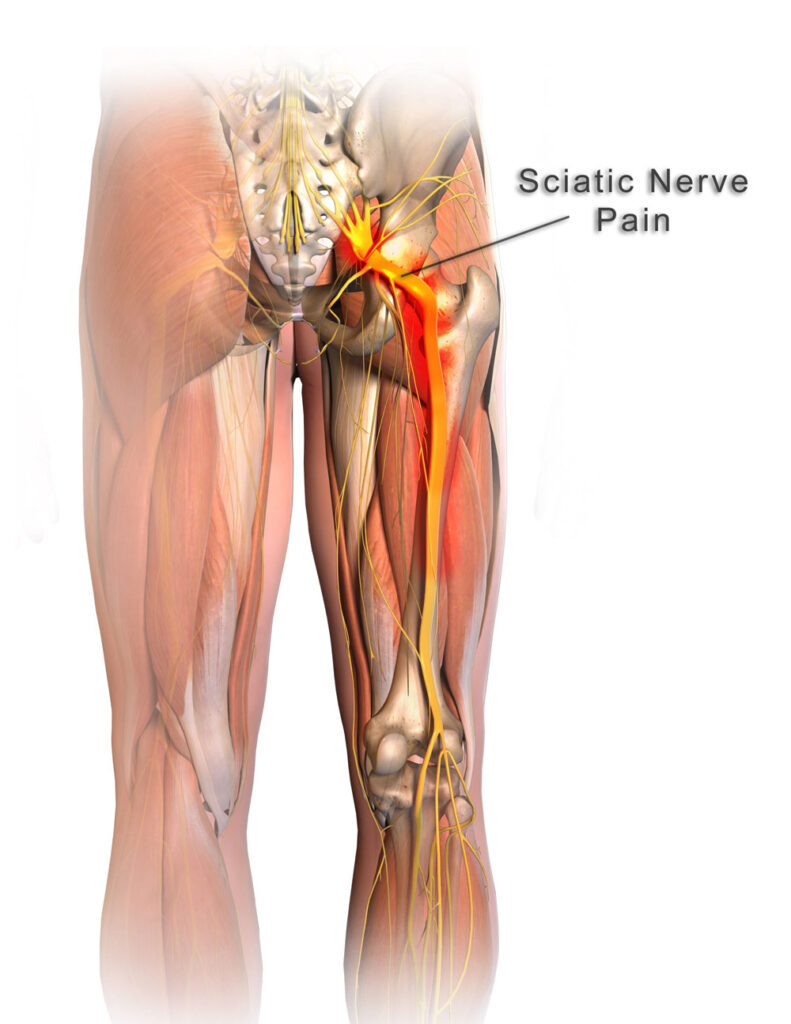
Symptoms Of Sciatica
Depending on the original cause of your pain, there are a variety of symptoms you could have, or your symptoms could change. For example, it can be quite mild and have very little effect on your life, or it can be so severe you are unable to do everyday tasks. It might come on gradually and get worse over time, or it might be sudden and intense.
Also the way you might experience sciatica and lower back pain can vary considerably. It might be a dull ache that you only feel in your lower back, or it might feel more like a burning sensation that can extend to the back of your legs or even your feet. You might have muscle spasms and tightness in your lower back, upper back or hips, and you might only feel pain after prolonged sitting or prolonged standing (1).
Is It Sciatica Or Lower Back Pain
Sciatica and lower back pain are not the same, though they can have similar causes. Unlike lower back pain, sciatica uniquely transmits its characteristic pain down your leg and foot, even though both can originate in the lumbar spine. The difference is, a muscle spasm in the lower back can cause back pain, but only if the muscle presses on or impinges the sciatic nerve will it cause sciatica.
Sciatica can also result in leg tingling, numbness or weakness that can cause your leg to give way when you are standing. Plus sciatica pain usually affects one leg and is more burning or sharp compared to a dull ache or throb.
The specific location of the sciatic nerve compression determines the symptoms you experience. L4 issues usually cause problems with your thigh and you might feel weakness when straightening your leg. L5 issues can go as far as your big toe. They can also cause numbness on top of your foot, especially between your big toe and second toe. S1 issues are more likely on the outside of your foot and little toes. You might also have weakness when trying to stand on your tiptoes.
Common Causes Of Sciatica And Lower Back Pain
Sciatica and lower back pain that does not involve your sciatic nerve generally have the same causes:
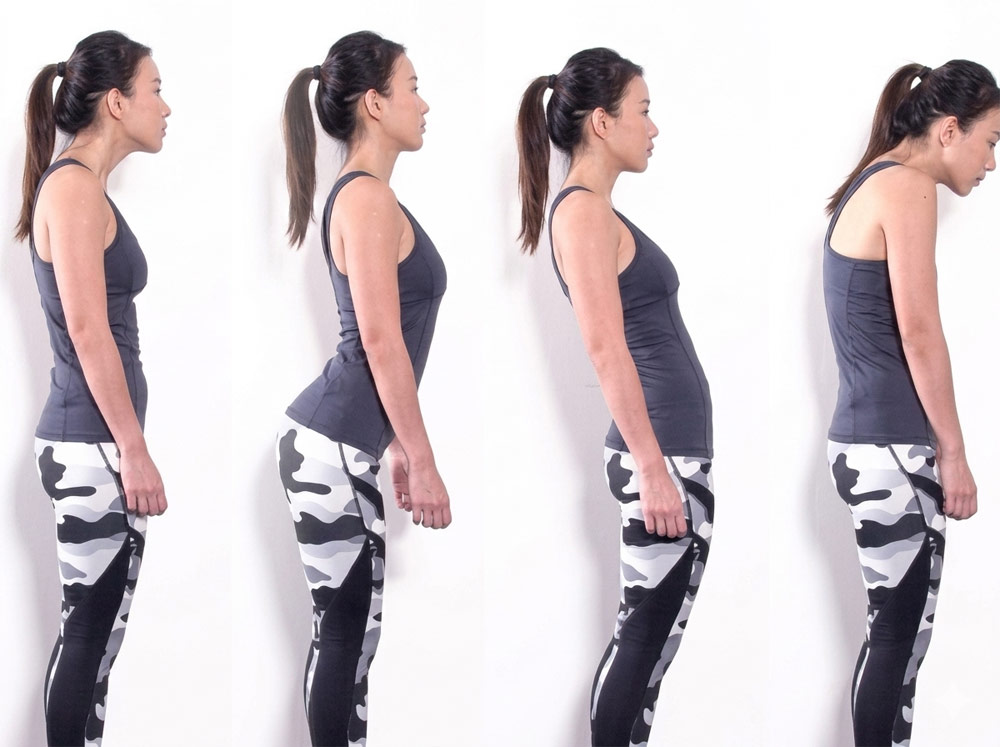
Poor Posture
Whatever the cause of poor posture the result is weakened, tight muscles or muscles doing work they’re not designed for. For example, tight muscles on one side means that the other side has to do extra work. This can increase the chances of a strain on either side.
Heavy Or Awkward Lifting
Heavy lifting, or lifting in awkward ways, can put stress on areas already susceptible to injury. Bending forward at the waist and twisting to pick something up with one hand is an example of awkward lifting.
Sitting For Long Periods
If your job involves a lot of sitting, many muscles will become shortened and weak. The most affected areas are usually the hip flexors and hamstrings. In turn this prevents the hips being in their correct position which puts pressure on the lower back.
Being Overweight
The more overweight you are the more likely you are to have poor posture and the more stress there is on your back. This can cause chronic lower back pain and lead to a slipped disc or sciatica.
How My Massages Help Sciatica
As a qualified sports massage therapist, I can help relieve most causes of sciatica and lower back pain.
If the pain is coming from a slipped disc, the surrounding muscles often become inflamed and tight, which can put even more pressure on the sciatic nerve. This can cause pain close to the injury or radiate further down your back or leg.
If the cause is poor posture, whether from being overweight, awkward movements at work, or prolonged sitting, I focus on loosening the tight muscles that are pulling your body out of alignment. This allows the muscles to work more evenly on both sides, reduces imbalances, eases muscle spasms, and improves blood flow to speed up healing.
How I Treat Sciatica And Sciatic Nerve Pain
When a client comes to me with sciatica, I never just massage the painful area. True relief comes from finding and treating the muscles that are actually compressing or irritating the sciatic nerve.
My Approach
During your session at home, I start with a clear assessment. It can involve checking your posture, pelvic alignment, how you walk, and which movements trigger your sciatic pain. The most common culprits I see are:
- A very tight piriformis muscle
- Deep glute tightness
- Tight quadratus lumborum (QL) and lower back muscles
- An irritated iliopsoas or hip flexors
- Poor pelvic stability
The Treatment
Once I understand the main causes of your sciatica, the session focuses on:
- Releasing your piriformis and deep glute muscles that often trap the sciatic nerve
- Careful work on your lower back and QL to reduce pressure on the nerve root
- Addressing your hip flexors and surrounding tissues that contribute to pelvic tilt
- Gentle neural mobilisation techniques to help the nerve glide more freely
I combine targeted sports massage with simple movement corrections. Because I also have an advanced personal training background, I show you specific glute activation and core stability exercises so the muscles that support your pelvis start working properly again. This is what helps prevent the sciatica from returning quickly.
Why My Treatment Is More Effective
Many generic massages only rub the lower back or leg. I focus on the whole pattern that is causing the nerve irritation. Because the treatment is mobile, you can relax properly afterwards in your own home instead of tensing up again on a drive home This makes a big difference with sciatica.
Most clients usually feel noticeable relief in the first 1–3 sessions, with progressive improvement as we continue to release the deep tension and improve stability.
Yes, massage can be very effective for many cases of sciatica. Especially when the pain is caused by tight muscles compressing or irritating the sciatic nerve. In my experience working with clients in York, the most common causes are a tight piriformis muscle, deep glute tension, lower back muscle spasms, or pelvic imbalances. Targeted sports massage helps release these muscles, improve nerve glide, reduce inflammation, and ease the sharp, burning, or shooting pain that runs down the leg. While it’s not a cure for every type of sciatica (some cases need medical investigation), many clients get significant relief and better long-term management through this approach.
It really depends on how long you’ve had the sciatica and how severe the muscle involvement is. Some clients feel a noticeable reduction in leg pain after just 2–3 sessions. For more chronic or stubborn sciatica that has been present for months or even years, I usually recommend an initial course of 4–6 sessions, spaced 5–7 days apart. The early sessions focus on releasing the main compressing muscles, while later sessions work on preventing the problem from returning. After the main course, many clients move to maintenance sessions every 4 weeks if they have physically demanding jobs or hobbies.
I always work within your comfort zone and check with you regularly throughout the session. Some areas, such as the piriformis and deep glute muscles, can feel quite intense when they are extremely tight, but I never push beyond what you can tolerate. Most clients describe the sensation as “nice pain” or a discomfort that brings relief as the muscles start to release. If anything feels too strong, we adjust immediately. The goal is effective treatment, not to make you suffer through the session.
A standard back massage usually just works on the lower back where the pain is felt. My approach is different. I look at the whole pattern that is irritating the sciatic nerve. This includes deep work on the piriformis, glutes, QL, hip flexors, and surrounding tissues, plus gentle neural mobilisation. Because I also have an advanced personal training background, I include specific exercises to strengthen weak stabilising muscles so the sciatica is less likely to keep coming back. This whole-body, root-cause method gives superior, longer-lasting results than generic massages.
Yes, this is the most common type I treat. Whether you have pain, tingling, burning, numbness, or weakness running down the buttock, back of the thigh, calf, or even into the foot, I can help. By carefully releasing the muscles and fascia along the path of the sciatic nerve and improving pelvic alignment, we can reduce the pressure on the nerve. Many clients report that the radiating symptoms calm down significantly within the first few sessions.
Not necessarily. I’ll give you honest, personalised advice based on your specific case. Many clients can continue with light walking, gentle stretching, or modified training. However, high-impact activities or heavy lifting may need to be reduced temporarily while we calm the nerve irritation. I’ll also show you safe exercises and movements that support recovery rather than aggravate the sciatica.
After a sciatica treatment session, your muscles are often much looser and the nerve is less irritated. Getting into a car and driving (or sitting for a long journey) can quickly re-tighten everything and flare up the symptoms again. With a mobile service, you can stay in your own home, rest properly, apply heat if needed, or just have a bath straight after treatment. This relaxed environment helps the benefits of the session last much longer.
Summary
Sciatica is often driven by tight muscles around the glutes, piriformis, hips and lower back that irritate or compress the sciatic nerve. When those restrictions are left in place, the pain, tingling or leg symptoms tend to keep returning.
Targeted sports massage focuses on releasing the muscles that are actually loading the nerve, while also improving pelvic support and movement. Combined with simple corrective work, this approach frequently gives clearer and longer-lasting relief than treating the lower back alone.
If sciatica or related lower back pain is limiting your day-to-day comfort, book a mobile massage at home today.
Book A Mobile Massage For Sciatica And Lower Back Pain
If sharp, burning leg pain, deep glute tightness, or persistent lower back ache are making daily movement uncomfortable, targeting the underlying nerve compression offers a far more effective solution than simply resting and hoping it fades.
I provide specialized mobile sports massage across York, bringing everything needed to your home so you can recover immediately after treatment and avoids the aggravation of driving through York’s traffic.
To book or discuss your symptoms contact me on 07713 250352 or email david@massageinyork.co.uk or read more information on booking.