
Last Updated – June 2026
I am a mobile sports and therapeutic massage therapist in York and I’ve helped hundreds of runners dealing with pain after running, especially that frustrating shin pain that seems to appear out of nowhere.
I actually know this problem very well from personal experience. In my 20’s I suffered badly with shin splints. The pain was sharp, relentless, and it got so bad it stopped me running properly or even walking comfortably. The NHS wanted to treat it with surgery, a fasciotomy, which is where they cut through the fascia of the muscle to release the pressure. I considered this to be a last resort when all else had failed and set about figuring how to fix myself using massage, stretching and then strengthening exercises for the muscles once they were healthy again I succeeded.
That experience taught me more about shin pain and running injuries than any textbook ever could.
In my years as a therapist, I’ve seen that shin pain, IT band syndrome, tight calves, knee pain, and hip issues after running are incredibly common. Many runners are told to just rest, ice, or take a few weeks off. But in reality most of these problems are caused by tight muscles, poor mobility, compensation patterns, and imbalances that build up from repetitive running.
In this article, I explain the most common causes of pain after running that I see in my York clients. I also explain my personalised approach which combines targeted sports and rehab massage with practical movement correction, and how it helps runners recover faster and get back to pain-free running without having to stop for weeks, months or even years.
Table Of Contents
What Causes Pain After Running?
There’s a reason that running is such good exercise – it’s hard work. And it’s hard work because it involves all the major muscle groups in your lower and upper body. This includes stabilisation and shock impact by your core, while your arms, shoulders and back help maintain balance and momentum. The precise use of muscles depends on your running action and whether you prefer sprints, long distance or something in between. But however you run, if you push yourself things can get uncomfortable by the time you reach the finish line. However, that’s not the same as your shins hurting every time your foot hits the ground or waking up the next day with lower back pain.
If left untreated, pain can cause you to alter your running action so the affected muscle doesn’t have to work as hard. For example, knee pain can cause you to rotate your hip internally or externally from where it should be, and this just adds a new issue which is likely to cause you problems in the future. In this case, shin, hip or even lower back pain.
So let’s take a look at some common problems, what might be causing them, and how I treat them with massage.
Knee Pain
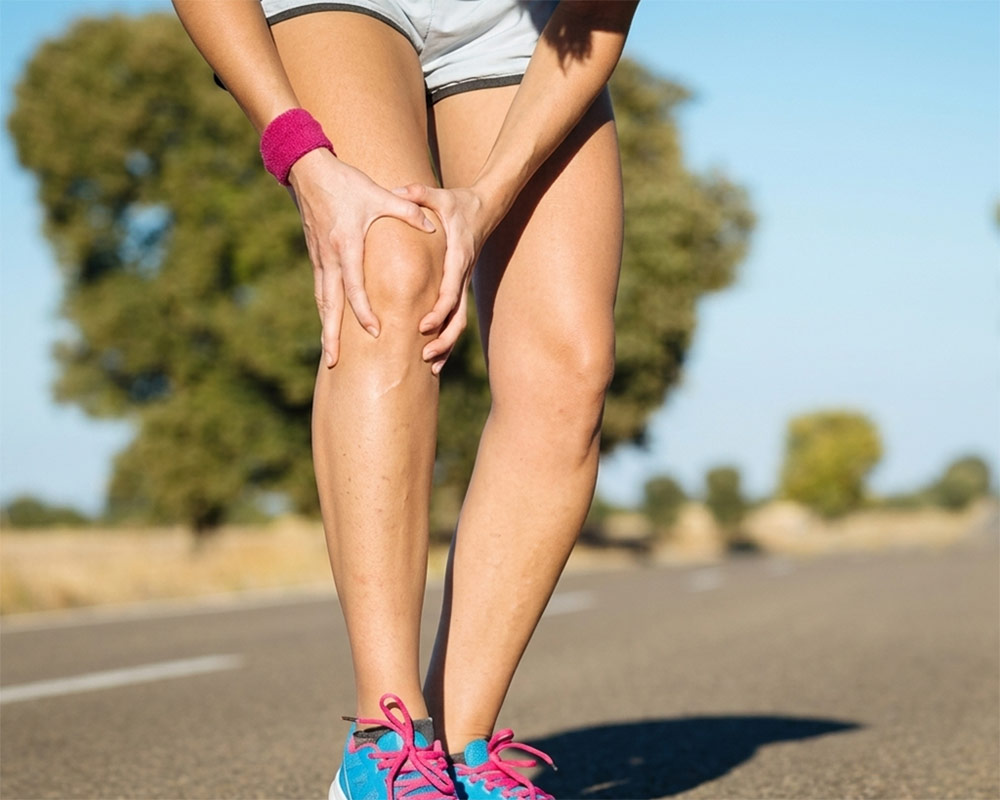
Many people automatically assume that knee pain after running is a sign of cartilage damage and while this is a possibility, it could also be related to ligament or muscles issues. Hundreds or thousands of steps per run, especially on concrete or tarmac, takes its toll on shock-absorbing cartilage. And once the damage occurred, treatment options are limited.
Ligaments, of which there are 4 main ones, hold the bones of the upper and lower leg in place. They can become damaged by over extension, such as a sudden turn, though this is unlikely if you’re just out for a run. Instead it is muscle issues, even without injury, that are the cause of most knee pain after running. The hamstrings at the back of your thigh and the quadriceps at the front can become tight and inflamed, and because they pass over your knee this can lead to pain above, below or along either side of it.
How I Treat It
Knee pain after running is one of the most common issues I see and many runners automatically assume it must be cartilage or meniscus damage. But in my experience the majority of cases are caused by tight quadriceps, hamstrings, IT band, or poor tracking due to weak glutes and hip stabilisers.
When I work with a runner who has knee pain, I first assess the whole chain including ankles, hips, glutes, and quads. I then use targeted sports massage to release the tight muscles that are pulling on the knee and causing inflammation. I pay particular attention to the quads and IT band, as these are frequently the main culprits. I can also give clients simple activation exercises for the glutes and vastus medialis (the inner quad) so the knee tracks better and the pain reduces. For a more detailed look at knee pain click here
Shin Pain
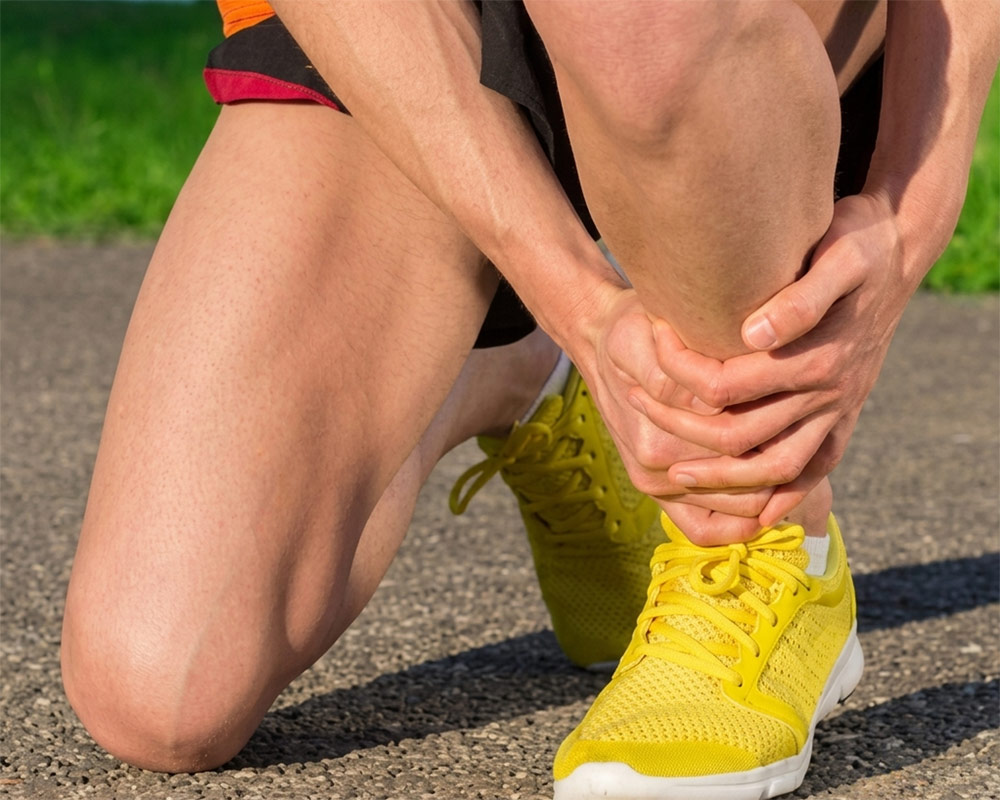
Shin pain, usually known as shin splints, refers to pain below the knee and above the ankle, but another possibility is a stress fracture. Shin splints cause pain that radiates down the majority of the lower leg and tends to feel worse the day after exercise. A stress fracture is only painful at the site of the injury and feels slightly better after a day’s rest.
The most common cause of shin splints is weak muscles at the front of the lower leg and stronger, often tighter muscles at the back. Beginners can develop the problem from trying to progress too quickly, but a seasoned veteran can also suffer. This is especially likely if a build up of injuries or muscle imbalances has led to an improper running action.
How I Treat It
Shin pain (shin splints) is something I know very well from personal experience. In my 20’s I suffered badly with it and managed to fix it myself with consistent massage, stretching, and strengthening. I avoided the fasciotomy surgery the NHS suggested at the time. So when a client comes to me with shin pain, I treat both the front (tibialis anterior) and the calves because the imbalance between these muscles is often the root cause. I use deep but controlled massage to release the tight calves and calm the inflamed area at the front of the shin. I also check higher up the chain because tight hip flexors and quads can contribute to the problem.
After the massage I give clients specific stretching and strengthening exercises for the lower leg and advice on gradual return to running. This combined approach helps most runners get back to pain-free running much faster than rest alone.
Hamstring Pain
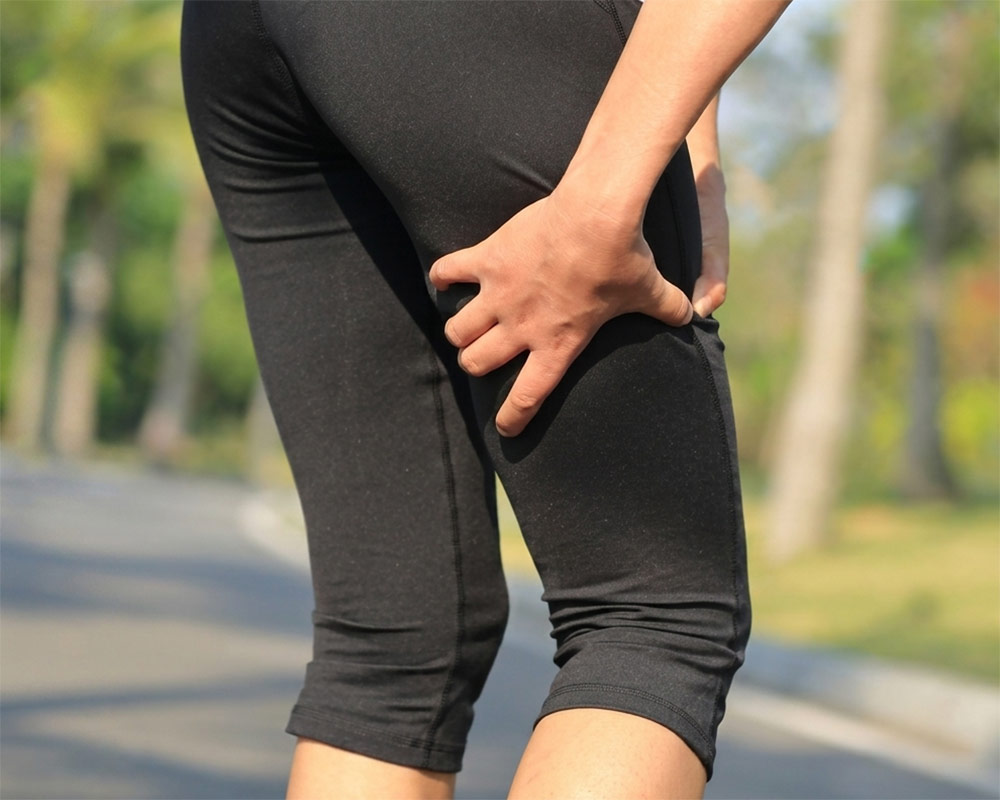
Hamstrings are the muscles at the back of your upper thigh, extending from your pelvis down to your lower leg. Bending your knee and powering explosive movements like deadlifts and squats rely heavily on the hamstrings. Long periods of sitting, whether it’s at a desk or watching TV, causes them to shorten and become tight. And they can also become inflamed by running, especially if it involves inclines. The result is pain after running that isn’t just due to sore muscles but to areas of tension (knots) that can in turn progress to strains and tears if left untreated.
Hamstring pain can also affect your running action by shortening your stride in an attempt to stop you aggravating the problem area. It can also pull your hips out of alignment which can lead to lower back pain. To read more on this click here
How I Treat It
Hamstring pain after running is very common, especially when runners increase mileage or add hills. Tight or fatigued hamstrings are often linked to weak or underactive glutes, which forces the hamstrings to do too much work.
During a massage I focus on releasing the tight areas and knots in the hamstrings while also working on the glutes to restore proper balance. I use a combination of deep tissue massage and slower therapeutic techniques. After releasing the tension, I show clients glute activation exercises so the hamstrings don’t have to overcompensate.
Many runners I treat find they can run with better form and less hamstring strain after a few sessions.
Lower Back Pain
As mentioned above, tight hamstrings can be the source of lower back pain. But there are other possible causes.
Gluteus Medius
One potential cause is a tight or strained gluteus medius muscle, which is deep under your gluteus maximus. Together these are better known as your buttock. The job of the gluteus medius is to abduct your hip, moving it outwards away from your other leg. Plus it stabilises your pelvis and keeps it level when one foot is off the ground, such as when running. Sitting for long periods can cause a lack of flexibility in the glutes, which can radiate into the hip, and putting in the miles, especially on hard surfaces, can lead to painful glutes.
Tight or painful glutes can then lead to weak glutes from lack of proper use. And this means muscles in the lower back have to take over the job of hip adduction when walking or running. This is why some people have to swing their leg out and forward to run rather than just straight forward. Overworked lower back muscles, forced to compensate for weak glutes, cause inflammation and pain
IT Band
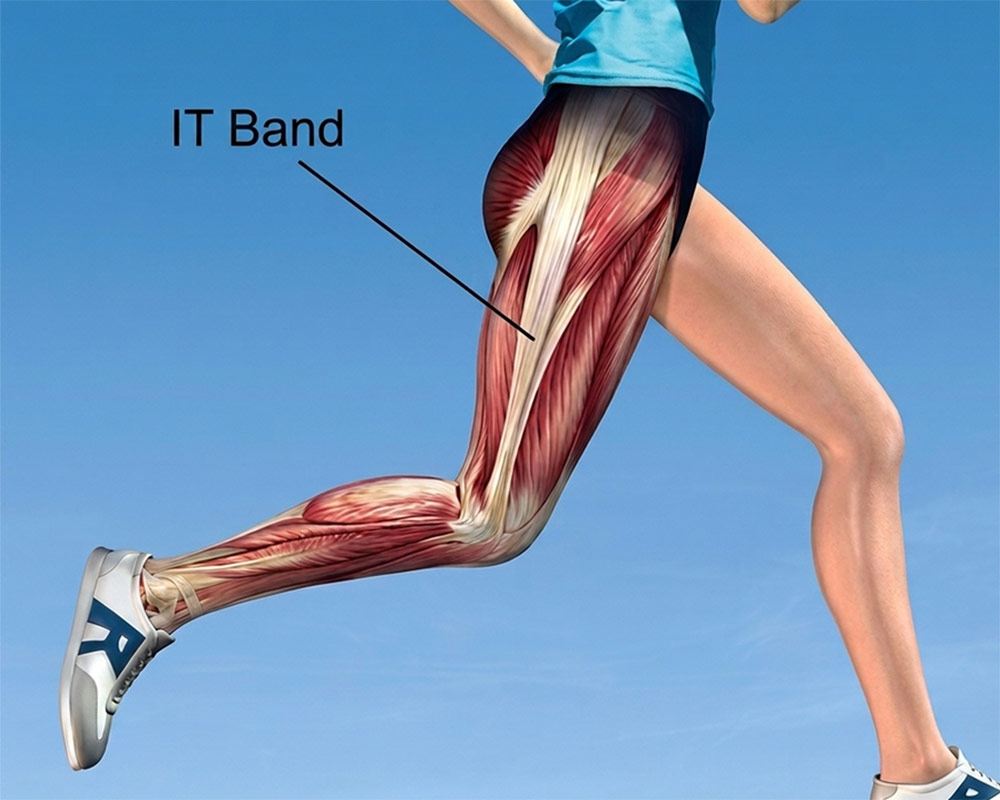
The IT Band is a thick band of connective tissue and fascia that runs from your hip to the outside of your knee. It works with muscles to extend your hip and, like the gluteus medius, with abduction. Plus it helps to rotate your leg and stabilise your knee. Running can cause your IT Band to become inflamed, especially if you have poor technique, which in turn can lead to hip or knee pain after running. And because it connects to your hip it can also affect your gluteus medius muscle, which as stated above, can cause lower back pain.
Lower Back Issues
Although lower back pain often has its source elsewhere, that doesn’t mean the problem can’t simply be with the muscles of your lower back. And it can also be the case that your lower back is causing problems in other areas. An example is a misaligned pelvis putting more stress on one leg, and one knee, than the other. This can be caused by prolonged sitting or standing with poor posture, muscle imbalances or injury. Injuries, such as strains, tears or even a slipped disc, usually occur with heavy or awkward lifting, but sometimes a sneeze or just bending down to tie your shoelace can be enough to cause a significant injury. Especially if there is already an underlying issue.
How I Treat It
Lower back pain after running is one of the most common issues I treat, and it’s something I know extremely well from personal experience.
Until I diagnosed and fixed it myself I suffered with severe chronic lower back pain for over 30 years after a car accident. I understand how frustrating and limiting it can be, especially when it stops you from doing something you love, like running.
In most runners, lower back pain isn’t actually a back problem on its own. It is usually caused by tight hip flexors, weak glutes, poor pelvic stability, or tight calves and ankles that force the lower back to take on too much stress.
When treating runners with lower back pain, I focus on the whole chain. I release the tight hip flexors and quadratus lumborum (QL), work on the glutes and deep hip muscles, and gently mobilise the thoracic spine. After the massage I show clients specific glute activation and core stability exercises so their lower back doesn’t have to compensate as much.
Because I went through long-term back pain myself I understand both the physical and mental side of it. This combined approach of targeted massage and corrective work has helped many runners in York reduce or eliminate their lower back pain and get back to enjoyable running.
Shoulder Pain
Shoulders generally aren’t the first place people think they might feel pain after running. After all, it’s your legs that do all the work and take most of the impact. But if running makes your shoulders sore or you wake up the next day and they feel tight, you know this isn’t the case.
Your arms swing as part of your running action and it is your shoulders that are making this happen. If you have tight muscles, whether from stress or tension, you might be shrugging your shoulders as you run. This can cause pain and inflammation which makes the situation worse the next time you train and would be felt mostly in your neck and the top of your shoulders.
If the pain is closer to your shoulder joint or upper back the problem is more likely to be with your rotator cuff. An indication of this is if reaching overhead causes discomfort, or if the pain is worse lying on your side.
How I Treat It
Shoulder pain after running often surprises people, but it’s more common than you’d think. It usually comes from tight trapezius muscles, poor posture while running, or tension held in the shoulders and neck.
I treat this by releasing the upper trapezius, levator scapulae, and chest muscles, combined with some thoracic spine mobility work. Many runners don’t realise how much tension they hold in their shoulders while running, especially when tired or pushing hard.
After treatment, most clients report their shoulders feel looser and their running posture feels more relaxed.

Frequently Asked Questions
Most runners I see notice a meaningful reduction in pain and stiffness after the first or second session. For recent or relatively mild issues, many people feel significantly better within 2–4 treatments. For more chronic or stubborn problems, such as long-term shin splints, IT band syndrome, or recurring knee pain, I usually recommend an initial course of 4–6 sessions. I’ll always give you a realistic timeline during your first session after I’ve assessed you.
Generally, no. Most clients feel some relief straight after the first session. However, if an area has been very tight or restricted for a long time, it’s possible to feel a bit of soreness the next day. This is similar to feeling DOMS (Delayed Onset Muscle Soreness) after a hard training session. It usually settles within 24–48 hours and is typically followed by noticeably looser muscles and reduced pain. I always adjust my pressure to minimise any post-treatment soreness while still getting effective results.
Yes, in most cases you can continue running. I very rarely tell runners to stop completely. Instead, we make smart, temporary modifications to your training while we work on the root causes. This could include reducing mileage or intensity, changing running surface, or adjusting pace. This active approach often helps runners return to full training faster than complete rest would. I’ll give you clear, personalised guidance based on your specific issue.
Rest can reduce inflammation in the short term, but it doesn’t release deep muscle tightness or fix the movement imbalances that caused the problem. While physiotherapy can be helpful, my approach combines targeted sports and therapeutic massage with practical movement correction. Because I also have an Advanced Personal Training background, I don’t just release tight muscles. I show you simple exercises to strengthen the weak areas so the same injury is less likely to keep returning. Many runners tell me this combination gives them better and longer-lasting results.
For most runners, yes. After a deep massage session your muscles are loose and relaxed. Driving home, especially if you have to sit in traffic, can quickly cause everything to tighten up again. With a mobile service at your home in York, you can rest properly, do the gentle mobility work I recommend, have a shower or bath, and let the benefits settle in much more effectively. Many clients report feeling noticeably better the next morning because of this.
If you run 3–5 times per week and currently have no issues, a maintenance session every 4 weeks works well for most people to stay ahead of tightness. If you’re increasing mileage, training for an event, or currently dealing with pain, weekly sessions for a short period usually give the best results. Once the main issue has settled, most of my regular runners move to monthly maintenance. I’ll always give you honest advice tailored to your training load and how your body responds.
You should see a doctor first if the pain is very sharp, gets worse even with rest, is accompanied by significant swelling or bruising, or if you can’t put weight on the leg properly. The same applies if you have numbness, tingling, or sudden weakness in the leg. These can be signs of a stress fracture or more serious injury that needs proper medical investigation before massage treatment.
Yes, I regularly help runners who have been dealing with the same issue for years. Even long-term problems often improve significantly once we properly release the accumulated tightness and correct the underlying movement patterns. It is rarely too late to make real progress and get back to pain-free running.
Summary
Pain after running is extremely common, but it doesn’t have to be accepted as normal. Whether it’s shin splints, knee pain, tight hamstrings, lower back ache, or IT band issues, most of these problems stem from tight muscles, poor mobility, and compensation patterns that build up over time.
I provide targeted sports massage combined with practical movement correction. This allows many runners I work with in York are able to recover faster, reduce their pain significantly, and return to pain-free running without long periods of rest.
Book A Mobile Massage For Pain After Running
If shin splints, knee pain, tight hamstrings, or lower back stiffness are disrupting your training, targeted sports massage can help resolve the deep muscle tightness and compensation patterns holding you back.
I provide a fully equipped mobile sports and rehabilitation massage service across York and surrounding areas. As I come to your home you can ease straight into recovery without the immediate stress or muscle-tightening effect of driving through York’s traffic afterwards.
To book or discuss your symptoms contact me on 07713 250352 or email david@massageinyork.co.uk or read more information on booking.
