
Last Updated – July 2026
As a mobile sports and therapeutic massage therapist in York, I treat a lot of clients with IT band issues that are causing knee pain, hip tightness, or stubborn lower back pain.
The iliotibial (IT) band is a thick band of fascia running down the outside of the thigh. When it becomes tight or inflamed, it can pull on the hip and knee, creating a chain reaction that often ends up stressing the lower back. Many people are surprised to learn their back or knee problem is actually coming from the IT band.
With qualifications in sports massage and Advanced Personal Training, and having overcome my own long-term chronic pain, I take a targeted approach that addresses both the IT band and the muscles that connect to it. In this article, I explain how a tight IT band can cause lower back pain and exactly how I treat it with sports massage and corrective work at your home in York.
Table Of Contents
How Does The IT Band Cause Lower Back Pain
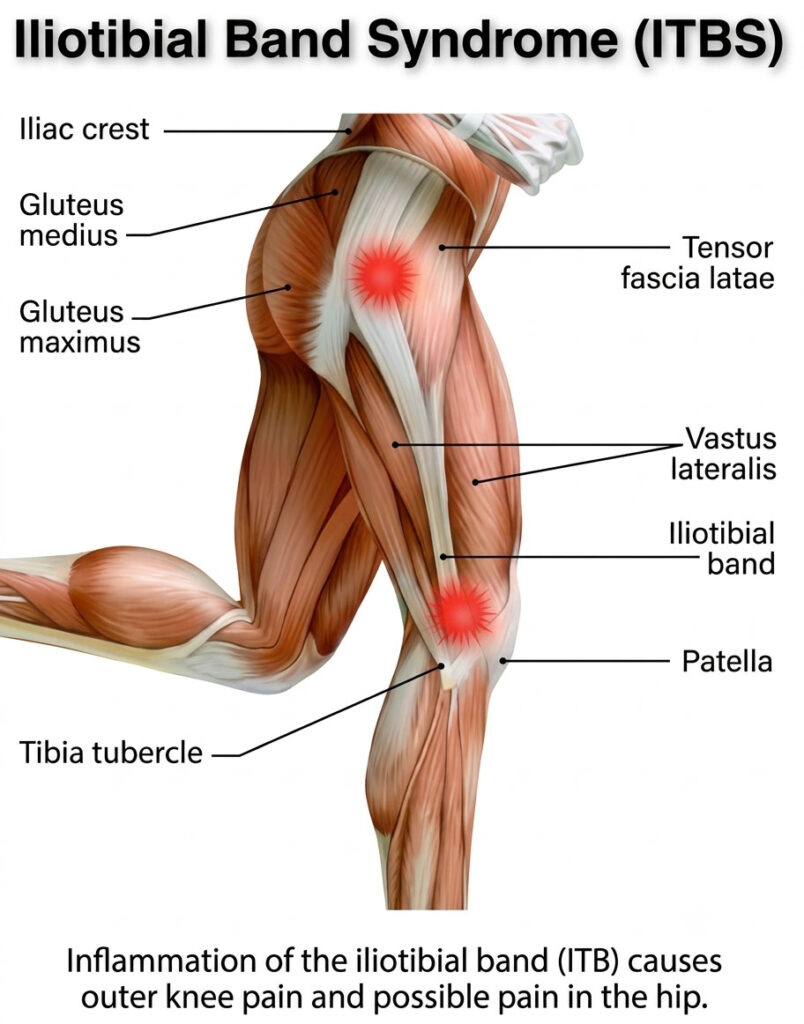
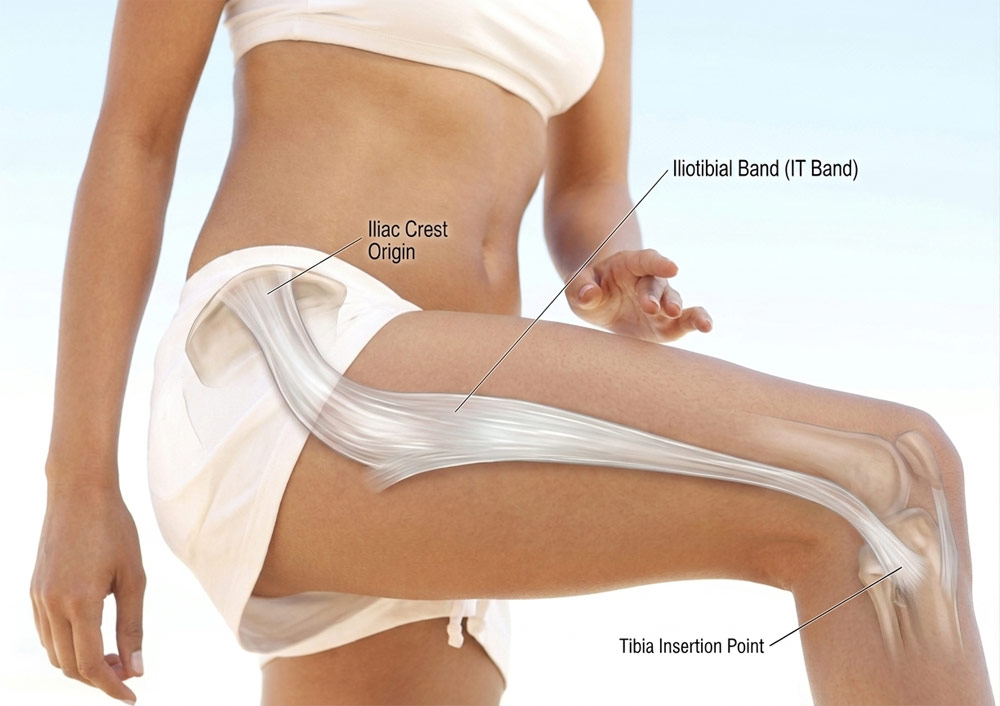
The IT band is a thick strip of fascia that runs down the outside of the thigh from the hip to the knee. It works with the tensor fascia latae (TFL) and gluteus medius to stabilise the pelvis during walking, running, and single-leg movements. It also helps control hip rotation and knee tracking.
When the IT band becomes tight or inflamed, usually from overuse in running, cycling, sudden increases in training, or poor hip stability, it can create a chain reaction that affects the lower back. A tight IT band pulls on the TFL and alters hip mechanics. This often leads to the gluteus medius becoming weak or inhibited. When the gluteus medius isn’t doing its job of stabilising the pelvis, the lower back muscles (especially the quadratus lumborum or QL) have to compensate by working harder to keep the pelvis level with every step.
The QL is not designed to handle this extra load for long periods. Over time it becomes tight, overworked, and painful. This is why many clients feel lower back pain that is worse on one side or that returns even after they stretch or massage the lower back itself.
In my experience, a lot of lower back problems are actually driven by an IT band issue, which is why treating only the lower back gives temporary relief at best. Real improvement usually comes when we address the IT band, TFL, gluteus medius, and the lower back together.
How I Treat Lower Back Pain Caused By The IT Band
When a client comes to me with lower back pain linked to a tight or inflamed IT band, I never treat the lower back in isolation, I address the whole chain.
First, I identify the main contributing factors, whether it’s repetitive running, cycling, poor hip stability, or compensatory patterns from weak glutes. Once I understand the root causes, I create a targeted treatment plan.
During the session I use deep tissue and therpeutic massage to release the tight IT band and tensor fascia latae (TFL) along the outside of the thigh. I also work on the gluteus medius and maximus because they are often inhibited when the IT band is overactive. At the same time I release the overworked quadratus lumborum and erector spinae in the lower back to reduce the compensatory tension. The goal is to restore proper hip mechanics so the IT band isn’t constantly pulling and the lower back isn’t forced to do extra work.
After the massage I show clients specific exercises and mobility drills they can do at home or at the gym, including IT band release techniques, glute activation work, and simple stretches that actually target the right areas.
Many clients notice reduced lower back tightness and better hip mobility after the first couple of sessions. With consistent treatment and the right home exercises, most see significant long-term improvement and fewer flare-ups.
Stretching and foam rolling can help maintain progress between sessions, but they are far more effective when combined with a deep-tissue massage or sports massage as on their own, they often only provide short-term relief.
Frequently Asked Questions
Yes, it’s surprisingly common. When the IT band is tight or inflamed it affects hip mechanics and often weakens or inhibits the gluteus medius. This forces the lower back muscles (especially the QL) to overwork to keep the pelvis stable. Many clients have been treating their lower back for months or years without much success until they come to me and we address the IT band and glute connection.
Common signs include pain or tightness along the outside of the hip or thigh, lower back pain that is worse on one side, discomfort that increases with running, walking, or cycling, or a feeling that your hip is pulling when you move. During your first session I assess the IT band, TFL, gluteus medius, and lower back together so we can see exactly what’s contributing to your pain and create the right treatment plan.
Many clients feel noticeable improvement after 2–4 sessions. For long-standing IT band issues or chronic lower back pain linked to it, I usually recommend an initial block of 4–6 sessions. After that, most people move to maintenance sessions once a month. I’ll give you a clear, honest recommendation after the first assessment.
The IT band and TFL can be quite tender when they’re tight or inflamed. I always work within your comfort level and check in regularly. Most clients describe the pressure as intense but relieving rather than sharp or unbearable. The goal is effective release without leaving you too sore the next day.
In most cases yes, but with some smart modifications. I’ll give you honest advice after assessing you, such as temporarily reducing high-mileage running, avoiding certain hills, or modifying squats and lunges. The aim is to keep you active while we release the tightness and strengthen the supporting muscles so you can return to full training without the pain coming back.
I usually show clients specific IT band release techniques, glute activation exercises (such as side-lying clams and banded walks), and foam rolling methods that actually target the right areas. Reducing the main aggravating activity for a short period, improving hip mobility, and avoiding excessive sitting with poor posture also make a big difference.
Yes, for most people it is. After deep work on the IT band, glutes, and lower back, sitting in a car or driving through York traffic can quickly re-tighten the tissues and undo some of the benefits. Having the session at home allows you to rest properly, do gentle movement, or apply heat if needed, which helps the results last much longer.
It’s rarely too late. Even long-term IT band issues and the lower back pain they cause often respond well once we release the tight tissues and restore proper glute and hip function. I’ve helped many clients who had been dealing with the problem for years.
Summary
A tight or inflamed IT band is a surprisingly common but often overlooked cause of lower back pain. When the IT band pulls on the hip and TFL, it can disrupt pelvic stability and force the lower back muscles (especially the QL) to overwork.
My approach is to release the tight IT band and TFL, calm the overworked lower back muscles, and activate the glutes so the pelvis stays balanced. Many clients notice reduced lower back pain and better hip mobility after a few sessions, especially when they also do the simple home exercises I give them.
If you have persistent lower back or outer hip pain that hasn’t responded well to general treatment, the IT band could be the missing piece. I’d be happy to assess and treat it with a personalised mobile sports massage at your home.
Book A Mobile Massage For IT Band & Lower Back Pain
If outer thigh tightness, lateral hip discomfort, or stubborn lower back pain is disrupting your running, cycling, or daily movement, a targeted treatment can help address the deep fascial restrictions pulling on your pelvis.
I provide a fully equipped mobile sports, deep tissue, and rehabilitation massage service across York and surrounding areas, bringing a professional service directly to your home.
To book or discuss your symptoms contact me on 07713 250352 or email david@massageinyork.co.uk or read more information on booking.
