
Last Updated – June 2026
Neck pain is one of the most common reasons people in York contact me for treatment. Many clients arrive with the same story: constant tightness across the shoulders and base of the skull, sharp pain when turning their head, frequent tension headaches, reduced range of motion, and that heavy, restricted feeling that gets worse as the day goes on. Some have lived with it for months or years. Others notice it getting gradually worse from desk work, driving, phone use, or working out.
I qualified in sports massage and Advanced Personal Training after having spent decades managing my own chronic pain issues. I learned that standard neck massages often deliver only short-term relief and the pain usually returns because the real underlying problems are not being addressed.
In most cases, the neck pain is not just coming from the neck itself. It is often the result of muscle imbalances, poor posture, tight chest and shoulder muscles pulling the head forward, weak deep stabilisers, and compensation patterns that develop over time.
In this article, I explain the most common causes of neck pain I see in my York clients. As well as how my personalised approach, combining targeted sports and rehabilitation massage with movement assessment and corrective work, helps many people achieve noticeably better and longer-lasting relief compared to generic treatments.
Table Of Contents
What Causes Neck Pain
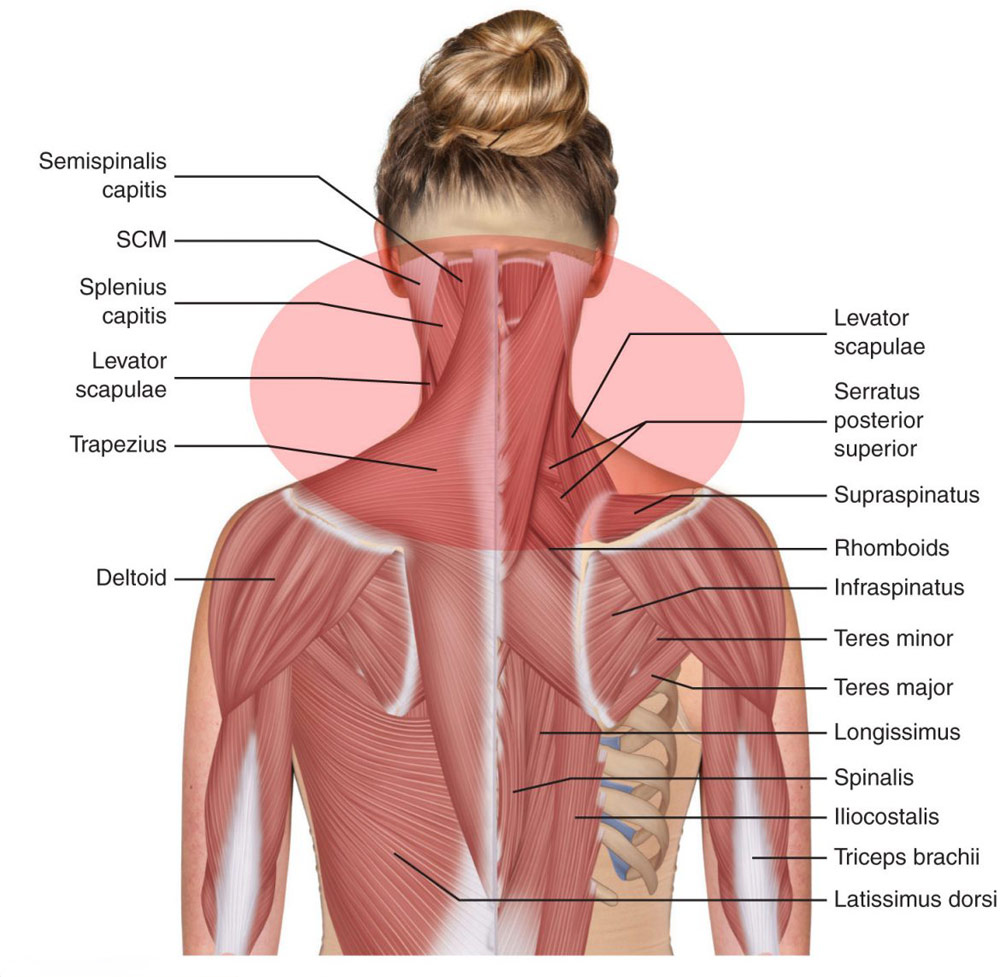
When you feel soreness in the back of your neck, your hand instinctively goes to rub the painful area. While several muscles make up the back of your neck, one in particular is usually the cause of your problems. Your trapezius, which starts at the base of your skull, runs down your neck, out to your shoulder blades and then extends down to mid-back alongside your spine. When it’s functioning correctly it holds your head and neck upright and your shoulders back. But if you spend a lot of time sitting at a desk, or standing while looking down, this usually isn’t the case. Getting a massage for neck pain can fix this but the treatments are slightly different.
Neck Pain Caused By Sitting
Unless you maintain a good posture, sitting at a desk and staring at a computer screen will cause you to slump forward with rounded shoulders. This is especially the case if you are reaching forward to use a mouse or type on a keyboard. Plus in this position you have no option but to tilt your head up to look at the screen. This is known as forward head posture which can eventually cause a neck hump if not corrected. I’ve had clients in their 20’s already showing signs of this. Besides the obvious neck pain, common symptoms include headache or migraines, TMJ disorder / bruxism and upper back pain.
How I Treat It
If I was giving a massage for neck pain of this type I would concentrate on relaxing your trapezius, which is the muscle that extends up to the top of your neck / base of the skull area and down to your mid back. I would also lengthen the muscles in this area to help improve flexibility and mobility in your upper back and neck.

Neck Pain Caused By Mobile Phone Use
Neck pain from mobile phone use, such as messaging or being online, comes from looking down too much. This also applies to jobs such as hairdresser, dentist or cashier. The problem is made even worse because most people don’t tilt their head to look down, they extend their neck. This is known as anterior head syndrome or text neck. Common symptoms include a stiff neck, upper back pain, especially between the shoulder blades, and difficulty looking upwards.
How I Treat It
My massage for neck pain of this type would again focus on relaxing the muscles of your trapezius. Flexibility here isn’t the issue though. Instead it is the muscles at the front of your neck / upper chest that will require an improvement in mobility and flexibility.

How I Treat Neck Pain In General
When a client books a session for neck pain, I never start by just massaging the neck. Neck pain is rarely an isolated problem, it’s usually the result of multiple contributing factors. These can include posture, muscle imbalances, tight chest and shoulders, weak deep stabilisers, and compensation patterns built up over years.
My Assessment Process
During your mobile session at home, I begin with a detailed assessment. I observe how you hold your head and shoulders, check your range of movement, test muscle tightness, and identify which movements or positions trigger your pain. I also discuss your daily habits such as desk work, driving, phone use, training, stress levels, and sleeping position, as these factors almost always play a major role.
This assessment allows me to build a clear picture of why your neck is painful, rather than just treating the symptoms.
The Treatment
The massage portion of the session is highly targeted and includes:
- Release of your upper trapezius, levator scapulae, and suboccipital muscles of your upper back and neck that commonly become overworked and tight
- Work on the scalenes and sternocleidomastoid muscles of your neck that often contribute to tension headaches and restricted movement
- Deep release of your chest (pectorals) and front of the shoulders, which pull your head forward and overload your neck
- Soft tissue work on your jaw and base of your skull when tension headaches are involved
I combine therapeutic and sports massage techniques with slow, sustained pressure and gentle movement to improve tissue quality and restore better range of motion. Because I’m also an Advanced Personal Trainer, I can include specific activation exercises for your deep neck flexors and scapular stabilisers after the massage. These exercises are simple but highly effective at preventing the neck pain from returning quickly.
Why Having Treatment at Home Makes a Big Difference for Neck Pain
Treating you at home is particularly beneficial for neck issues. After the session your muscles are looser and your nervous system is calmer. You don’t have to get straight into a car and drive, which often re-tightens the exact muscles we’ve just worked on. Many clients report they wake up the next morning with noticeably better movement and less stiffness because they could rest properly afterwards.
Long-Term Results
My goal is not just short-term relief. By combining thorough soft tissue work with movement correction and practical advice on posture and daily habits, many clients experience significant and lasting improvements. They report less daily tightness, fewer tension headaches, better range of motion, and an overall feeling that their neck and shoulders are finally working properly again.
Frequently Asked Questions
I don’t just massage the painful area, I assess your whole body. This includes your posture, mobility, chest tightness, shoulder position, and daily habits. I combine targeted therapeutic and sports massage with specific activation exercises for the deep neck flexors and scapular shoulder stabilisers. Because I also have an Advanced Personal Training background, I can give you practical exercises that help maintain the improvements between sessions. My clients get better and longer-lasting results because I treat the cause, not just the symptoms.
Many clients feel some relief after the first session and a noticeable reduction in tightness and aching. For neck pain that has built up over months or years, I usually recommend a course of 3–6 sessions. The early sessions focus on releasing the main areas of tension, while later sessions work on correcting posture and muscle imbalances for longer-lasting results. I’ll give you a realistic expectation during your first session based on what I find.
This is extremely common. Most standard massages and basic stretches only treat the tight spots temporarily. The pain usually returns because the root causes (forward head posture, tight chest and shoulders, weak deep neck flexors, poor upper back mobility, and daily habits) are not being properly addressed. I focus on releasing overworked muscles while activating and strengthening the weak stabilisers. As well as practical advice on posture and movement.
Yes, this is one of the most common causes I treat. Prolonged sitting and screen use typically leads to forward head posture, tight chest muscles, and weak deep neck flexors. I focus on releasing the overworked posterior neck muscles, opening the chest and front of the shoulders, mobilising the upper back, and teaching simple resets and strengthening exercises you can do during the workday.
Yes, because a lot of tension headaches and migraines are linked to tight suboccipital muscles at the base of the skull, upper trapezius, levator scapulae, and jaw tension. When these areas are properly released and overall posture improves, many clients experience a significant reduction in both the frequency and severity of headaches.
It’s rarely too late. Even if you’ve had neck pain for many years, the body can still respond very well to the right combination of targeted soft tissue work, mobility work, and corrective exercises. I’ve helped many clients who had been suffering for decades once we properly addressed the muscle imbalances and postural issues.
I always work within your comfort level and encourage your feedback. Some areas (particularly the upper trapezius and suboccipitals) can feel intense when very tight, but it should never be sharp or unbearable pain. Most clients describe it as “nice pain” that brings relief as the muscles release. I will immediately adjust if anything feels too strong.
After a neck treatment your muscles are looser and your posture feels improved. But driving home can quickly undo much of that benefit by forcing you back into poor posture. With a mobile service you can stay relaxed at home, do the gentle mobility work I recommend, apply heat if needed, and allow the benefits to settle in properly. Many clients tell me they wake up the next day feeling looser and with noticeably less stiffness.
For acute or severe neck pain, weekly sessions for the first 3–4 weeks often produce the best results. Once the pain has significantly reduced, clients can move to fortnightly or monthly maintenance sessions to keep the area mobile and prevent flare-ups. I will always give you honest, personalised advice based on your specific situation and how your body responds to treatment.
Summary
Neck pain can significantly affect your daily life, sleep, concentration, and overall wellbeing. The good news is that with the right approach, many people experience meaningful relief and improved mobility. In this article, I’ve covered the most common causes of neck pain I see in my York clients and how my personalised sports and therapeutic massage approach helps many clients achieve longer-lasting results rather than short-term relief. All by focusing on both the tight muscles and the underlying imbalances.
If you’re tired of living with neck tightness, headaches, or restricted movement, feel free to get in touch. I offer mobile treatment at your home in York and surrounding areas.
Book A Mobile Massage For Neck Pain
If persistent neck tightness, postural strain from desk work, or tension headaches are affecting your day, targeted sports and rehabilitation massage can help release deep upper back restrictions and restore comfortable movement.
I provide a fully equipped mobile sports, deep tissue, and therapeutic massage service across York and surrounding areas, bringing a professional treatment directly to your home. Receiving treatment at home allows your neck and shoulder muscles to remain completely relaxed, avoiding the immediate re-tightening that happens when driving through York’s traffic.
To book or discuss your symptoms contact me on 07713 250352 or email david@massageinyork.co.uk or read more information on booking.
