Don’t Join Gyms In York. Here’s Why.

Every January, thousands of people join gyms in York. By February, most of them have stopped going. Why does this happen? Is it because they’re lazy? No, it’s because the traditional gym model doesn’t work. If you’re new to working out or returning to fitness after a break, a crowded gym is often the worst place to be.

The Problem With The January Rush

If you have a busy life, fighting for space at the gym after work is a nightmare. You have to deal with York’s traffic, find somewhere to park and then queue for machines. It’s a lot of effort for very little reward. Most people quit because the hassle becomes too high.

But there are deeper reasons why people fail: January is actually the hardest time to start a new habit(1). It’s cold, dark and your energy is low after the holidays.

A Better Way To Get Results

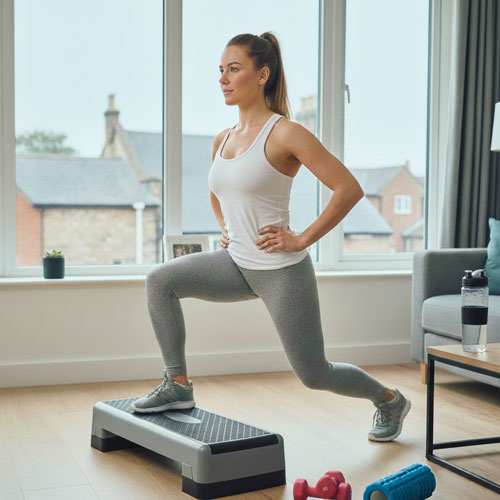
woman doing step ups in a York gym with a view of buildings in window behind her
| Training in your own home is better than any of the gyms in York

Instead of fighting the crowds, you can bring the expert to your home. As a specialist in both Sports Massage and Personal Training, I offer a different approach that actually works.

I fix your pre-existing injuries, aches and pains first. Many people fail because an old back or knee injury flares up in week two. I start by using sports massage to “unlock” your body. If necessary we can fix the problems caused by sitting at a desk(2) or commuting before you ever pick up a weight.

Because I come to your home, the focus is entirely on you. We don’t do boring workouts. We do smart, effective movements that fit your specific body. You get better results in less time because every move is done with perfect form.

  • Skip the Traffic: You don’t have to drive across York or hunt for a parking space.
  • Zero Queues: You’ll never have to wait for a machine or a squat rack again.
  • Total Privacy: I bring all the professional equipment to your living room.
  • Stay Consistent: When you remove the travel and the crowds, it’s much harder to find an excuse to skip.

Why Men Snap In January

Men often make a big mistake when returning to gyms in York. They try to lift the same weights they used last year. Your brain remembers being strong, but your body has changed. You have spent years sitting at a desk or driving. Your muscles might still be able to handle the weight, but your tendons are not ready. Connective tissue is especially tight on a cold January night so if you lift what you think you can and not what you actually can, your tissue will fail. This leads to torn shoulders or painful back spasms. Training with cold, locked-up muscles isn’t working hard, it’s asking for an injury.

Why Women Get Bored

Many women find the gym boring. This isn’t really a surprise. Using a treadmill or Stairmaster for 30 minutes is dull and it also stops being effective very quickly. To see real results, your body must move in different ways. At home, we avoid boring machines. We use weights, bands and body weight exercises to challenge you. And because every session is different, the time flies by. You see better results because it keeps your mind engaged and your muscles working.

Training in a gym also creates peer pressure. When you haven’t trained for a while, a room full of people is distracting. The feeling of needing to look like you know exactly what you’re doing leads to trying to lift more than you are able and poor form. This results in inferior results and even injury. When I come to your home, that pressure vanishes. We focus entirely on the quality of your movement. We can spend time fixing your posture and ensuring the best technique for every exercise, without worrying about what other people might be thinking.

How Your Posture Is Killing Your Gains

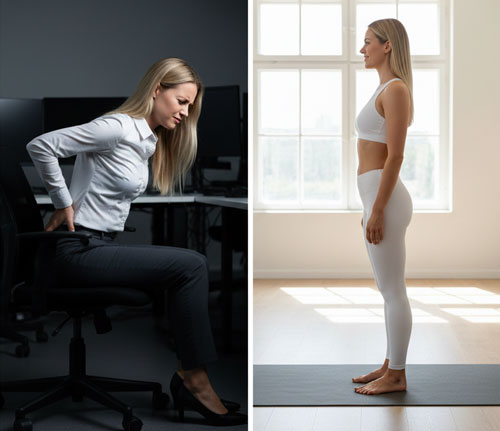
woman with bad posture at work and good posture in the gym
| The worse your posture is the less likely you are to have good exercise technique

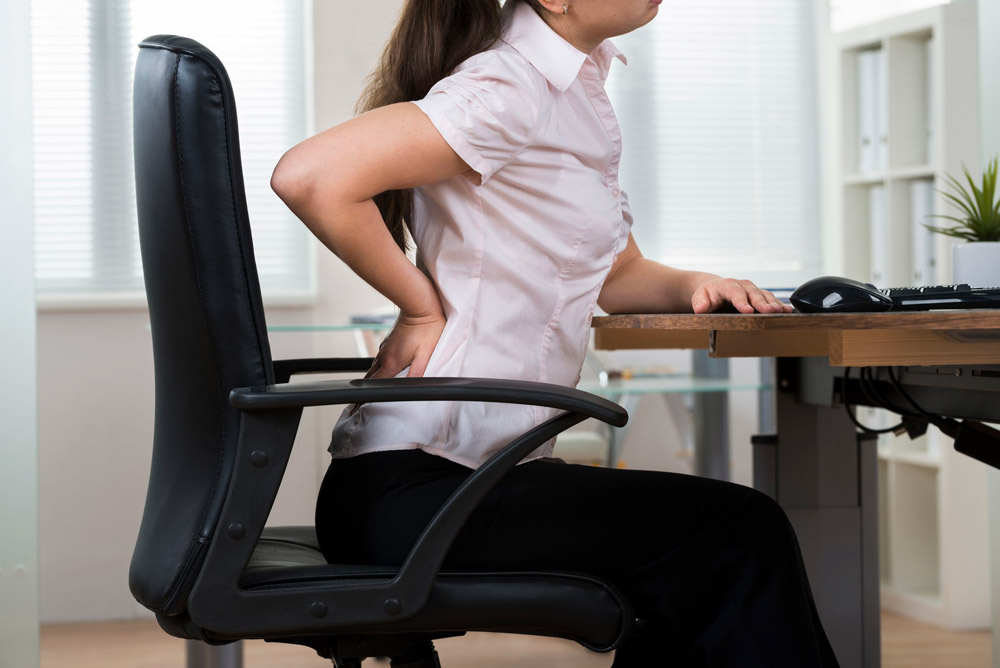
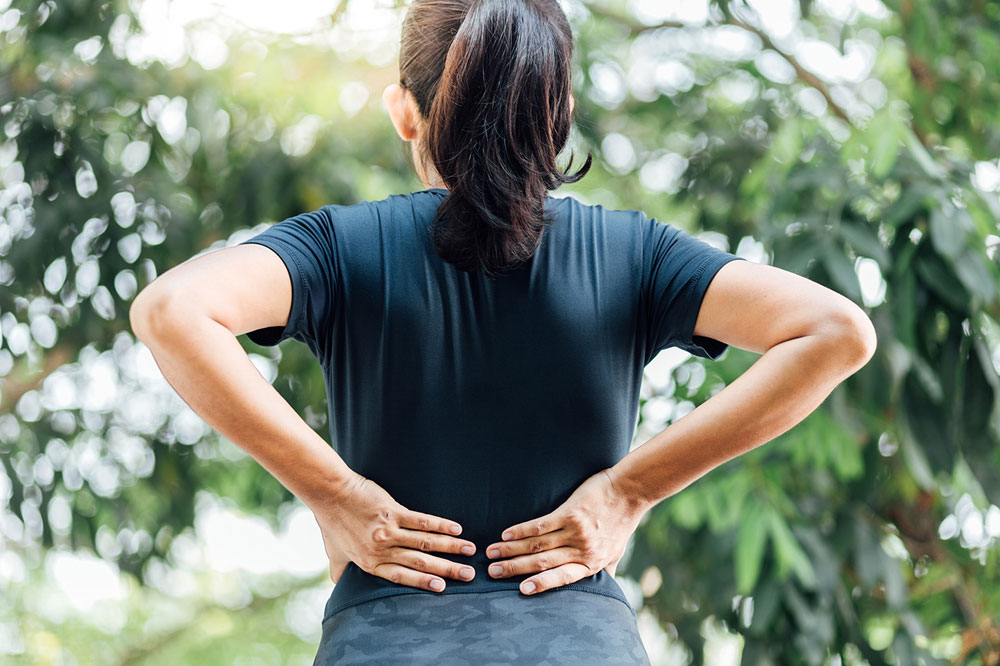
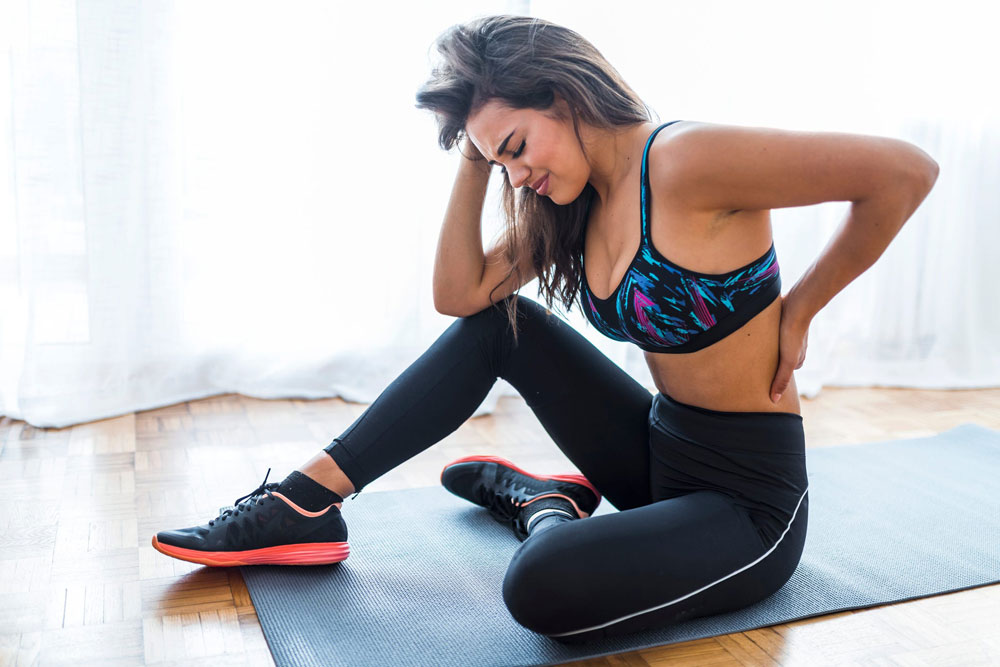
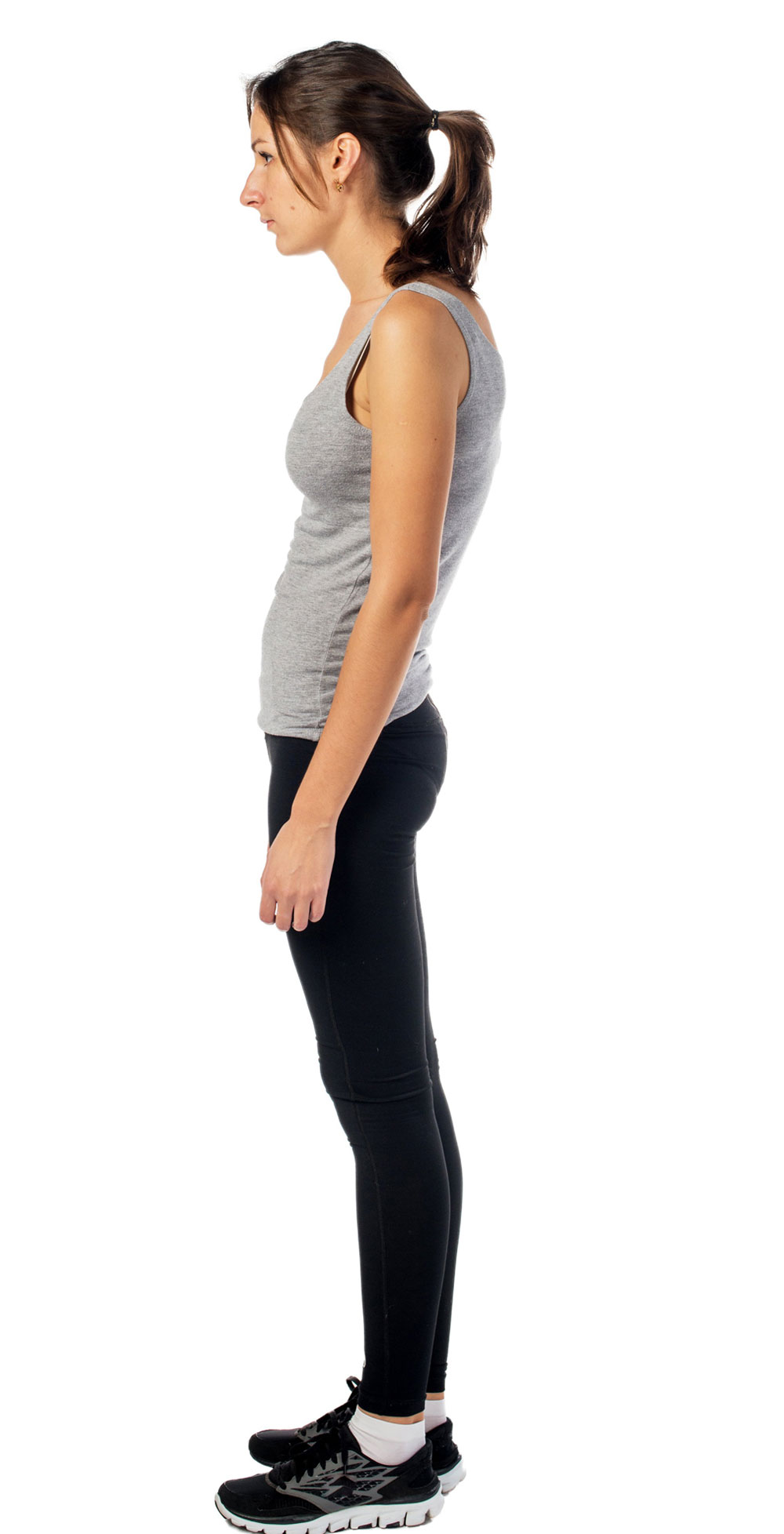
Most people starting at gyms have spent the year sitting, especially December. Whether this is at a desk, in a car or on a sofa. This worsens the poor posture most people already have. Your chest is tight, your back is weak and your glutes are inactive. Training in this state leads to injury. If you suddenly start to squat with a “C-curve” spine you will be lucky not to quickly end up with a sore or injured lower back. I sort your posture and your technique first.

If your body is locked into a ‘seated shape,’ you’re fighting your own anatomy. Most gyms just tell you to work harder—more reps, more sets, more weight. But if your biomechanics are wrong you’re not going to achieve much besides injuries. I don’t just give you a workout, as your personal trainer I look at how your body moves and where you hold tension. By fixing these underlying issues, you see better results faster because your muscles are finally positioned to work properly. We fix the issues before we add the weight so that you make steady, consistent progression while others are reaching for painkillers.

Start The Year The Right Way

Gyms in York seem relatively cheap if you’re going regularly every week. But if you stop after a month, it’s a waste of money. Especially if you’re like most people and never get around to cancelling the membership. My service is premium because it is complete. You aren’t paying to commute, wait for machines and stand around feeling self-conscious. You’re paying for an expert to come to you who will teach you how to get the results you want rather than feel like a February failure.

Don’t waste money at gyms in York. Focus on quality. Combine restorative massage with expert coaching at home. If you want to move better and feel stronger, fix the problem at the source. Forget the crowded gyms in York. Choose the alternative that fits your lifestyle.

Book A Personal Training Session

If you would like to book a personal trainer in the York area please contact me on 07713 250352 or email david@massageinyork.co.uk. For more information on booking click here

Caesarean Scar Treatment With Massage

As a mobile sports and therapeutic massage therapist in York, I treat many women who are struggling with the long-term effects of a Caesarean section. This is often months, or even years after giving birth.

Whether you’re dealing with scar tightness, a noticeable “shelf” or “pouch” above the scar, numbness, pulling sensations, or the frustrating feeling that your core simply won’t switch on properly, you’re not alone. Far too many women are told these issues are “normal” and that nothing can be done.

The truth is that a C-section involves cutting through multiple layers of tissue. When the body heals, it often lays down dense scar tissue that can create adhesions, pull on the pelvis, affect posture, and disconnect core function. Standard exercise and resistance training often can’t fully resolve this on their own.

In this article, I explain how caesarean scars can affect the body long-term and how my personalised approach can help. I combine careful, targeted scar tissue release with gentle core reconnection work. This can help restore mobility, reduce discomfort, improve posture, and support better core strength.

All sessions are carried out in the comfort of your own home in York.

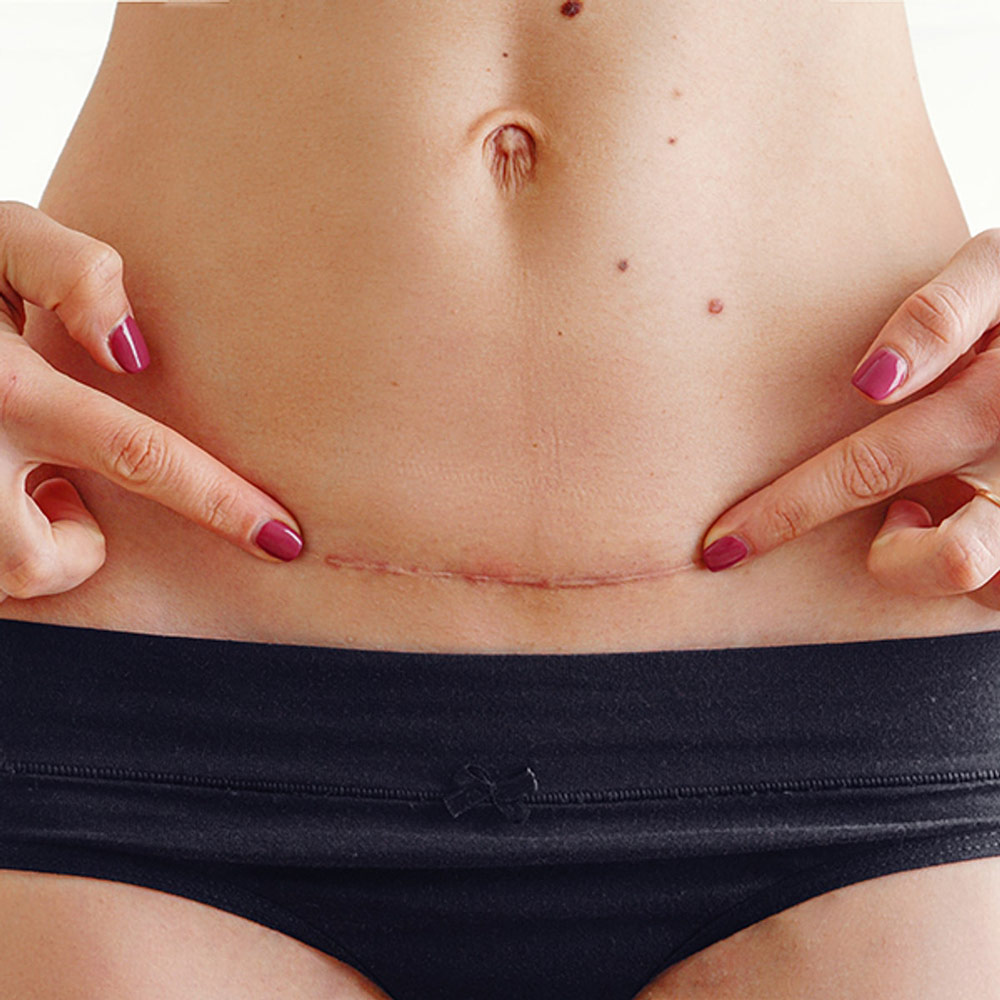
Close-up of a woman pointing to a horizontal C-section scar on her lower abdomen.

The Hidden Issues of Your Caesarean Scar

What may have started as a standard surgical incision can become the root cause of many long-term problems. Most women are given basic post-operative instructions by the NHS but then left to manage the long-term consequences on their own.

Physical Pain And Discomfort

Beneath the surface of the incision your body lays down new collagen fibres to repair the wound. This process is a normal part of healing. But it can also lead to adhesions, where internal tissues become stuck together. These adhesions can cause a persistent feeling of tightness and a deep, nagging ache. For many, this discomfort manifests as a sharp, pulling pain when stretching or standing up straight. Nerve damage from the surgery is also common and can lead to numbness, or it can create a heightened sensitivity around the area. Even a light touch can become unbearable for some.

An Unwanted “Pouch” Or “Jelly Belly”

The appearance of a caesarean scar is a significant concern for many. A major issue is the “pouch” or “overhang” that often forms directly above your incision. This unwanted layer of excess tissue is a source of self-consciousness and frustration. Many women believe this is stubborn fat that they cannot lose, but a significant portion of it is actually built-up scar tissue and fluid trapped by adhesions beneath the skin(1). This can be treated with caesarean scar massage.

This issue is often not limited to the scar itself. Many women experience a general feeling of a soft, disorganised stomach sometimes referred to as “jelly belly.” This sensation is caused by knots and scar tissue which form throughout the abdomen due to the stretching and trauma of pregnancy and childbirth. Don’t endure this for years or even decades in the false belief that nothing can be done. Just like the area around the scar, this can be improved or, in many cases, removed all together.

A Weak Core

Besides the appearance, the most critical problem is how a C-section scar impacts your core. A tight, unaddressed scar acts as a physical barrier that prevents your deep muscles from working properly. This disconnect leads to a feeling of instability and core weakness as your body compensates by recruiting other muscles to do the work. This is one of the main reasons why so many women develop chronic lower back pain after a C-section.

Why Standard Advice Falls Short

While the NHS provides care for initial wound healing, the long-term management of the scar is an afterthought. The typical advice of “let it heal on its own” is a passive approach and my experience shows it can lead to years of unnecessary pain and discomfort. This advice ignores the very nature of scar tissue formation.

A surgeon’s job is to close the wound, not to manage the tissue that forms beneath it. And the standard of care from your GP assumes a perfect healing process. The reality is that your body often requires help to lay down collagen fibres correctly and prevent them from binding to other tissues. This is why caesarean scar treatment is so important.

The lack of professional guidance is a serious issue that only focuses on basic healing. Caesarean scar massage instead offers a solution for a problem many women believe they must live with.

How I Treat Caesarean Scars

When you book a caesarean scar treatment with me, the main focus of the session is exactly what you want: direct, targeted work on your caesarean scar. Using careful, progressive techniques, I gently mobilise the scar tissue to help break down adhesions, improve tissue movement, and reduce tightness or pulling sensations. Many women are surprised how much tension can be held in and around the scar, even years later.

I work through the different layers, from the surface down to the deeper restrictions, always at a pace that feels comfortable for you. The goal is to make the scar more supple, reduce the “shelf” or “pouch” appearance where possible, and ease any numbness or discomfort.

Once we’ve done the primary scar work, I also treat the surrounding areas that are commonly affected, such as the abdomen and hips. A C-section scar rarely exists in isolation, it often creates compensation patterns in nearby muscles and fascia. Addressing these helps the results last longer and improves overall comfort and posture. I also include gentle core reconnection work (using my personal training background) to help wake up the deep abdominal muscles that often shut down after surgery.

Most women notice improvements in how the scar feels, reduced pulling, better posture, and improved core awareness within the first few sessions. Because the treatment is mobile and done in the privacy of your own home in York, you can fully relax during and after the session without the stress of travelling.

Benefit From Caesarean Scar Treatment

The good news is that scar tissue is not permanent. It can be changed, no matter how old the scar is. This is where a targeted, professional approach to caesarean scar treatment comes in. Through manual therapy, also known as c-section scar massage, I can fill the gap left by traditional care. I can transform the scar from a source of pain to a supple, pain-free part of your body that is barely visible.

How Manual Therapy Works

The goal of scar massage is not to just “rub” the area. Instead it guides and realigns the collagen fibres that make up the scar tissue using specific techniques. This encourages the fibres to realign in a more orderly fashion. Think of it as reweaving a tangled knot of threads into a smooth, organised tapestry. This releases adhesions allows the surrounding tissue to move more freely and restores natural circulation to the area.

Improve Your Stretched “Jelly Belly” Skin

Another benefit of c-section scar massage is reducing or even completely getting rid of the excess skin that surrounds it. As well as general abdominal tissue that remains after pregnancy. By releasing the underlying scar tissue and knots, I can reduce the volume and density of this excess tissue. This will restore a smoother, flatter, more natural abdominal shape. But this isn’t just about appearance, it’s about re-establishing the proper connection to your core. And when your core works it can help improve chronic back pain which makes everyday activities easier and more enjoyable.

It’s Never Too Late to Heal

I have had women come to me whose caesarean scars were not just visible, they were inflamed, painful and raised. A source of constant discomfort and self-consciousness. But through consistent, targeted caesarean scar treatment from me they saw those scars soften. They flattened and faded, becoming nothing more than a little white line. This is a result that is possible no matter how much time has passed. The techniques may differ, such as a gentle touch for a new scar and a deeper approach for an older one. But the outcome can be just as profound. A scar is a signal from your body. If it is barely visible it has healed well, if not the healing process is not yet complete, even if it has been there for years. A professional caesarean scar treatment will help your body complete the process.

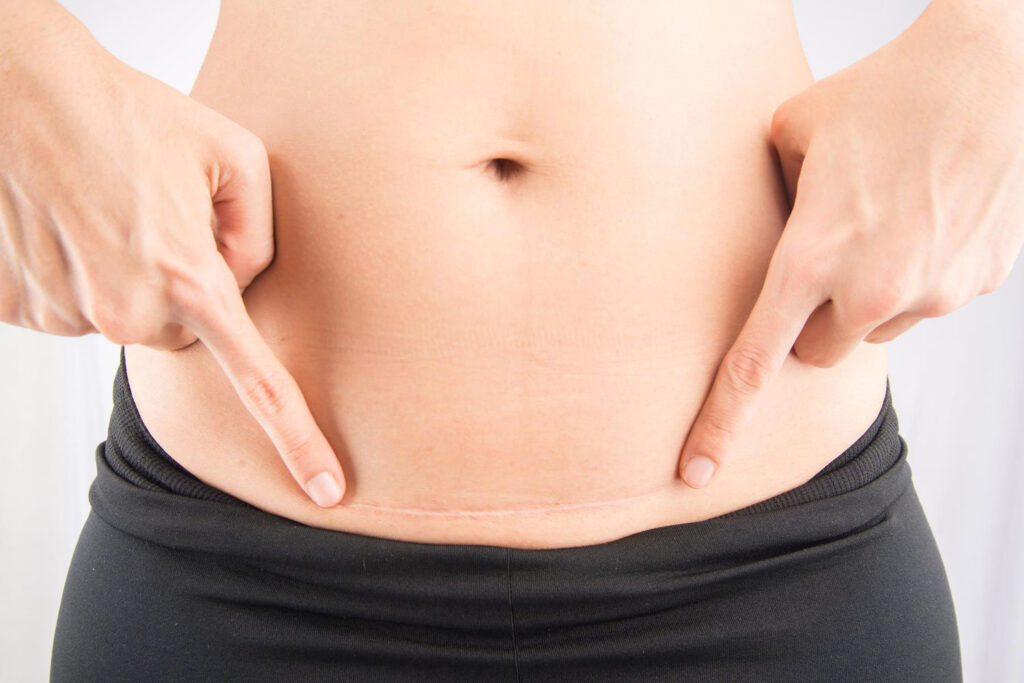
Close-up of a woman pointing to a faint, well-healed horizontal C-section scar on her lower stomach after massage treatment.

Why You Need A Professional

While some self-massage techniques are available, the most effective path to a full recovery is with a professional. I have the anatomical knowledge to feel for subtle differences in tissue density and where adhesions have formed. I know the correct technique and pressure to release them safely. And if required, I can integrate this manual therapy into a broader postnatal fitness plan.

A c-section scar massage isn’t a luxury, it’s an investment in your long-term health and wellbeing. It offers a you simply cannot achieve alone without caesarean scar treatment.

Frequently Asked Questions

How soon after a C-section can I have scar massage?

I generally recommend waiting until the incision is fully closed, dry, and healed, which is usually 6 to 8 weeks after surgery. Because everyone heals at a different rate, I always advise getting clearance from your midwife or GP first. If you are months or even years post-C-section, scar massage remains highly beneficial. Scar tissue does not simply disappear and can remain restrictive indefinitely, meaning it is never too late to start.

Will Caesarean scar massage help with the “shelf” or “pouch” above my scar?

Yes, because the “shelf” is rarely just stubborn fat. More often it is caused by tight scar tissue pulling down on the surrounding fascia while disconnecting the deep core muscles. Through targeted massage and mobilisation I restore flexibility and tissue glide. Most women see a noticeable reduction in bulging, less localized tightness, improved posture, and a significantly smoother abdominal profile after a few sessions.

Does Caesarean scar massage hurt?

Most women find the treatment highly manageable. While certain areas can feel intense or tender when we initially target deep, long-standing adhesions, I work progressively and constantly check in with you regarding pressure. The sensation is typically described as a deep, satisfying “releasing” or “melting” feeling rather than sharp pain. If any technique feels too intense, I adjust immediately to ensure effective release with minimal discomfort.

How many sessions will I need?

This depends entirely on the age of the scar and the density of the restrictions. Some women experience a significant shift within 2 to 4 sessions. For older scars or deep adhesions I typically recommend an initial block of 4 to 6 sessions spaced 1 to 2 weeks apart. Once we have cleared the primary restrictions, many mums choose an occasional maintenance session every few months to keep the tissue mobile.

Can scar massage really help years after my C-section?

Yes, absolutely. I regularly treat women whose Caesareans were 5, 10, or even 20+ years ago. Left untreated, scar tissue remains dense and rigid. With consistent, skilled manual therapy, even well-established scars can become significantly more supple, less restrictive, and less visible.

Do you only work on the scar itself?

Our primary focus is always direct, targeted work on your Caesarean scar. However, because a C-section disrupts the entire kinetic chain of your core and pelvis, I can also address the immediate surrounding areas if required. This includes the lower back, hips, glutes, and abdomen. Such a thorough approach ensures the surrounding muscles stop overworking, leading to longer-lasting results, better posture, and improved core strength.

Is your mobile Caesarean scar treatment better than visiting a clinic?

For postnatal recovery, my mobile service offers a distinct advantage. Scar tissue release can leave you feeling physically tender, so receiving treatment in the privacy and comfort of your own home eliminates the stress of getting dressed, navigating traffic, or driving afterward.

What results can I realistically expect?

Visually, the results can be remarkable. I have treated scars that were highly prominent, thick, and raised, and worked them down until they were almost invisible. By breaking down the dense, tethered collagen bands underneath, we can flatten a raised scar, improve skin tone, and smooth out the overall profile of the lower abdomen.

Book A Caesarean Scar Massage

If you would like to book a treatment for your c-section scar in the York area please contact me on 07713 250352 or email david@massageinyork.co.uk. For more information on booking click here

Stress Relief Massage For Students In York

University life can be an incredible experience, but it’s no secret that it comes with its fair share of stress. Whether you’re cramming for exams, juggling assignments, or just feeling overwhelmed by the demands of student life, stress can take a serious toll on your body and mind. That’s why more students are turning to massage therapy as a natural way to relax, recharge, and stay focused. If you’re looking for a stress relief massage for students in York, you’ve come to the right place. This guide will explain why massage is so beneficial for students, what to expect from a session, and how it can fit into your busy university schedule.

Why Students Need Stress Relief Massage

Stress isn’t just a mental burden—it affects your entire body. Long hours of studying, sitting in lectures, and staring at screens can lead to muscle tension, headaches, and poor sleep. Here’s how a stress relief massage for students can help:

1. Reduces Anxiety & Mental Stress 💆‍♀️

Massage helps to lower cortisol levels (the stress hormone) and increase serotonin and dopamine(1), which boost your mood. This makes it a great way to calm your mind before exams or after a long week of coursework.

2. Relieves Tension from Studying 🧑‍🎓

student with stress in library needing a massage
| Students can benefit from a stress relief massage after long hours of studying

Spending hours hunched over a laptop or desk can cause tight shoulders, neck pain, and lower back discomfort. Massage works to loosen those muscles, improving posture and reducing pain.

3. Improves Sleep Quality 😴

Struggling to get a good night’s sleep? Many students find that regular massage helps them relax more deeply and improves sleep quality – essential for memory retention and academic performance.

4. Boosts Energy And Focus 💪

Rather than relying on caffeine or energy drinks, massage can improve circulation and oxygen flow, giving you a natural energy boost to help with concentration and productivity.

5. Helps With Fitness Recovery 🏃‍♀️

If you hit the gym, do yoga or play sports at uni, a massage can speed up muscle recovery and prevent injuries. Even if you’re not an athlete, everyday activities like carrying a heavy bag can create muscle imbalances that massage can help correct.

What To Expect From A Stress Relief Massage For Students

If you’ve never had a professional massage before, you might be wondering what’s involved. Here’s a quick breakdown:

🛋️ Where Does It Take Place?

Unlike spa-based massages, mobile massage means the therapist comes to you, so you can relax in the comfort of your own space. Whether you live in student halls, private accommodation or a shared house, you can enjoy a massage without the hassle of traveling.

⏳ How Long Should A Session Be?

You can choose the session length that best fits your schedule and desired level of relaxation.

  • 30-Minute Session: Perfect for a quick fix focusing on the neck, shoulders and upper or lower back.
  • 60-Minute Session: Ideal for a full-body relaxation experience.
  • 90-Minute Session: Provides extra time to deeply target stress areas and incorporate additional relaxation techniques. Or extended focus on particularly tight muscles.
  • 2-Hour Session: A comprehensive, luxurious treatment designed for those who want to fully unwind and experience a holistic approach to self-care. This session allows for a more thorough treatment, including multiple techniques. These can include Swedish, deep tissue, sports, head and neck, lower back and more to provide the ultimate rejuvenation experience. The goal is to leave you feeling totally calm, refreshed and stress free.

👐 What Techniques Are Used?

A stress relief massage for students in York typically includes:

Fitting A Massage Into Your Student Budget

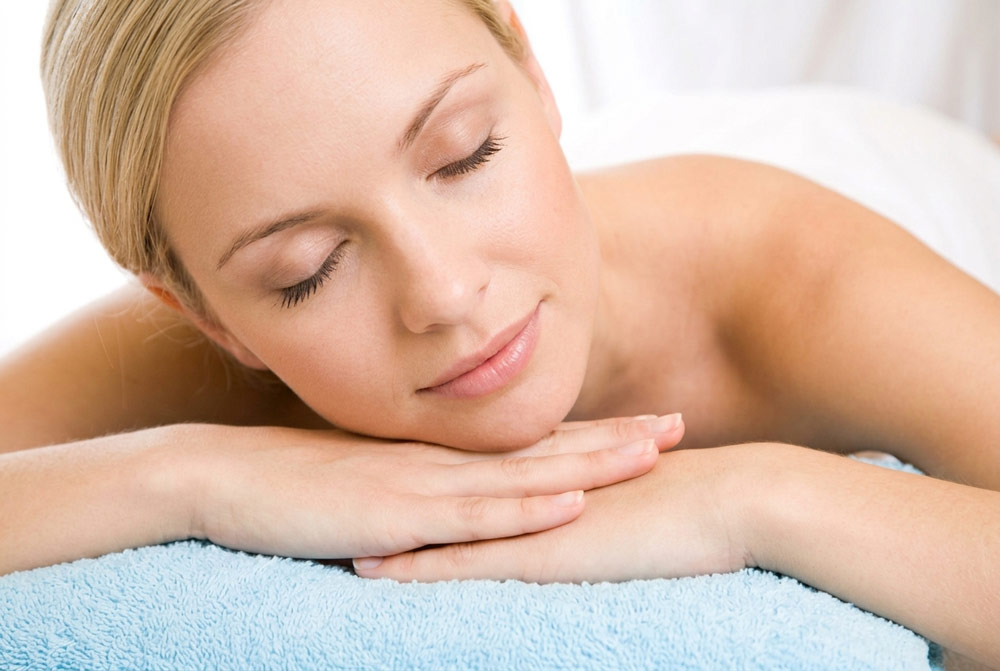
female student relaxing after a stress relief massage
| Stress relief is just one of the benefits of massage for students

It’s understandable that students need to keep an eye on their spending. While spa treatments can be expensive, mobile massage therapy offers affordable options designed with students in mind.

To make it even more accessible, a stress relief massage for students in York comes with discounts. This means you can enjoy professional massage therapy at a lower cost, without compromising on quality.

  • Student Offer: Get 10% off every session with a valid student ID.
  • Referral Discount: Recommend a friend and you get 15 minutes added to your next massage at no extra charge.

The Best Times For A Massage As A Student

📚 Before Exams

When exams are looming, stress levels can skyrocket and your mind can feel cluttered. Booking a massage before exams isn’t just a treat—it’s a strategy. A relaxing session can lower your cortisol levels, helping to reduce anxiety and clear your head. With a calmer mindset, you’re more likely to absorb information and improve your focus during study sessions. Think of it as a way to hit the reset button before tackling those tough questions on paper.

🖥️ After Long Study Sessions

Hours spent in front of a computer or buried in textbooks can leave your body feeling stiff and sore. If you’ve been glued to your desk all day, a massage can work wonders by easing muscle tension and preventing stiffness. It helps to restore proper blood circulation and loosen those tight muscles in your neck, shoulders, and back. This means you can continue your studies without the nagging discomfort that often follows long periods of sitting.

🏋️ After Exercise

Balancing university life with an active lifestyle is a challenge many uni girls face. Whether you’re hitting the gym, joining a fitness class, or participating in sports, physical activity is key—but it can also lead to muscle soreness and fatigue. A post-exercise massage accelerates muscle recovery by flushing out lactic acid and reducing inflammation. Not only does it help to relieve the aches from your workout, but it also improves flexibility, ensuring you’re ready for your next session—whether that’s another workout or a study marathon.

🛏️ Before Bed

A late-evening massage can be the perfect way to transition from the hustle of the day to a peaceful night’s sleep. When your body is relaxed and your stress levels have dropped, falling asleep becomes much easier. The gentle massage not only soothes your muscles but also calms your mind, paving the way for deep, restorative sleep. This means you wake up refreshed, with better energy levels and a clearer mind—vital for those early lectures and late study sessions.

Why Choose A Mobile Massage In York?

Many students prefer a stress relief massage because it fits around their busy schedules. Here’s why it’s a great option:

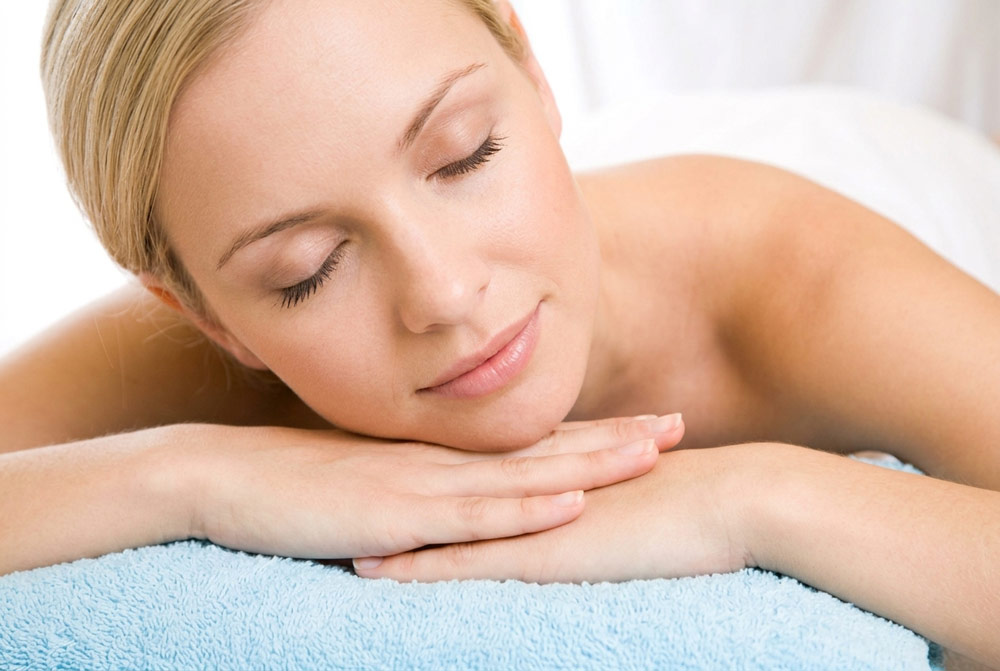
female student relaxing after stress relief massage
| Having a massage at home means that when it’s over, you can just relax

No Travel Needed – The therapist comes to you. You don’t have to worry about going anywhere. In fact, you don’t have to do anything!
Flexible Appointments – Available during the day, evenings and weekends, so it’s easy to fit into your schedule.
Comfort & Privacy – You can enjoy a professional massage in the comfort of your own space where you feel the safest.
Affordable for Students – With discounts and referral offers, it’s a cost-effective way to relax.

How To Book A Stress Relief Massage For Students In York

Booking is quick and easy:

1️⃣ Choose Your Session – 30, 60, 90 or 120 minutes, depending on your needs.
2️⃣ Pick A Time – Appointments can be during the day or in the evening, 7 days a week.
3️⃣ Contact me – email, phone, text or Whatsapp (details below )
4️⃣ Enjoy Your Massage – Relax and de-stress in the familiar surrounding of your own space.

For more details or to book your session, get in touch today and take the first step towards better relaxation, focus and wellbeing.

Book A Stress Relief Massage In York

If you’re a student and would like to book a mobile massage at home in the York area please contact me on 07713 250352 or email david@massageinyork.co.uk.

Click for more information on booking or Frequently Asked Questions.

Sports Massage At Home In York

The fast-paced world in which we live today means maintaining good physical health is essential. Whether you’re a professional athlete, a fitness enthusiast or someone managing everyday physical stress, a tailored sports massage can significantly enhance your well-being. With my mobile sports massage in York, you can experience the benefits of a professional treatment at home.

Why Have A Sports Massage At Home?

woman having a sports massage at home
| Reduce stress even more by having a sports massage at home

Life can be hectic and finding time to visit a massage clinic might feel impossible. That’s where I, as a mobile massage therapist, can help. Having a sports massage at home you eliminate the hassle of travel, reduce post-massage stress and can enjoy complete relaxation in familiar surroundings.

Convenience

Having a sports massage at home saves you valuable time. No need to worry about York’s traffic or scheduling conflicts. I bring all the necessary equipment to ensure a professional and effective session.

Comfort

Your home is your sanctuary. So receiving a massage in a familiar environment allows you to relax more deeply, enhancing the benefits of the therapy. Plus, there’s no rush to get up and drive afterwards, you can simply rest and enjoy the post-massage tranquility.

Personalised Care

As a mobile sports massage therapist in York, I tailor each session to your unique needs. Whether you’re recovering from an injury, preparing for a competition or addressing chronic tension, my goal is to help you feel your best.

The Benefits of Sports Massage

A sports massage at home is not just for athletes. It offers a wide range of physical and mental benefits for everyone(1)

  • Enhanced Recovery: Sports massage promotes blood flow, helping to remove toxins and deliver oxygen and nutrients to tired muscles.
  • Reduced Muscle Tension: Targeted techniques release knots to alleviate pain and tension, improving flexibility and range of motion.
  • Injury Prevention: Regular sports massages help identify and address muscle imbalances, reducing the risk of injuries.
  • Improved Performance: By keeping your muscles in peak condition, sports massage can enhance your physical performance and endurance.
  • Stress Relief: The calming effects of a massage can reduce cortisol levels and promote overall mental well-being(2)

Click here to read more about sports massage

What to Expect During Your Sports Massage At Home

When you book a session with me, you’ll receive professional, top-tier care in the comfort of your home. Here’s what you can expect:

Initial Consultation

We’ll begin with a brief health questionnaire and discussion about your needs, goals and any specific areas of concern. This ensures a tailored approach to your session.

Requirements

I bring everything required for your massage, including a comfortable massage mattress, oil and towels. So all you need to do is provide quiet space to set up.

The Massage

Using a combination of techniques I’ll focus on relieving muscle tension, reducing pain, improving circulation, and addressing problem areas. My goal is to provide a thorough and effective session leaving you feeling refreshed and rejuvenated.

Why Choose Me as Your Mobile Sports Massage Therapist?

With years of experience and a commitment to delivering exceptional care, I take pride in providing the highest quality sports massage at home in York. Here are a just few reasons why clients in York trust my service:

  • Expertise: I’m fully qualified and stay updated on the latest techniques to ensure effective treatments.
  • Personal Approach: Every client is unique and I tailor each session to meet your specific needs.
  • Professionalism: I uphold the highest standards of respect, hygiene and care, ensuring a comfortable and safe experience.
  • Local Knowledge: As a York-based therapist, I understand the community and its needs, making my service both personal and reliable.

Who Can Benefit from a Sports Massage at Home in York?

woman with tight neck and back who would benefit from a sports massage at home
| If working from home has given you neck tension or back pain, get a sports massage at home in York today!

Sports massage is suitable for a wide range of individuals, including:

  • Athletes: Enhance performance, speed up recovery, and prevent injuries.
  • Office Workers: Relieve tension caused by prolonged sitting and poor posture.
  • Fitness Enthusiasts: Support muscle recovery and flexibility.
  • Anyone with Stress or Tension: Enjoy the calming and restorative benefits of a professional massage.

FAQs About A Sports Massage At Home In York

Is a sports massage at home as effective as in a clinic?

Absolutely. As I am a skilled and experienced therapist you’ll receive the same professional care and results as anywhere else.

How long does a session last?

Sessions typically range from 30 minutes to 90 minutes, depending on your needs and preferences. But in some cases 120 minutes can be the most beneficial.

Do I need to prepare anything?

All you need is a clean, quiet space for the massage and I’ll take care of the rest.

Can I book recurring sessions?

Although you can benefit greatly from just one massage, regular treatments will maximise the benefits and support your ongoing health and fitness goals.

By choosing me for your sports massage you will experience the convenience, comfort and tailored care of a professional at home in York. So contact me today to book your session.

Click here for even more on home massage

Book A Mobile Massage

If you would like to book a sports massage at home in the York area please contact me on 07713 250352 or email david@massageinyork.co.uk. Includes sports massage, deep tissue massage and Swedish massage. For more information on booking click here

Magnesium For Exercise And Recovery

Magnesium is one of the most important minerals for overall health, yet its role in exercise and physical performance is often overlooked. From producing energy to supporting muscle function and recovery, magnesium is a key part of your workout success. In this article we’ll explore how magnesium impacts exercise performance, reduces muscle soreness and aids in recovery. As well as providing practical tips to ensure adequate intake.

The Importance Of Magnesium For Exercise

Sufficient magnesium is essential for peak exercise performance
| Sufficient magnesium is essential for peak exercise performance

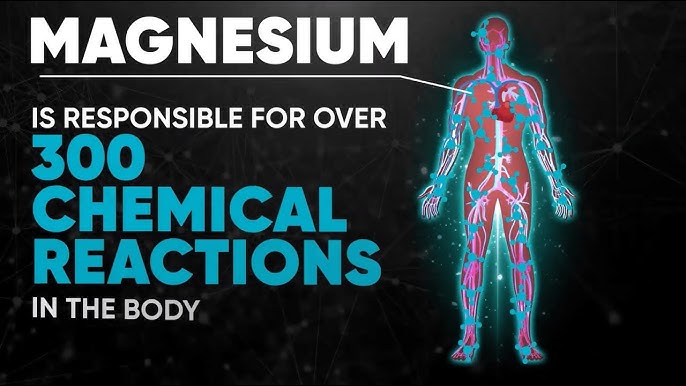
Exercise puts your body under significant physical and metabolic stress. To meet the demands of physical activity, your body relies on several key minerals, including magnesium. This essential mineral is involved in over 300 biochemical processes, many of which directly affect physical performance and recovery.

One of magnesium’s main functions is to support energy production. During exercise, your muscles require a steady supply of ATP (adenosine triphosphate). This is the molecule that powers all cellular activity. Magnesium activates the enzymes responsible for ATP synthesis, ensuring your muscles have the energy they need to sustain movement(1). Without adequate magnesium, energy production becomes less efficient, potentially leading to early fatigue and reduced performance.

Magnesium also plays a critical role in muscle contraction and relaxation. When you move, calcium floods into your muscle cells to trigger contraction. Magnesium then counteracts calcium, allowing muscles to relax. This balance is essential for preventing cramping and maintaining smooth, coordinated movements. If magnesium levels are low, your muscles may contract too forcefully or fail to relax properly. This increases the risk of spasms, cramp and discomfort during or after exercise.

Magnesium For Exercise Recovery

Woman recovering from exercise needs magnesium
| After a hard workout, magnesium is involved with many aspects of recovery

Recovery is just as important as the workout itself, and magnesium is vital to this process. After exercise, your body begins repairing muscle tissue, replenishing energy stores and reducing inflammation caused by physical exertion. Magnesium contributes to each of these steps, making it a key nutrient for effective recovery.

Protein synthesis is the process of repairing and rebuilding muscle fibers. Once again, magnesium plays a significant role. It helps to regulate the enzymes that facilitate protein formation, speeding up muscle repair and growth. For athletes or anyone engaging in regular strength training, maintaining optimal magnesium levels can help recovery between workouts and promote stronger, more resilient muscles.

Additionally, magnesium has anti-inflammatory properties that help calm the body after intense physical activity(2). Exercise-induced inflammation, while a natural part of the recovery process, can lead to prolonged soreness and stiffness if not managed properly. By reducing inflammation magnesium helps your body recover faster and feel less fatigued.

Preventing Cramps And Muscle Soreness

Muscle cramps are a common issue for those who exercise regularly, especially in high-intensity or endurance activities. These involuntary contractions can be caused by imbalances in electrolytes, one of which is magnesium. When levels levels are low, nerve signals can become overactive and lead to painful muscle cramps.

Magnesium also helps alleviate post-exercise soreness, DOMS, by promoting better blood flow. Improved circulation means more oxygen and nutrients are delivered to tired muscles, while waste products like lactic acid are removed more efficiently. This reduces stiffness and speeds up recovery so you feel ready for your next workout sooner.

Magnesium, Stress And Sleep

Exercise causes stress to your body and mind, magnesium helps regulate your response to this stress. One of its key functions is to balance cortisol, a hormone that increases during physical activity. Elevated cortisol levels can slow recovery, impair sleep and even contribute to muscle breakdown over time. Magnesium helps keep cortisol under control to ensure your body recovers in a balanced state.

Sleep is another critical factor in recovery and magnesium also plays an important role here. By calming the nervous system and promoting relaxation, it helps improve the quality of your sleep. Restful sleep allows your body to repair damaged tissues, restore energy and prepare for future workouts. If you often struggle with sleep after intense exercise, ensuring adequate magnesium intake might make a noticeable difference.

Meeting Your Magnesium Needs

woman taking magnesium which helps pre and post exercise
| If you can’t get enough magneium from your diet, supplements are cheap and convenient

Despite its importance, magnesium deficiency is surprisingly common. It is estimated that 50% of people in some populations don’t get enough(3). Athletes and those who exercise frequently may be at an even greater risk due to magnesium loss through sweat. Ensuring you consume enough magnesium through diet or supplements is crucial for maintaining peak performance and recovery. Read about signs of low magnesium.

Good dietary sources of magnesium include leafy green vegetables, nuts, seeds, whole grains and legumes. For those who struggle to get enough through food alone, magnesium supplements can be a convenient option.

Massage With Magnesium For An Exercise Boost

While magnesium alone offers impressive benefits for exercise and recovery, accompanying it with massage therapy can amplify its effects. Magnesium helps muscles relax and recover, while massage improves circulation and relieves tension. Together they create a powerful combination that supports faster recovery, reduced soreness and enhanced performance.

Massage also enhances the delivery of essential nutrients to the muscles, including magnesium, while aiding in the removal of waste products. If you’re looking to maximise your recovery, adding regular massages alongside a magnesium-rich diet or supplementation can make a noticeable difference.

If you want to know more about how massage can help you reach your fitness goals, read how massage can improve exercise results.

Summary

Magnesium for exercise is a vital part of any fitness routine. From boosting energy production and improving muscle function to speeding up recovery and reducing soreness. It plays a critical role in optimising performance. Ensuring adequate magnesium intake can help you push through tough workouts, recover more effectively and achieve your fitness goals.

For even better results, combine magnesium with massage therapy to take your recovery to the next level. Together, they provide the support your body needs to perform at its best, day after day.

Click here to find out which is the best type of magnesium for you.

Book A Mobile Massage In York

If you would like to book a mobile massage or personal training in York please contact me on 07713 250352 or email david@massageinyork.co.uk. Includes sports massage, deep tissue massage and Swedish massage. For more information on booking click here

Does Magnesium For Stress Relief Work?

Magnesium is an essential mineral that plays a vital role in many bodily processes, including regulating the nervous system and stress response. If you’re looking for natural ways to manage stress, you might have heard about using magnesium for stress relief. But how does it work and how effective is it? Let’s take a look how magnesium supports relaxation and why it goes so well with massage therapy for a holistic health.

How Magnesium Helps With Stress

Magnesium is a natural way to relieve tension
| Magnesium is a natural way to relieve tension

When you’re under stress your body releases hormones like adrenaline and cortisol. Together they prepare you to for challenging situations which in the short term can be helpful. But chronic stress can leave these hormones elevated leading to fatigue, anxiety and tension(1). Magnesium helps by calming the nervous system and balancing these hormones.

This mineral is also essential for the production of GABA, also known as gamma-aminobutyric acid. GABA is a neurotransmitter that promotes relaxation and reduces feelings of anxiety. By supporting this process, magnesium plays a direct role in easing the physical and mental toll of stress.

In addition, magnesium’s ability to regulate calcium levels in muscle cells allows for proper contraction and relaxation. This further helps the body manage stress-induced muscle tension.

Stress often disrupts sleep and poor sleep only worsens stress, creating a cycle that can be difficult to break. Magnesium can help by promoting deeper, more restorative slumber. It works by supporting the production of melatonin, a hormone that regulates sleep, and by calming the nervous system to prepare the body for rest.

If stress has been keeping you awake at night, adding magnesium to your routine might provide the relaxation you need for better sleep. As well as overall stress management.

Massage And Magnesium For Stress Relief

While magnesium helps internally, massage works externally to address stress and tension. Together they provide a holistic approach to relaxation. Massage reduces muscle tightness, improves circulation and promotes the release of endorphins. Magnesium complements these effects by calming the nervous system and reducing inflammation.

For example, if stress leaves you with tight shoulders or a tense back, massage therapy can relieve physical discomfort. Combine this with magnesium supports the body’s natural relaxation mechanisms, making recovery more effective.

How To Add Magnesium Into Your Routine

woman taking magnesium supplement
| Boost your magnesium levels from your diet or supplements

Using magnesium for stress can be as simple as making dietary changes or taking supplements. Foods such as spinach, almonds and dark chocolate are excellent sources of magnesium and can easily be included in meals and snacks.

If adjusting your diet isn’t sufficient, magnesium supplements are another option. They’re available in various forms, such as magnesium citrate or glycinate, which are known for their high bioavailability.

Click here to find out which is the best type of magnesium for you.

Why Magnesium For Stress Isn’t Enough

While magnesium can significantly help with stress, it’s important to combine it with other effective techniques. Massage therapy provides both physical and emotional benefits that magnesium cannot achieve on its own. Additionally, regular exercise, yoga and a balanced diet can work alongside magnesium to further reduce stress levels and enhance overall well-being.

Summary

Magnesium offers a natural way to support relaxation and stress relief by calming the nervous system, regulating hormones, and improving sleep. When combined with massage therapy, it creates a well-rounded approach to managing stress and tension(2). Whether through diet, supplements or both, magnesium can make a valuable addition to your stress management routine.

Are you getting enough magnesium? Click to read about the signs of low magnesium

How To Book A Massage In York

If you would like to book a massage in York for stress relief please contact me on 07713 250352 or email david@massageinyork.co.uk. Includes sports massage, deep tissue massage and Swedish massage. For more information on booking click here

Magnesium For Tight Muscles – Does It Work?

Magnesium is an essential mineral that plays a crucial role in a variety of bodily functions, including muscle health. You’ve probably heard that if you take magnesium for tight muscles it can help. But how effective is it at relieving muscle tension and promoting relaxation? Let’s take a look at how magnesium affects muscle health and how it can be a useful accompaniment to massage.

How Magnesium Helps Tight Muscles Relax

Magnesium helps 300 reactions in the body including relaxing tight muscles
| Tight muscles can be helped by magnesium

Magnesium is involved with more than 300 enzyme systems that regulate diverse biochemical reactions in the body(1). This includes muscle function. By assisting with the regulation of calcium levels in muscle cells it allows for proper contraction and relaxation. Without enough magnesium your muscles can become overly excited, which can contribute to tension, cramping or spasms.

When you have sufficient magnesium they can contract and relax more efficiently, reducing the risk of tightness. This is why taking magnesium for tight muscles can help to reduce discomfort.

Magnesium And Muscle Cramps

Magnesium deficiency is often associated with muscle cramps, especially in athletes and people who engage in regular physical activity. When magnesium levels drop too low, muscles may not fully relax, leading to the sensation of cramp or stiffness. Increasing your magnesium intake can help alleviate these this by supporting the muscles ability to relax.

If you suffer from cramps, particularly during the night, magnesium might offer some relief. Click to read about signs of low magnesium. It’s important to note, however, that it’s always best to talk to a healthcare provider if cramps persist. They could be caused by other underlying issues.

Magnesium For Tight Muscles Caused By Stress

Stress is another common contributor to tight muscles, particularly in the neck, shoulders and back. Stress can cause your body to remain in a “fight or flight” state, keeping muscles tense for prolonged periods. Magnesium has a calming effect on the nervous system which may help reduce stress levels and associated muscle tension.

Eating foods high in magnesium may support your body in managing stress and help your muscles relax more naturally.

How Much Magnesium For Tight Muscles?

For women it is recommended you get around 300mg of magnesium per day while for men it’s around 400mg (2). But be sure to check with your doctor how much is best for you personally as medications can affect or be affected by magnesium. The best way to get magnesium is through your diet from foods such as:

  • Dark chocolate
  • Avocados
  • Nuts
  • Legumes
  • Seeds
  • Whole grains
  • Fatty fish
  • Bananas
  • Leafy greens (3)

If you can’t manage it you can always try magnesium supplements. They’re relatively cheap and with several different types to try.

Do I Still Need A Massage For Tight Muscles?

Woman massaging tight shoulder muscles as magnesium is an aid not a solution
| Tight muscles can be helped by magnesium but are not a substitute for massage

Although magnesium can help relax muscles and prevent cramps, it’s important to remember that it doesn’t address underlying issues. Muscle knots, scar tissue or tissue damage will still require massage therapy which will also help to break up adhesions and relieve tight muscles. Like other supplements, magnesium can assist your treatment in the same way as stretching and corrective exercises.

Summary


Magnesium is a vital mineral that can support muscle relaxation, reduce cramps and even help manage stress-induced tension. If you’re considering trying magnesium for tight muscles however, remember that it’s no substitute for a professional massage.

Click here to find out which is the best type of magnesium for you.

How To Book A Mobile Massage Or Personal Training In York

If you would like to book a mobile massage or personal training in York please contact me on 07713 250352 or email david@massageinyork.co.uk. Includes sports massage, deep tissue massage and Swedish massage. For more information on booking click here

Sports Massage For Lower Back Pain

As a mobile sports and remedial massage therapist in York, I frequently treat clients with stubborn lower back pain that hasn’t responded well to standard treatments. My approach is shaped by both my professional qualifications and my own 30+ years of living with chronic back pain after a serious car accident in 1989. Having qualified in massage in 2005 and as an Advanced Personal Trainer in 2008, I now combine sports massage with a deep understanding of strength training and movement patterns. I never use a standard “lower back pain” massage. Whether the pain is coming from a tight Quadratus Lumborum (QL), weak Gluteus Medius causing compensation, old scar tissue, or postural issues from desk work or training. Instead I focus on finding the real mechanical drivers behind your pain, not just treating the symptoms. In this article, I’ll explain the most common causes I see in my York clients and how my individualised approach can help you move from constant pain management toward better function and long-term relief.

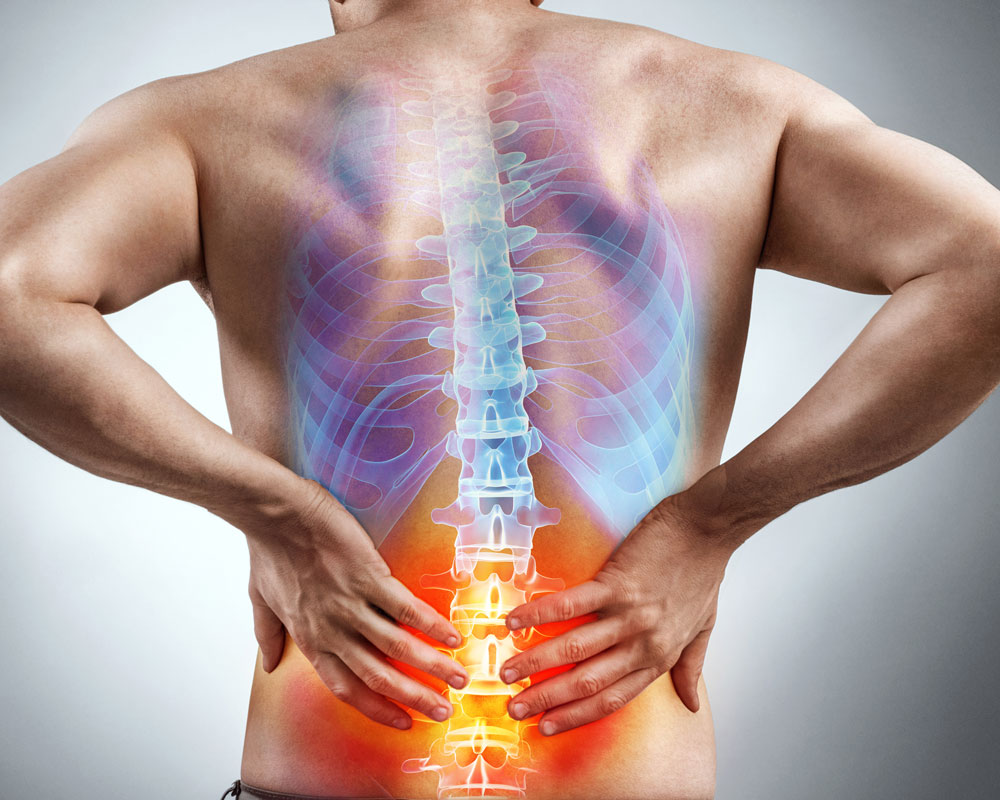
Anatomical illustration of a man with lower back pain, highlighting the lumbar spine and muscles treated by a sports and remedial massage therapist in York.

Lower Back Pain When Sitting

Many health experts have said that too much sitting is as bad for our health as smoking(1). Whether or not this is true, it’s definitely bad for your back. If your lower back pain is like an ache when you’re sitting, there’s a good chance that prolonged sitting is what caused it in the first place. This could be from driving in York, working at a desk, or slumped on the sofa working from home. Unless you have a very strong core that can keep your back in its correct position for several hours a day your muscles are going to be tight. And tight muscles eventually become sore and inflamed, even when you’re not sitting.

Woman sitting on a gym mat holding her lower back in pain, illustrating a weight training injury that requires assessment from a York sports massage and personal training specialist.

But Is It Just Your Lower Back?

If prolonged sitting is the reason you’re wanting of a sports massage for lower back pain, it will definitely help. But the area most in need might not be in your lower back, it could be the muscles of your hips and glutes. When you’re in a seated position, your hip muscles contract and become shortened. As are your gluteus medius, gluteus minimus and piriformis. This means they will tighten up, become inflamed and have reduced blood supply. And that can send pain into your lower back. The job of those muscles is to assist with hip abduction when you’re walking. When they’re tight however, your quadratus lumborum (QL) has to take over. This back muscle now has to do a job it wasn’t designed for, which further stresses something that is already a tight and weak.

Lower Back Pain When Standing

If your lower back issues are at their worst when you are standing, or straightening up after bending forward, the cause is likely to be related to your hips and glutes. As mentioned earlier, sitting for long periods can tighten up those muscles and affect your back. But so can prolonged standing. This doesn’t mean when you’re walking around or being generally active though. It means standing in pretty much the same place.

Jobs such as a barrista, factory worker or chef are good examples(2).

Why Is This Bad For Your Muscles?

Woman in athletic wear holding her lower back in pain outdoors, illustrating back injury triggers from jogging or weight training addressed by a York sports massage therapist.

This position shortens your glutes and your lower back, leading to a lack of flexibility in these muscles. Specifically, your gluteus maximus and medius and your quadratus lumborum (QL). As well as your erector spinae muscles which run alongside your spine from your lower back up to your neck. And let’s not forget your hamstrings, already tight from sitting and driving, which can tighten further, adding to the discomfort.

Bending forward becomes a particular struggle when these shortened muscles tighten further, leaving your lower back feeling stiff and achy.When you do, all of these muscles have to stretch, which they no longer find easy. And because your glutes can’t do the job they’re meant for, your hamstrings and especially your lower back have to try to take over. This can turn a chronic back ache into a jolt of sudden of pain. Even if it’s something as simple as putting on your socks in the morning.

Lower Back Pain In Bed

If you struggle through the day with back pain you can at least check your sitting and standing posture. You can also do some gentle stretches and mobilisation exercises to help prevent things getting worse while you have treatment. For some people, laying down takes all of the pressure off their back and allows them some relief. But for others, laying down, especially in bed, can make things even worse. And a good night’s sleep free from waking up every time you turn over a distant memory.

A woman waking up in bed with lower back pain and morning stiffness, a condition treated by a mobile sports and remedial massage specialist in York.

Getting Up Can Be Even Worse

You might also find sitting up to get out of bed in the morning just as difficult. And instead you have to wriggle on to one side so you can get your knees underneath you and then roll to the floor. This problem can be caused by issues which have been mentioned before. A tight quadratus lumborum (QL), erector spinae and tight glutes.

If you tend to sleep on your front or back this puts these muscles in a very short position. As a result they will stiffen up during the night. Sitting up to get out of bed then requires these muscles to stretch, which is what causes the pain. Side sleeping stretches one QL while shortening the other, creating a muscle imbalance that can contribute to pain. Especially if you have a soft mattress(3). Then when you try to turn over you are asking these muscles to work and for the shortened muscle to stretch. Not only can this action be very painful it can also cause injury in the form of a muscle strain.

Exercise And Lower Back Pain

There are many causes of lower back pain while exercising, whether this is group classes, lifting weights or jogging. And while the muscles involved are usually the same, the reason why you are having problems with them can differ.

Lower Back Pain From Deadlifts

If deadlifts are your issue, such as a sharp pain or stiffness during the exercise, there are two main reasons. The first is glute muscles that are too tight or weak to allow you to bend at the hip. The second is a tight QL and erector spinae muscles trying to do a job they’re not designed for. Both of these things will also prevent you from maintaining a correct S-shaped spine and instead it will be more C-shaped. If you are doing squats, these tight muscles will instead cause an excessive lumbar curve. And this will put a lot of pressure on your lower back.

Lower Back Pain When Jogging

If jogging around York is when you feel your lower back pain, a common reason is tight glute muscles. Specifically, your gluteus medius. The reason for this is when you run (or walk) it should be doing the job of hip abduction. But if it’s tight and weak your QL has to do the work instead, which puts excessive strain on your lower back. Running on hard surfaces like pavement or roads can further exacerbate the situation.

Lower Back Pain From Exercise Classes

The two previous examples can cause your lower back pain even if you’re concentrating on your technique. But doing them at speed in a group exercise class such as Body Pump can be just as bad if not worse. Countless reps involving bending, lifting and twisting with no time to think about that twinge in your back can all add up to a major problem. And a tight muscle anywhere can lead to compensation by others that shouldn’t really be involved in that movement.

Poor Posture And Lower Back Pain

Having a good posture means your body is in its optimum position for what it’s doing. Whether this is sitting, standing, picking something up, running, doing a specific exercise at the gym, DIY, gardening, using your phone or laptop or even sleeping. If your posture is good, you are less likely to get injured. This is because you are using your body as it was meant to be used. If it’s bad you could be using the muscles on one side more than the other. Or making them work in a way they’re not designed to.

Side view of a woman with forward head posture and rounded shoulders, illustrating postural imbalances treated by a York sports massage therapist and personal trainer.

It could be that many years ago you had an accident or injury that caused a small change to your posture you were unaware of. And over time this has developed into something far more significant in that area. Or it could have progressed to the point where the painful muscle is not the one you originally injured(4).

What Does This Have To Do With Lower Back Pain?

Well, if you have a poor posture it affects the way you sit, stand, move and lift. Instead of maintaining a healthy S-shaped curve, chronic poor posture can gradually flatten your lower back, setting the stage for potential discomfort. Especially if you slump in your chair.

Another common cause is picking things up by bending at your waist rather than your hips, which can lead to a strain or even a slipped disc. In turn this can lead to excessive lumbar curve and be the cause of problems in your upper back. The reason for this is your glute muscles have become tight and therefore weak. This means that your hamstrings and lower back have had to take over the role to compensate. Your erector spinae and QL also then become tighter and therefore shorter, which is what causes you to have a poor posture. And your poor posture is what can cause lower back pain.

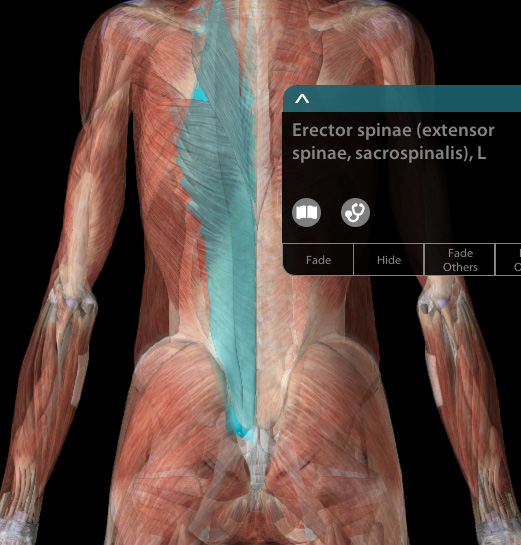
3D anatomical diagram highlighting the erector spinae muscle group, illustrating the clinical focus of remedial massage therapy in York.

Muscles Targeted In A Sports Massage For Lower Back Pain

This article has highlighted the quadratus lumborum (QL), the erector spinae and the gluteus medius muscles as major contributors to lower back pain. But where exactly are they and how will a sports massage for lower back pain help?

The Quadratus Lumborum (QL) And Erector Spinae

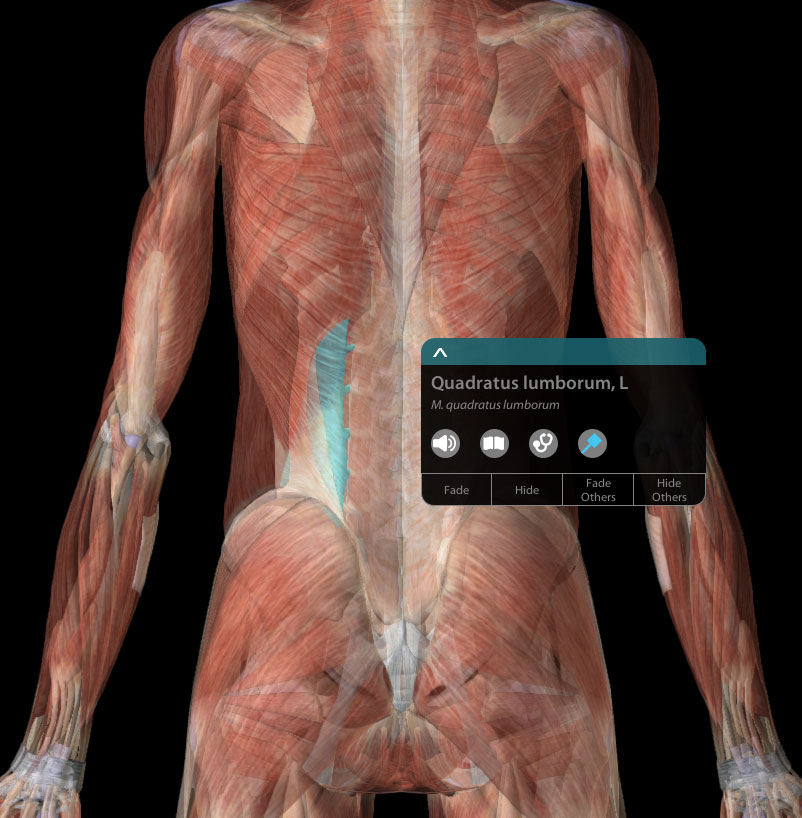
The QL is a deep muscle in your lower back. It runs from the iliac crest of your pelvis and connects to your lumbar vertebrae and lowest rib. If just one side contracts you will bend to that side at the waist. If you are already bending forward and both sides contract they will straighten you up to an upright position.

Anatomical diagram of the Quadratus Lumborum (QL) muscle, a key area for lower back pain relief through sports and remedial massage in York.

The erector spinae is a group of 3 muscles alongside your spine. They run from the iliac crest of your pelvis all the way up to your head. Like the QL, if one side contracts you will bend to that side, if both sides contract you will straighten. The difference is that the erector spinae affect the length of the back, therefore keeping it straight during a deadlift type movement.

Tightness in the erector spinae or QL will contribute to an excessive lumbar curve. And it is tightness, overuse or incorrect use of these muscles that is most often responsible for lower back pain.

The Gluteus Medius

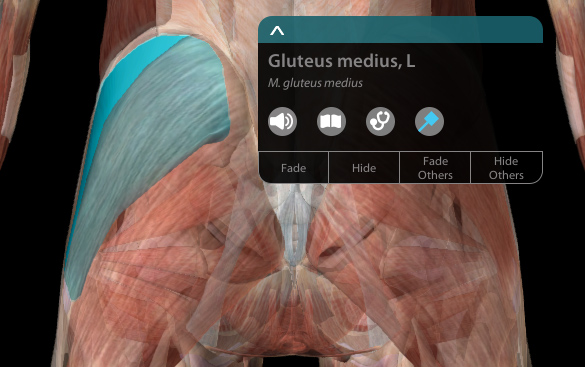
Although you are less likely to feel pain in your gluteus medius, issues here are often the initial cause of your lower back pain. It is hidden deep under your gluteus maximus (buttock) and connect your femur (thigh) to your pelvis. When contracted it abducts your hip, meaning it moves one leg away from the other. It also stabilises your pelvis when you walk or run. Problems arise when you do something that involves bending at the waist, especially with a heavy weight or when twisted. It is tightness or weakness here that contributes to incorrect use of the QL.

Anatomical 3D diagram highlighting the gluteus medius muscle, illustrating its role in pelvic stability and lower back pain relief through remedial massage in York.

How A Sports Massage Can Help Lower Back Pain

A sports massage at home for lower back pain would initially focus on reducing the discomfort in your QL and erector spinae. This means getting rid of any scar tissue that has built up and increasing blood supply to the area. As well as increasing flexibility to allow your pelvis to move more freely. This is likely just a symptom of issues with your gluteus muscles however. So in order to prevent your back issues returning the underlying cause should be dealt with by also massaging your gluteus medius.

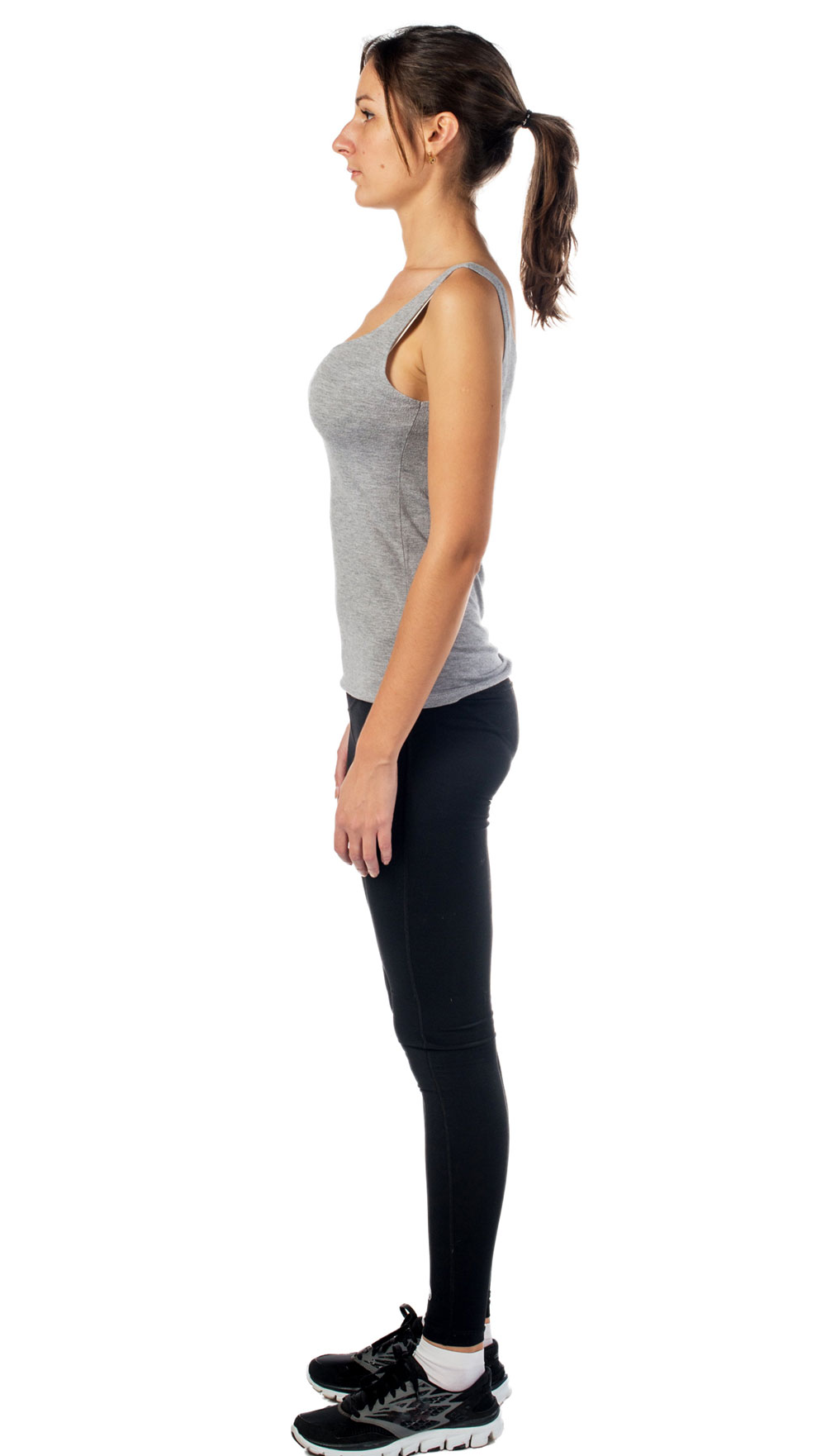
Side view of a woman with correct neutral spine alignment and good posture, following remedial massage and postural correction in York.

Frequently Asked Questions

What’s the difference between your sports massage and a standard back massage?

I don’t do standard back massages. I assess movement patterns and compensation (weak glute medius making the lower back overwork, or tight hips from sitting/driving) and treat the real causes of your pain—not just where it hurts. After curing my own 30+ years of chronic lower back issues, I learned that the pain is usually the symptom, not the cause. I combine clinical massage to release the tight areas with knowledge from my personal training background to address why those muscles became tight in the first place. This is why many clients get longer-lasting results.

How many sessions will I need for lower back pain?

It really depends on how long the issue has been there and what the underlying causes are. For recent or mild cases, many clients notice a meaningful difference after 2–3 sessions. For chronic or recurring pain that has built up over years (which is very common), I usually recommend an initial course of 4–6 sessions spaced 1–2 weeks apart. The early sessions focus on releasing tight muscles and improving mobility, while later ones strengthen weak areas and lock in better movement patterns so the pain doesn’t keep returning.

Do you treat lower back pain caused by desk work or long driving commutes?

Yes, this is one of the most common patterns I see. Prolonged sitting shortens hip flexors and glutes while weakening the deep stabilisers. I target the QL, erector spinae, glutes, and hip flexors specifically, then show you simple resets you can do during the day (e.g., standing breaks, glute activation, hip flexor stretches). Many office workers and drivers notice they can sit or drive longer without the usual end-of-day ache after a few sessions.

Can mobile sports massage really be as effective as going to a clinic?

In my experience, it often works better for lower back pain. You’re in your own space, so you’re more relaxed. There is no drive home afterwards that can tighten everything up again. I can also show you quick follow-up techniques using things you already have at home (cushions, walls, chairs). Plus a mobile massage in your home is a lot more personal and one-to-one than the conveyor belt feeling you get from many clinics. The knowledge and experience of the therapist giving the massage is far more important than the location.

Is sports massage painful when treating lower back issues?

I always work within your comfort zone and encourage your feedback. Some areas (especially deep glute work, QL, or scar tissue) can feel intense at first because those muscles have been locked up for a long time. Most clients describe it as “good pain” or therapeutic pressure that eases as the tissue releases. I never force anything—if it’s too much, we adjust immediately. The goal is relief and improved muscle function, not to see how high your pain threshold is.

Will sports massage help with sciatica or disc-related pain?

It can help a lot with the muscular side of sciatica—tight piriformis, glute medius, or QL muscles often compress or irritate the nerve. I focus on releasing those areas and improving pelvic alignment. However, if there’s a significant disc bulge or nerve root compression, I always advise working alongside your GP, physio, or specialist. Massage is complementary, not a replacement for medical diagnosis.

How soon after a session can I return to exercise or heavy lifting?

For most people, light movement and walking the same day is fine and even helpful. For heavy lifting or intense training, I recommend listening to your body. Many clients feel noticeably better mobility within 24–48 hours as inflammation drops and range improves. If the session was releasing a chronic issue I suggest taking it easy at first to let the body adapt. A muscle that might not have been active for months or even years doesn’t suddenly want to be part of your heavy deadlift or squat routine.

What should I do between sessions to make the improvements last?

The biggest difference comes from the simple things you do consistently. I can give you targeted stretches and mobility drills that are specific to your problem areas — for example, glute medius activation work, QL stretches, hip flexor release, or gentle thoracic rotations. It depends on what we find during the session. The key is quality over quantity: 10–15 minutes a day done properly is far more effective than 30 minutes done occasionally. I’ll show you exactly what to do and how to do it so you’re not guessing.

Is there anything I should avoid before or after a session?

Avoid eating a heavy meal or drinking alcohol before we meet. I also recommend avoiding painkillers immediately before the session if possible as these can mask your natural pain response. This makes it harder for us to gauge the correct pressure and ensure the treatment is both safe and effective.
Following the session, I will provide you with a set of specific instructions tailored entirely to your physical presentation and the issues we addressed. This isn’t “one size fits all” advice. Depending on whether we focused on acute nerve irritation or chronic postural resetting, I will direct you on exactly how to manage your activity levels, hydration, and movement for the first 24 hours to ensure the best results.

How To Book

If you would like to book a sports massage in York please contact me on 07713 250352 or email david@massageinyork.co.uk. Includes sports massage, deep tissue massage and Swedish massage. For more information on booking click here

Mobile Massage In York – FAQ’s

Massage in York offers mobile massage in York and the surrounding area. I am an experienced, fully qualified massage therapist and if you’re in need of a massage, I will come to you. If you want information on how to book a mobile massage click here. Or keep reading for answers to the most frequently asked questions. 

Why Have A Mobile Massage In York?

If a hectic life is giving you stress or you’re struggling to get about due to back pain or an injury, the last thing you want to do is fight your way through York’s endless traffic or walk any further than absolutely necessary to get treatment. A mobile massage from Massage In York is the answer. Available from 9am to 9pm, 7 days a week, you can book a massage to fit in with your schedule.

What Does A Mobile Massage Involve?

Besides taking place in your home, a mobile massage is like any other massage and can involve different techniques to suit your needs. This includes a Swedish massage for relaxation, insomnia treatment, a boost to your immune system and numerous other benefits. Click to find out more about Swedish Massage.

Deep Tissue Massage and Sports Massage are for treating pain or injuries. Whether this is back or neck pain from prolonged computer work or a strain from sport or working out. Or rehabilitation to help improve flexibility and mobility after recovery an injury or operation. Click to find out more about Deep Tissue Massage or Sports Massage.

If you aren’t sure what type of massage your need that’s not a problem. Whether you’re wanting general relaxation or something more specific such as an area of tension or injury, we can decide together which would be best.

Does A Massage Hurt?

Despite what many people believe, a massage does not have to hurt to be effective(1). For optimal results, when treating injuries or addressing knots, a deep tissue massage will prioritize muscle relaxation. If the level of pressure is causing you pain or too much discomfort you are unlikely to be relaxed. In the unlikely event this is the case during your massage don’t be afraid (or too polite) to say so.

Do You Provide Oil, Towels etc?

Just like you wouldn’t expect to take your own towels to a salon, a mobile massage from Massage In York is no different. I provide everything that is required. However, if you wish to use your own towels, as some people prefer, you are welcome to do so. Also if you have allergies you might want to provide an oil that you know is suitable.

Do I Need To Complete A Health Questionnaire?

Completing a brief consultation form is necessary before the massage begins but this does not affect your massage time. This information helps to ensure your safety and well-being by identifying any potential risks before your massage. It also needs to be done for insurance purposes and only takes a couple of minutes. Alternatively I can email you the consultation form in advance if you’d like to complete it at your convenience.

Is a Mobile Massage As Good As Massage In A Salon?

The qualifications and training required to offer mobile massage are exactly the same as a massage offered anywhere else. I have a diploma in massage therapy and originally began massaging in 2005. I also qualified as an advanced personal trainer in 2008 and these qualifications cover all aspects of health and fitness. They include client lifestyle and fitness assessment, nutrition, weight management, and postural analysis. This helps me diagnose the causes of many problems and offer advice on how to prevent their return after massage.

A mobile massage is also more private and more convenient than in a salon. And when they’re finished you don’t have the hassle of getting home, you’re already there!

Click to read feedback from previous clients

Do You Also Offer Personal Training?

Yes, I offer personal training alongside sports massage. My focus is on strength, mobility and injury prevention, ensuring you get the best results from your training while staying pain free. Whether you need rehab exercises or performance coaching, I can tailor sessions to your needs. Read more about this here

Book A Mobile Massage

If you’re looking for a massage therapist in york and would like to book please contact me on 07713 250352 or email david@massageinyork.co.uk. Includes sports massage, deep tissue massage and Swedish massage. For more information on booking click here

Massage Therapist In York

As a mobile sports and therapeutic massage therapist in York, I provide professional, personalised massage treatments directly at your home.

With over 20 years of hands-on experience, qualifications in sports massage (2005) and Advanced Personal Training (2008), and having overcome my own 30+ years of chronic pain following a serious car accident, I bring a deep understanding of the body to every session.

I don’t offer generic massages. Instead, I focus on truly understanding your lifestyle, activities, posture, and specific problems so I can deliver targeted, effective treatment that addresses the root causes of tension, pain, or tightness, rather than just the symptoms.

Whether you’re dealing with sports injuries, desk-related posture issues, lower back or neck pain, post-surgery recovery, or simply the build-up of daily stress, my goal is to help you move and feel better.

In this article, I explain what it’s like to have a mobile sports massage with me in York, how I work differently, and why so many local clients choose me as their regular therapist.

Why You Need Me As Your Massage Therapist

Some issues are quite straightforward. For example, tennis or golfer’s elbow is pain on the outside or inside of the forearm usually the result of repetitive strain. This causes tension and inflammation in the muscles, treated by rest and massage to the affected area.

But things can get a lot more complicated.

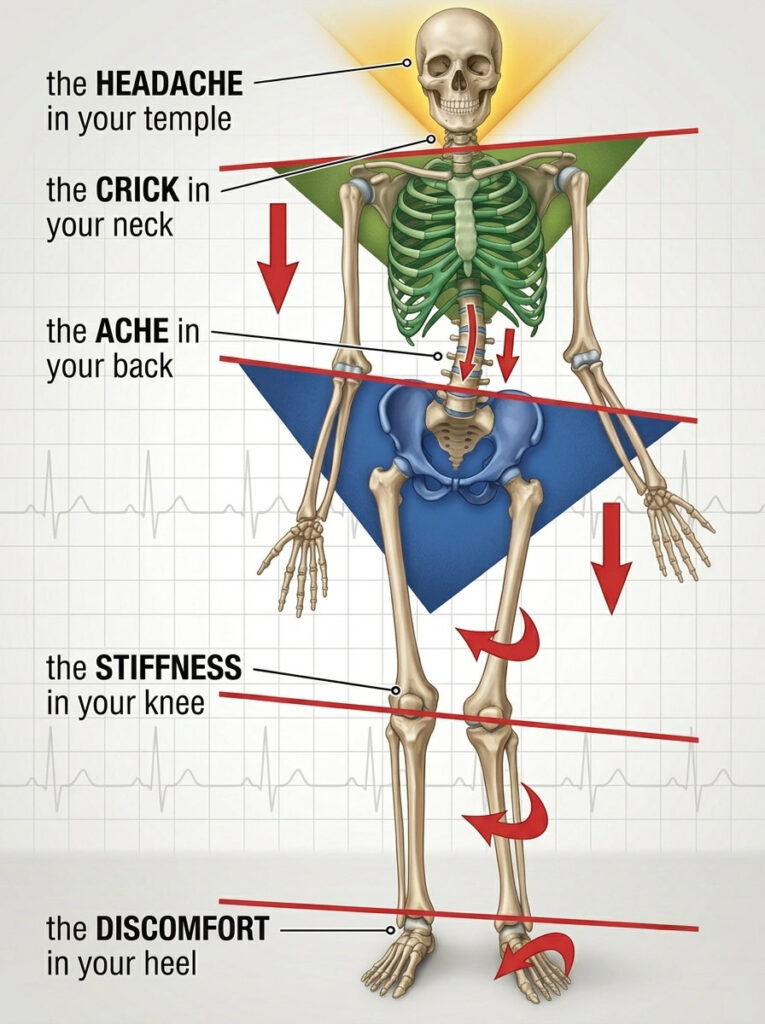
If you have a pain in your foot when you run, or even just when you walk, you might have plantar fasciitis. You could try stretching or rolling your foot over a tennis ball, but this is just treating the symptom. The cause of the pain is more likely to be tight muscles in your calves. But why are they tight?

As a massage therapist in York I look for the source of the issue. In the case of foot pain (plantar fasciitis) I have seen this be caused by tight calves, which in turn was caused by an incorrect walking action. This was the result of tight hip muscles (gluteus medius(1)) which also caused lower back pain. As well as neck and shoulder pain!

Alt Text: An anatomical diagram of the human skeleton illustrating how pelvic misalignment and kinetic chain compensation cause a chain reaction of pain, from heel discomfort and knee stiffness up to lower back aches, neck cricks, and headaches.

How I Work Differently As A Massage Therapist In York

I’ve been a professional massage therapist for over 10 years, but I don’t work like most therapists. After living with chronic pain for over 30 years following a car accident in 1989, and then qualifying in sports massage in 2005 and Advanced Personal Training in 2008, I developed a very different approach. I learned through my own painful experience that a standard “rub where it hurts” massage often gives only short-term relief. Real, lasting results come from understanding why the problem exists in the first place.

My Approach

I always start every session with a proper assessment. I don’t just ask you where it hurts. I look at how you stand, walk, sit, and move. I check posture, pelvic alignment, muscle imbalances, and compensation patterns. This allows me to identify the root causes rather than just treating the symptoms.

My treatments are never one-size-fits-all. Whether you’re a desk worker with neck and shoulder tension, a horse rider with lower back and hip issues, an athlete recovering from training, or someone dealing with post-surgery restrictions, I build the session around your specific lifestyle, activities, and goals.I combine several layers in every treatment:

  • Targeted sports and remedial massage to release deep tension and scar tissue
  • Soft tissue techniques to improve muscle length, blood flow, and nerve glide
  • My personal training knowledge to include corrective exercises and activation work so the improvements last longer
  • Practical advice on posture, daily habits, and movement patterns that I notice during the session

Because I’m a mobile therapist, I come to your home in York. This isn’t just about convenience. Treating you in your own environment gives me a much better understanding of your daily reality. This can include your sofa, office chair, bed, or car seat which all give clues about why certain areas keep tightening up. It also means you can fully relax during and after the session without having to drive, which significantly improves results.

I won’t give you the same generic massage every time. Some sessions are more clinical and remedial. Others are deeper sports-style work. Some clients need a careful balance of release work and mobility. I adapt every single session based on how your body presents on the day.

This combination of thorough assessment, personalised treatment, hands-on expertise, and corrective guidance is why many of my clients in York have been seeing me regularly for years. They don’t just feel better for a few days — they experience real, measurable improvements in mobility, pain levels, posture, and performance.

Frequently Asked Questions

What is the difference between a sports massage and a regular relaxation massage?

Sports and rehabilitation massage is significantly more targeted and clinical than a standard relaxation massage. While I still provide excellent relaxation, the main focus is on identifying and correcting specific muscle imbalances, tightness, scar tissue, and compensation patterns that cause pain or limit movement. I combine deep tissue and remedial techniques with movement assessment and corrective exercises (drawing from my Advanced Personal Training background). This approach aims for longer-lasting results and improved function rather than just short-term relief.

How far do you travel for mobile sports massage in York?

I cover the majority of York and surrounding villages. This includes York city centre, Acomb, Holgate, Fulford, Bishopthorpe, Copmanthorpe, Poppleton, Haxby, Strensall, Dunnington, and many more areas. If you’re unsure whether I cover your specific location, feel free to contact me and I’ll confirm availability straight away. Most areas within a reasonable distance from central York are covered without additional travel fees.

What should I wear for a sports massage session?

I recommend wearing comfortable clothing that allows easy access and movement, such as shorts and a t-shirt, or sports bra and leggings. During the treatment you will be properly draped with towels for privacy and warmth at all times. Only the area being treated is exposed. Your comfort and modesty are always my top priority throughout the session.

Will the sports massage be painful?

I always work within your comfort level and regularly check in with you. Some areas that are particularly tight or have built-up tension may feel intense at first (often described as nice pain), but it should never be sharp or unbearable pain. If any area feels too much, I adjust the pressure immediately. The goal is effective release and relief, not to push through pain.

How often should I have a sports massage?

It depends on your current condition, activity level, and goals. Many of my clients in York start with weekly sessions when they have significant pain, tightness, or are recovering from injury or intense training. This allows us to make consistent progress, properly release deep tension, and correct movement patterns. Once the main issue has improved and they are feeling much better, most clients then move to monthly maintenance sessions to stay on top of tension and prevent problems from building up again.

Others prefer to have a block of weekly or fortnightly sessions when they feel they need it (for example during heavy training periods, after competition, or when desk work has left them very tight), then pause and rebook another block when they feel the need again.

During your first session I will assess your body and give you honest, personalised advice on the best frequency for your specific situation. Many clients find that a combination of weekly sessions when needed, followed by regular monthly maintenance, works best for them.

Is mobile sports massage at home as effective as clinic treatment?

For most cases it is equally effective and for many clients it actually works better. The quality of the treatment depends primarily on the therapist’s skill and experience, not the location. Being treated in your own home often allows deeper relaxation because you’re in a familiar environment. There’s also no drive home afterwards, which prevents the muscles from tightening up again straight after treatment. Many clients report feeling noticeably better the following day because they could rest properly.

Do I need to provide any equipment or towels?

No, you don’t need to provide anything. I bring a professional portable massage table, fresh towels, oil, and all necessary equipment. Some clients prefer to use their own towels for personal preference and that is completely fine.

Can you help with specific conditions like back pain, neck pain, sciatica or sports injuries?

Yes. I have extensive experience treating common issues including chronic lower back pain, neck and shoulder tension, sciatica, hip and knee problems, sports injuries, and post-surgery recovery. As well as general muscle tightness from desk work or training. My approach combines hands-on soft tissue work with postural assessment and corrective exercises to address both the symptoms and the underlying causes.

Book A Mobile Massage

If you’re looking for a mobile massage in york and would like to book please contact me on 07713 250352 or email david@massageinyork.co.uk. Includes sports massage, deep tissue massage and Swedish massage. For more information on booking click here