Tight Iliopsoas And Back Pain: The Muscle Therapists Miss

Back pain is a daily struggle for many, yet its true cause often stays hidden. While most people blame their spine or posture, a tight iliopsoas could be the real culprit of your issues. The iliopsoas is a deep muscle in your hips that can trigger pain in your lower back and even your mid back, yet therapists rarely address it.

As a massage therapist dedicated to lasting solutions, I’ll explain how a tight iliopsoas causes back pain, why it’s overlooked, what tightens it, and how my targeted massage therapy can fix it for good.

What Is The Iliopsoas

The iliopsoas, often just called the psoas, is a powerful muscle group that links your lower spine to your pelvis and femur (thigh) bone. It’s made up of two parts: the iliacus and the psoas major. This muscle helps you bend at the hip, like when you raise your knee, and keeps your spine stable for good posture. Because it’s buried deep in your abdomen, it’s hard to feel or assess, which is why a tight iliopsoas and back pain often go unnoticed.

When the psoas tightens, it pulls on your spine and pelvis, throwing your body out of balance. This tension can cause pain that feels like a back issue but actually starts in your hips. Recognising this muscle’s role is the first step to tackling a tight iliopsoas and back pain effectively.
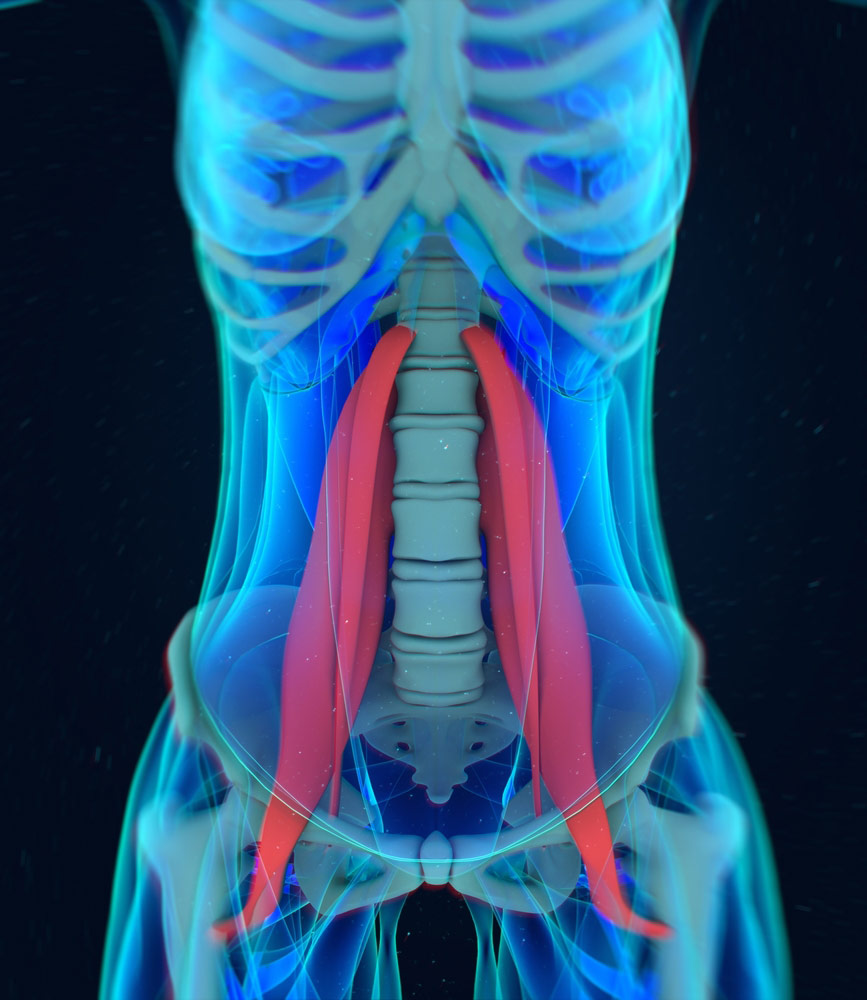
Anatomical diagram of the iliopsoas muscle connecting the lower spine to the hips, a common cause of lower back pain.

A tight psoas creates back pain through several pathways, affecting both your lower and mid back. Here’s how it works:

Lower Back Compression

The psoas attaches to the lumbar spine (L1-L5)(1). When tight, it pulls these vertebrae forward, exaggerating the natural curve of your lower back. This condition is called lordosis and squeezes spinal joints and discs, leading to aching or sharp pain in the lower back. Tension here is a major driver of tight iliopsoas and back pain.

Mid Back Pain From Thoracic Pull

Less known but equally critical, the psoas major connects to the lower thoracic spine (T12). A tight iliopsoas tugs on these mid back vertebrae, causing tension or stiffness that feels like a knot between your shoulder blades. This pain is often mistaken for a thoracic muscle strain or joint issue, but the psoas is the hidden source. Its deep location means therapists rarely suspect it, leaving tight iliopsoas and back pain in the mid back untreated.

Pelvic Misalignment

A tight psoas tilts your pelvis forward, disrupting your body’s alignment. This forces your lower and mid back muscles to work harder to keep you upright, leading to fatigue, spasms and pain. The misaligned pelvis also stresses the sacroiliac joints, adding to tight iliopsoas and back pain.

Compensatory Muscle Strain

When the psoas is tight, other muscles such as the quadratus lumborum, erector spinae, or mid back muscles (like the rhomboids), overcompensate to stabilise your spine. These overworked muscles become sore, spreading pain across your lower and mid back and perpetuating tight iliopsoas and back pain.

Nerve Irritation

The psoas runs close to the lumbar plexus, a bundle of nerves in your lower back. Tightness can press on these nerves, causing radiating pain, tingling, or numbness that may reach the mid back or legs. This mimics sciatica or thoracic nerve issues, leading to misdiagnosis and ineffective treatments.

Why the Iliopsoas Is Overlooked In Treatment

Despite its role in tight iliopsoas and back pain, the psoas is often ignored. Here’s why:

Deep Location

The psoas is buried deep in your abdomen, making it hard to assess without specialised skills. Therapists typically focus on surface muscles like those in the back, missing the psoas’s influence on lower and mid back pain.

Symptom-Focused Care

When you point to your lower or mid back as the pain source, therapists often treat only that area. This approach ignores the psoas, even though it’s driving a tight iliopsoas and back pain from the front of your body.

Lack Of Training

Many healthcare providers aren’t well-versed in the psoas’s biomechanics, especially its connection to the thoracic spine. Without this knowledge, they attribute mid-back pain to posture or spinal issues, overlooking tight iliopsoas.

Misdiagnosis

Psoas-related pain mimics other conditions, like herniated discs, sciatica, or thoracic joint problems. This leads to treatments, like medication or imaging, that don’t address the muscle. This oversight leaves people stuck in a cycle of temporary relief and recurring back pain.

What Causes A Tight Iliopsoas?

Several everyday factors can tighten the psoas, setting the stage for back pain:

Prolonged Sitting

Sitting for hours, whether at a desk, in a car, or on a couch, keeps the psoas in a shortened position. Over time, this leads to chronic tightness and tight and back pain.

Poor Posture

Slouching or leaning forward while sitting or standing strains the psoas. This is common among office workers or those who have a lot of phone use as it reinforces tightness.

Overuse in Activities

Athletes, like runners or cyclists, repeatedly flex their hips, overworking the psoas. Imbalanced workouts that neglect stretching or opposing muscles (like hamstrings) worsen tightness, contributing to tight iliopsoas and back pain.

Stress And Tension

The psoas is sensitive to stress, often called the “fight or flight” muscle. Chronic stress or anxiety keeps it tense, amplifying back pain.

Injuries And Compensation

Past injuries to the hip, pelvis or back can make the psoas tighten as it compensates. For example, a sprained ankle might change how you walk, overloading the psoas and causing tight iliopsoas and back pain.

Signs Of A Tight Iliopsoas

How do you know if the psoas is behind your back pain? Watch for these signs:

  • Lower or mid back pain that worsens after sitting or standing for long periods.
  • Difficulty standing straight after sitting as if you’re stuck in a slight hunch.
  • Tightness or pulling in your hips or groin.
  • Pain that spreads to your buttocks, thighs, or mid back.
  • Discomfort during activities like running, climbing stairs, or twisting.

If these sound familiar, you may be dealing with tight iliopsoas and back pain.

How My Massages Fix Tight Iliopsoas

Massage therapy is ideal for treating tight iliopsoas and back pain. As a massage therapist, I use targeted techniques to address this muscle directly, helping you move better and hurt less. Here’s how I do it:

Thorough Assessment

  • Posture Check: Is your pelvis tilted forward? Is your spine overly curved? A postural analysis will reveal this.
  • Movement Tests: Do you struggle to extend your hip or twist your torso?
  • Muscle Tests: Is your psoas tight or overactive? Are other muscles compensating?
    This pinpoints how the psoas is driving pain into your lower or mid back.

Myofascial Release

I begin with gentle myofascial release to loosen the tissues around your psoas, like the abdominal muscles and hip flexors. This prepares the area for deeper work, reducing tension that contributes your back pain.

Psoas Release Technique

The psoas requires careful, precise work because of its depth. I apply slow, controlled pressure into your abdomen, just below your navel and slightly to the side. This targets the psoas without aggravating it. Clients often feel a deep stretch or release, followed by less back pain, as this method directly addresses tight iliopsoas and back pain at its source.

Deep Tissue Massage

I then incorporate deep tissue massage to lengthen your psoas and surrounding hip flexors. This isn’t about brute force. Gentle, sustained pressure works best to avoid irritating the muscle. This approach eases tension in both your lower and mid back.

Stretching And Guidance

Where necessary I will guide you through assisted stretches, like a modified lunge, to open the psoas. I also teach simple at-home stretches to keep your psoas loose and support massage results.

Holistic Support

Massage alone often isn’t enough and I offer advice on lifestyle changes:

  • Ergonomics: Adjust your chair or desk to avoid slouching(2)
  • Movement Breaks: Stand and stretch every hour to prevent psoas tightening.
  • Stress Relief: Try deep breathing to relax the psoas.

Why My Massages Work For Your Tight Iliopsoas

Massage targets the psoas directly, unlike generic back rubs that only soothe symptoms. By releasing this deep muscle, my massage restores spinal alignment, eases pelvic tilt, and calms irritated nerves. It’s not a quick fix and can require consistent sessions and client effort, but the results are lasting. Clients often report standing taller, moving easier, and feeling less pain in both their lower and mid back.

Frequently Asked Questions

Can a tight iliopsoas really cause back pain?

Yes, it is one of the most common hidden causes of persistent lower back and mid-back pain. The iliopsoas connects your lumbar spine to your thigh bone. When it becomes chronically tight, it pulls the pelvis forward into an anterior tilt. This increases stress on the lower back muscles and spine, often mimicking spinal problems. Many clients come to me believing they have a disc or spinal issue when a large part of their pain is actually coming from this deep hip muscle.

Why do so many therapists miss tight iliopsoas issues?

The iliopsoas is a very deep muscle lying underneath several layers of tissue, making it difficult to locate and treat properly. Most standard massages only work on the area where the pain is felt (usually the lower or upper back) rather than investigating the root cause. I combine sports massage with my personal training background, and my own personal experience of an ilopsoas injury.

So how did you become so knowledgeable about the iliopsoas?

I have a deep understanding of the iliopsoas because of professional expertise and personal experience.
Years ago, long before I had sorted out my own body, I once strained my iliopsoas simply by sitting up in bed. The pain was so severe I was in agony and was virtually immobilised and unable to sleep for nearly a week. That experience gave me powerful first-hand insight into how debilitating this muscle can be if it isn’t healthy.
Since then I’ve learned how it functions, how it compensates, and how to treat it effectively, which allows me to identify and treat iliopsoas-related problems more effectively than most therapists.

Is hard pressure the best way to release a tight psoas?

No, but this is actually a very common mistake. Aggressive pressure on the iliopsoas can cause irritation and rebound tightness. I use slow, gentle, and sustained pressure in very specific ways. This careful approach is far more effective and comfortable for safely releasing this deep, sensitive muscle.

Will stretching fix my tight iliopsoas?

A chronically tight iliopsoas is usually caused by prolonged sitting, weak glutes, and poor movement patterns. The best results come from a combination of proper soft tissue release, glute activation exercises, and changes to daily habits. Trying to stretch a tight muscle can cause it to tighten further, or even cause an injury.

How many sessions will I need for iliopsoas-related back pain?

It depends on how long the issue has been present. Some clients with more recent tightness feel significant improvement after 2–3 sessions. For long-standing problems, I usually recommend an initial course of 4–6 sessions. This allows us to properly release the deep tension and retrain movement patterns. Many clients then move to maintenance sessions every 4 weeks, but every body is different.

Can a mobile massage really help with deep hip flexor issues?

Yes, often better than a clinic. After releasing the iliopsoas you don’t want to sit in a car and drive home, as this can quickly re-tighten the muscle. With a mobile session at your home in York, you can stay relaxed and rest properly afterwards, which helps the results last much longer.

Is it too late to fix a tight iliopsoas if I’ve had the pain for years?

It’s never too late. Even after many years of tightness and compensation patterns, the body can respond very well when we address both the muscle restrictions and the underlying movement imbalances. I’ve helped many clients who had been suffering with this for 5–10+ years, including myself!

Book A Massage For Tight Iliopsoas And Back Pain

If you would like to book a mobile massage please contact me on 07713 250352 or email david@massageinyork.co.uk. For more information on booking click here

Do Massages Work? Only If They’re Done The Right Way

Do massages actually work?

It’s a question I get asked all the time. Many people in York have had massages in the past and felt better for a day or two, only for the pain or tightness to quickly come back again. This leaves them wondering if massage is really effective or just a temporary luxury.

After more than 20 years as a mobile sports massage therapist, and having overcome my own 30+ years of chronic pain after a serious car accident, my answer is: Yes! Massages absolutely do work, but only when they’re done properly.

Most massages fail because they only treat the symptoms (the tight or painful area) rather than the underlying causes. These can include muscle imbalances, compensation patterns, poor posture, and movement issues that build up over time.

In this article, I explain why many massages only give short-term relief and how my personalised, systemic approach helps clients get significantly better and longer-lasting results.

The Problem With Many Massages

When you visit a massage therapist with a specific complaint such as pain on the left side of your lower back, it’s not uncommon for them to concentrate solely on that area. They might knead and press the sore spot diligently. They might even spend a few minutes on the right side too. And while this could ease the pain temporarily, it’s often a short-lived fix. Massages only really work if they address more than just the surface-level ache.

Why Therapists Focus On Painful Areas

Several things drive this narrow focus. Time is a major factor. A typical one-hour session leaves little room to explore beyond the immediate problem. Many therapists are also trained to zero in on the pain point, assuming that’s where the issue originates. Clients also play a role, often insisting the therapist fix the area that hurts, unaware that other parts of their body might be contributing to the problem. For instance, if the left side of your lower back hurts the right side is almost certainly in need of treatment due to overcompensating. Or there could be tension elsewhere that’s pulling your body out of alignment. Ignoring these connections means the relief is brief and the pain returns. To understand why, we need to see pain as a signal of a deeper, systemic issue.

Woman grimacing in pain while holding her lower back outdoors, highlighting the need for sports massage and pelvic alignment correction in York.

Pain As A Symptom Of A Bigger Problem

Your body isn’t a collection of separate parts, everything is linked. Muscles, fascia, tendons and ligaments form chains that work together. When one link is out of balance, the effects ripple elsewhere. Pain alerts you to a problem but very often that problem isn’t the source, it’s a symptom, not the root cause.

Consider headaches. This is a common complaint that sends people to massage therapists. You might assume a tight neck is to blame and a neck massage feels good for a while. But why is your neck tight? It could stem from overworked trapezius muscles, which run from your neck across your shoulders and down your upper back. Look deeper and you might find the trapezius is compensating for tightness in your lower back, and that lower back tension could trace back to improper lifting habits caused by tight glutes. Your glutes anchor your posterior chain—a muscle group including the hamstrings, lower back and calves. If they get tight they can pull the entire chain out of alignment, leading to hamstring stiffness, hip pain, lower back issues and general spinal misalignment(1). And eventually that headache.

Beyond Headaches

This interconnectedness isn’t unique to headaches. Shoulder pain, for instance, might not originate in the shoulder at all. Tight chest muscles can pull your shoulders forward, causing strain. Focusing solely on the shoulder misses the chest’s role. Similarly, knee pain could stem from tight hips or calves. Pain is a symptom, and treating it in isolation rarely solves the puzzle.

My Systemic Approach to Massage

So why am I so confident that my massages work? The secret lies in my systemic approach, treating the body as a unified whole rather than a series of disconnected parts. I don’t just chase the pain, I investigate its source and its ripple effects.

Picture a yourself with left-side lower back pain. I don’t stop at that area. I assess your hips, glutes, hamstrings and calves, looking for imbalances or tension patterns. I ask about your daily habits, how you sit, stand, or lift, to pinpoint what’s throwing your body out of alignment.

My treatment plans go beyond the pain point. It might involve loosening tight glutes to ease the posterior chain, balancing the hips to stabilise the spine or stretching hamstrings to restore proper pelvic alignment. The goal? To fix the system, not just the symptom.

This approach often combines various techniques. Myofascial release targets the fascia, the connective tissue encasing your muscles, to free up restrictions. Deep tissue massage digs into deeper muscle layers to break up knots. Trigger point therapy tackles specific sore spots that refer pain elsewhere. Even Swedish massage, with its focus on relaxation and circulation, can support the process when paired with these methods.

Why Do My Systemic Massages Work

My systemic approach transforms massage therapy from a quick, temporary fix to a lasting solution. Here’s why it stands out:

Long-Term Relief

By tackling the root cause such as tight glutes driving a chain reaction to your neck, my treatment can get rid of pain for months, years or even permanently. Compare that to the weeks or even just days relief from a symptom-focused session. Clients with chronic headaches, for example, might find they no longer need regular appointments after their posterior chain is balanced.

Prevention Over Cure

Fixing imbalances does more than relieve current pain, it prevents future issues. Proper alignment reduces strain on joints and muscles, lowering the risk of new injuries. This is important for amatuer athletes or anyone doing repetitive tasks like office workers hunched over desks or lifting heavy loads.

Holistic Benefits

When your body works as it should, you feel it everywhere. Energy levels rise, sleep improves and stress melts away. Clients often leave me feeling lighter, not just in their painful areas but overall. It’s wellness that goes beyond the massage itselt.

How My Massages Are Different

Having been a massage therapist with Massage In York for over 10 years I know that most treatments only provide temporary relief because they’re done incorrectly. They treat the symptoms rather than the real problem.

I don’t work like that.

Instead of just massaging the painful or tight area, I take a systemic approach. This means I look at the whole body to understand why you have that tightness or pain in the first place. In almost every case, the real issue is a combination of muscle imbalances, compensation patterns, poor posture, or old injuries that have forced other muscles to overwork.

Happy female runner in York, England, during a pain-free run on an outdoor path, showcasing the long-term benefits of systemic mobile sports massage and movement correction.

My Approach

When you book a session with me, I don’t just ask you where it hurts and start the massage. I begin with a proper assessment looking at how you stand, walk, sit, and move. I check posture, pelvic alignment, mobility, and how different muscle groups are working together (or against each other) .Only after understanding the full picture do I begin the hands-on work. I combine targeted sports and therapeutic massage to release the tight, overworked muscles with practical corrective exercises (drawing from my Advanced Personal Training background) to strengthen the weak areas that have been underperforming.

This means that where a standard massage usually relaxes the painful area for a few days, my approach aims to fix the underlying imbalances so the relief lasts weeks, months or even longer, not just days.

Because I’m a mobile therapist, I come to your home. This gives me extra insight. I can see your sofa, office chair, bed, or car seat and understand how your daily environment is contributing to the problem. It also means you can fully relax after the session without having to drive through York’s traffic, which helps the benefits last longer.

This combination of thorough assessment, targeted massage, movement correction, and practical advice is why many of my clients stay with me long-term. They don’t just feel better for a short while, they experience real, lasting improvements in how their body feels and functions.

Frequently Asked Questions

Do massages actually work or are they just a temporary fix?

Massages do work, but only when they’re done properly. In my experience, most standard massages only provide short-term relief because they focus solely on the painful or tight spot. The pain usually returns within days or weeks because the underlying causes such as muscle imbalances, compensation patterns, poor posture, and movement issues are never addressed. My approach is different. I treat the body as a connected system, releasing tight areas while correcting the root problems. This is why many of my clients in York experience significantly longer-lasting results, sometimes months or even years of relief instead of just a few days.

Why does my pain keep coming back after I’ve had massages in the past?

This is one of the most common things I hear. The pain returns because previous massages only treated the symptoms, not the cause. For example, if you have lower back pain, a therapist might just massage your lower back. But very often the real problem is tight hip flexors, weak glutes, or poor thoracic mobility pulling everything out of alignment. Until those root issues are fixed, the pain will keep returning. My systemic approach looks at the whole body to break this cycle, which is why clients often notice the difference after just a few sessions with me.

What makes your massages different from other therapists in York?

I don’t just massage where it hurts. I start every session with a proper assessment of posture, movement, and daily habits. I then combine targeted sports and therapeutic massage to release deep tension with practical corrective exercises (from my Advanced Personal Training background) to strengthen weak areas. Because I’m mobile and come to your home, I can also see how your sofa, office chair, or car affects your body. This full-body, root-cause method is what sets my treatments apart and gives clients results that can last for years.

How long do the benefits of a good massage actually last?

With a standard massage, the benefits often fade within a few days. With my systemic approach, many clients feel noticeably better for several weeks or longer after a session. When we do a short course of treatments (usually 4–6 sessions), the improvements can last for many months because we’re fixing the underlying imbalances rather than just masking the pain. Regular maintenance sessions then help keep things stable.

Can massage help with chronic long-term pain?

Yes, it can help a great deal. I regularly treat clients who have had pain for many years. Even long-standing issues often respond well once we properly release accumulated tension and correct the compensation patterns that have developed. Having overcome my own 30+ years of chronic back pain, I understand how discouraging it can be. Many clients who had almost given up hope tell me they feel significantly better after working with me.

Is it worth getting a massage if the pain isn’t that bad yet?

Absolutely. Early intervention is one of the best things you can do. Small areas of tightness and imbalance are much easier to correct before they turn into chronic problems. Many of my clients in York come for maintenance sessions even when the pain is mild, because they’ve learned that staying on top of tension prevents bigger issues down the line.

How often should I have a massage to keep pain away?

This depends on your lifestyle and how active you are. Many of my regular clients book every 4 weeks for maintenance. If you have a physically demanding job, train hard, or currently have pain, weekly sessions for a short period usually work best. During your first session I’ll assess your body and give you honest, personalised advice on the ideal frequency for you.

Are mobile massages as effective as clinic treatments?

In most cases, I believe they are more effective. You’re in your own familiar environment, which allows much deeper relaxation. There’s no drive home afterwards that can quickly re-tighten the muscles I just worked on. Many clients tell me they feel looser and more mobile the next morning because they could rest properly straight after treatment.

Booking A Massage In York Today

If you would like to book a mobile massage or personal training please contact me on 07713 250352 or email david@massageinyork.co.uk. For more information on booking click here

Sports Massage At Home In York

The fast-paced world in which we live today means maintaining good physical health is essential. Whether you’re a professional athlete, a fitness enthusiast or someone managing everyday physical stress, a tailored sports massage can significantly enhance your well-being. With my mobile sports massage in York, you can experience the benefits of a professional treatment at home.

Why Have A Sports Massage At Home?

woman having a sports massage at home
| Reduce stress even more by having a sports massage at home

Life can be hectic and finding time to visit a massage clinic might feel impossible. That’s where I, as a mobile massage therapist, can help. Having a sports massage at home you eliminate the hassle of travel, reduce post-massage stress and can enjoy complete relaxation in familiar surroundings.

Convenience

Having a sports massage at home saves you valuable time. No need to worry about York’s traffic or scheduling conflicts. I bring all the necessary equipment to ensure a professional and effective session.

Comfort

Your home is your sanctuary. So receiving a massage in a familiar environment allows you to relax more deeply, enhancing the benefits of the therapy. Plus, there’s no rush to get up and drive afterwards, you can simply rest and enjoy the post-massage tranquility.

Personalised Care

As a mobile sports massage therapist in York, I tailor each session to your unique needs. Whether you’re recovering from an injury, preparing for a competition or addressing chronic tension, my goal is to help you feel your best.

The Benefits of Sports Massage

A sports massage at home is not just for athletes. It offers a wide range of physical and mental benefits for everyone(1)

  • Enhanced Recovery: Sports massage promotes blood flow, helping to remove toxins and deliver oxygen and nutrients to tired muscles.
  • Reduced Muscle Tension: Targeted techniques release knots to alleviate pain and tension, improving flexibility and range of motion.
  • Injury Prevention: Regular sports massages help identify and address muscle imbalances, reducing the risk of injuries.
  • Improved Performance: By keeping your muscles in peak condition, sports massage can enhance your physical performance and endurance.
  • Stress Relief: The calming effects of a massage can reduce cortisol levels and promote overall mental well-being(2)

Click here to read more about sports massage

What to Expect During Your Sports Massage At Home

When you book a session with me, you’ll receive professional, top-tier care in the comfort of your home. Here’s what you can expect:

Initial Consultation

We’ll begin with a brief health questionnaire and discussion about your needs, goals and any specific areas of concern. This ensures a tailored approach to your session.

Requirements

I bring everything required for your massage, including a comfortable massage mattress, oil and towels. So all you need to do is provide quiet space to set up.

The Massage

Using a combination of techniques I’ll focus on relieving muscle tension, reducing pain, improving circulation, and addressing problem areas. My goal is to provide a thorough and effective session leaving you feeling refreshed and rejuvenated.

Why Choose Me as Your Mobile Sports Massage Therapist?

With years of experience and a commitment to delivering exceptional care, I take pride in providing the highest quality sports massage at home in York. Here are a just few reasons why clients in York trust my service:

  • Expertise: I’m fully qualified and stay updated on the latest techniques to ensure effective treatments.
  • Personal Approach: Every client is unique and I tailor each session to meet your specific needs.
  • Professionalism: I uphold the highest standards of respect, hygiene and care, ensuring a comfortable and safe experience.
  • Local Knowledge: As a York-based therapist, I understand the community and its needs, making my service both personal and reliable.

Who Can Benefit from a Sports Massage at Home in York?

woman with tight neck and back who would benefit from a sports massage at home
| If working from home has given you neck tension or back pain, get a sports massage at home in York today!

Sports massage is suitable for a wide range of individuals, including:

  • Athletes: Enhance performance, speed up recovery, and prevent injuries.
  • Office Workers: Relieve tension caused by prolonged sitting and poor posture.
  • Fitness Enthusiasts: Support muscle recovery and flexibility.
  • Anyone with Stress or Tension: Enjoy the calming and restorative benefits of a professional massage.

FAQs About A Sports Massage At Home In York

Is a sports massage at home as effective as in a clinic?

Absolutely. As I am a skilled and experienced therapist you’ll receive the same professional care and results as anywhere else.

How long does a session last?

Sessions typically range from 30 minutes to 90 minutes, depending on your needs and preferences. But in some cases 120 minutes can be the most beneficial.

Do I need to prepare anything?

All you need is a clean, quiet space for the massage and I’ll take care of the rest.

Can I book recurring sessions?

Although you can benefit greatly from just one massage, regular treatments will maximise the benefits and support your ongoing health and fitness goals.

By choosing me for your sports massage you will experience the convenience, comfort and tailored care of a professional at home in York. So contact me today to book your session.

Click here for even more on home massage

Book A Mobile Massage

If you would like to book a sports massage at home in the York area please contact me on 07713 250352 or email david@massageinyork.co.uk. Includes sports massage, deep tissue massage and Swedish massage. For more information on booking click here

Magnesium For Exercise And Recovery

Magnesium is one of the most important minerals for overall health, yet its role in exercise and physical performance is often overlooked. From producing energy to supporting muscle function and recovery, magnesium is a key part of your workout success. In this article we’ll explore how magnesium impacts exercise performance, reduces muscle soreness and aids in recovery. As well as providing practical tips to ensure adequate intake.

The Importance Of Magnesium For Exercise

Sufficient magnesium is essential for peak exercise performance
| Sufficient magnesium is essential for peak exercise performance

Exercise puts your body under significant physical and metabolic stress. To meet the demands of physical activity, your body relies on several key minerals, including magnesium. This essential mineral is involved in over 300 biochemical processes, many of which directly affect physical performance and recovery.

One of magnesium’s main functions is to support energy production. During exercise, your muscles require a steady supply of ATP (adenosine triphosphate). This is the molecule that powers all cellular activity. Magnesium activates the enzymes responsible for ATP synthesis, ensuring your muscles have the energy they need to sustain movement(1). Without adequate magnesium, energy production becomes less efficient, potentially leading to early fatigue and reduced performance.

Magnesium also plays a critical role in muscle contraction and relaxation. When you move, calcium floods into your muscle cells to trigger contraction. Magnesium then counteracts calcium, allowing muscles to relax. This balance is essential for preventing cramping and maintaining smooth, coordinated movements. If magnesium levels are low, your muscles may contract too forcefully or fail to relax properly. This increases the risk of spasms, cramp and discomfort during or after exercise.

Magnesium For Exercise Recovery

Woman recovering from exercise needs magnesium
| After a hard workout, magnesium is involved with many aspects of recovery

Recovery is just as important as the workout itself, and magnesium is vital to this process. After exercise, your body begins repairing muscle tissue, replenishing energy stores and reducing inflammation caused by physical exertion. Magnesium contributes to each of these steps, making it a key nutrient for effective recovery.

Protein synthesis is the process of repairing and rebuilding muscle fibers. Once again, magnesium plays a significant role. It helps to regulate the enzymes that facilitate protein formation, speeding up muscle repair and growth. For athletes or anyone engaging in regular strength training, maintaining optimal magnesium levels can help recovery between workouts and promote stronger, more resilient muscles.

Additionally, magnesium has anti-inflammatory properties that help calm the body after intense physical activity(2). Exercise-induced inflammation, while a natural part of the recovery process, can lead to prolonged soreness and stiffness if not managed properly. By reducing inflammation magnesium helps your body recover faster and feel less fatigued.

Preventing Cramps And Muscle Soreness

Muscle cramps are a common issue for those who exercise regularly, especially in high-intensity or endurance activities. These involuntary contractions can be caused by imbalances in electrolytes, one of which is magnesium. When levels levels are low, nerve signals can become overactive and lead to painful muscle cramps.

Magnesium also helps alleviate post-exercise soreness, DOMS, by promoting better blood flow. Improved circulation means more oxygen and nutrients are delivered to tired muscles, while waste products like lactic acid are removed more efficiently. This reduces stiffness and speeds up recovery so you feel ready for your next workout sooner.

Magnesium, Stress And Sleep

Exercise causes stress to your body and mind, magnesium helps regulate your response to this stress. One of its key functions is to balance cortisol, a hormone that increases during physical activity. Elevated cortisol levels can slow recovery, impair sleep and even contribute to muscle breakdown over time. Magnesium helps keep cortisol under control to ensure your body recovers in a balanced state.

Sleep is another critical factor in recovery and magnesium also plays an important role here. By calming the nervous system and promoting relaxation, it helps improve the quality of your sleep. Restful sleep allows your body to repair damaged tissues, restore energy and prepare for future workouts. If you often struggle with sleep after intense exercise, ensuring adequate magnesium intake might make a noticeable difference.

Meeting Your Magnesium Needs

woman taking magnesium which helps pre and post exercise
| If you can’t get enough magneium from your diet, supplements are cheap and convenient

Despite its importance, magnesium deficiency is surprisingly common. It is estimated that 50% of people in some populations don’t get enough(3). Athletes and those who exercise frequently may be at an even greater risk due to magnesium loss through sweat. Ensuring you consume enough magnesium through diet or supplements is crucial for maintaining peak performance and recovery. Read about signs of low magnesium.

Good dietary sources of magnesium include leafy green vegetables, nuts, seeds, whole grains and legumes. For those who struggle to get enough through food alone, magnesium supplements can be a convenient option.

Massage With Magnesium For An Exercise Boost

While magnesium alone offers impressive benefits for exercise and recovery, accompanying it with massage therapy can amplify its effects. Magnesium helps muscles relax and recover, while massage improves circulation and relieves tension. Together they create a powerful combination that supports faster recovery, reduced soreness and enhanced performance.

Massage also enhances the delivery of essential nutrients to the muscles, including magnesium, while aiding in the removal of waste products. If you’re looking to maximise your recovery, adding regular massages alongside a magnesium-rich diet or supplementation can make a noticeable difference.

If you want to know more about how massage can help you reach your fitness goals, read how massage can improve exercise results.

Summary

Magnesium for exercise is a vital part of any fitness routine. From boosting energy production and improving muscle function to speeding up recovery and reducing soreness. It plays a critical role in optimising performance. Ensuring adequate magnesium intake can help you push through tough workouts, recover more effectively and achieve your fitness goals.

For even better results, combine magnesium with massage therapy to take your recovery to the next level. Together, they provide the support your body needs to perform at its best, day after day.

Click here to find out which is the best type of magnesium for you.

Book A Mobile Massage In York

If you would like to book a mobile massage or personal training in York please contact me on 07713 250352 or email david@massageinyork.co.uk. Includes sports massage, deep tissue massage and Swedish massage. For more information on booking click here

Signs Of Low Magnesium

Magnesium is a vital mineral that plays a crucial role in numerous bodily functions, yet many people unknowingly suffer from magnesium deficiency. According to the University of Notre Dame, 75% of us aren’t getting enough (1). This article explores the signs of low magnesium, starting with general symptoms and progressing to the effects of minor and major deficiencies.

General Signs Of Low Magnesium

General signs of low magnesium often overlap with other health issues, making it difficult to identify without proper testing. However, common symptoms include:

| Unexplained fatigue is a common sign of low magnesium
  • Fatigue: Low magnesium levels can disrupt energy production, leaving you feeling tired and drained.
  • Muscle Cramps: Unexplained muscle spasms or cramps may indicate low magnesium. This is especially true if massage therapy hasn’t helped.
  • Irritability or Mood Changes: Magnesium is vital for brain function and low levels can cause mood swings or increased irritability.
  • Sleep Problems: Difficulty falling or staying asleep may be linked to inadequate magnesium levels.
  • Digestive Issues: Constipation or bloating could signal a lack of magnesium as it helps regulate muscle contractions. This includes the muscles of the digestive tract.

These general signs may seem mild but can indicate the need for a magnesium-rich diet or supplements. Massage therapy can sometimes complement these efforts as it aids in relaxing tense muscles that might be affected by low magnesium levels.

Signs Of Suboptimal Magnesium

When magnesium levels drop slightly below optimal, the body may exhibit minor but noticeable symptoms, including:

Woman with headache which is a sign of low magnesium
| Headaches and migraines can be caused or made worse by lack of magnesium
  • Tingling Sensations: Low levels of magnesium can affect nerve function, leading to tingling or numbness in the extremities (hands and feet).
  • Frequent Headaches: Minor deficiencies may contribute to tension headaches or migraines as it can cause blood vessels in the brain to narrow. Muscle tension in the head, neck and shoulders can make them more likely or more intense.
  • Poor Concentration: Difficulty focusing or mental fog may arise from low levels of magnesium as it helps to regulate calcium concentration.
  • Increased Stress Response: Minor magnesium deficiency can amplify your reaction to stress due to its role in regulating the nervous system.
  • Loss of Appetite: Reduced magnesium levels may cause a diminished appetite, which can lead to further nutrient deficiencies.

Addressing these minor signs early can prevent the progression to more severe deficiencies. Combining dietary adjustments with therapeutic approaches like massage can help alleviate stress and associated muscle discomfort.

Signs Of Very Low Magnesium

| Magnesium helps to regulate the heart which, like all muscles, is affected by deficiency

Severe magnesium deficiency can have significant health implications and should not be ignored. Major signs include:

  • Muscle Weakness: Very low levels of magnesium can cause severe muscle weakness or even muscle damage. You might first notice this in the gym if you can’t lift as much as you used to. If it progresses, climbing stairs or even just standing up can be an issue.
  • Abnormal Heart Rhythms: Magnesium plays a critical role in maintaining heart health. A severe deficiency can lead to arrhythmias or palpitations (heartbeat is too fast, slow or irregular).
  • Seizures: In extreme cases, a lack of magnesium disrupts nerve signals, potentially causing seizures. Seek help immediately if you experience this.
  • Hypocalcemia or Hypokalemia: Low levels of calcium and/or potassium often accompany low magnesium, so a more holistic approach may be necessary.
  • Chronic Fatigue Syndrome: Severe fatigue and weakness may result from long-term low levels of magnesium.

If you experience any of these signs of low magnesium medical intervention is essential. Prolonged deficiency can lead to serious complications.

How To Prevent Magnesium Deficiency

To prevent signs of low magnesium or improve suboptimal levels there are several things you can do before it gets more serious:

| Eating these magnesium-rich foods can help prevent deficiency
  • Dietary Sources: Include magnesium-rich foods like leafy greens, nuts, seeds, and whole grains in your diet.
  • Supplements: Consider taking magnesium supplements if dietary intake is insufficient. General guidance is 400mg per day for men and 320mg for women.
  • Reduce Risk Factors: Limit alcohol consumption, smoking and caffeine which can hinder the absorption of magnesium. As can gastrointestinal issues. Also chronic stress indirectly causes loss of magnesium which can in turn cause an increase in anxiety, irritability and sleep. This leads to further stress and the cycle worsens (2).
  • Regular Check-Ups: Blood tests can help identify magnesium levels and ensure you’re meeting your body’s needs.
  • Exercise: Exercise is a health-boosting activity with numerous benefits, including stress relief. But intense or long periods of training can cause low levels of magnesium, affecting your recovery and subsequent workout. It is therefore even more important to be sure you’re getting enough.
  • Self-Care And Relaxation: Utilising self-care practices, such as regular massage sessions, can reduce stress and improve circulation. This further supports magnesium balance.

Summary

Magnesium deficiency is more common than many people realize and its symptoms can range from mild to severe. Recognizing the signs of low magnesium early can help you take proactive steps to address it. Maintaining optimal magnesium levels supports overall health and prevents complications associated with this essential mineral.

Remember that complementary practices like massage therapy can enhance relaxation and muscle recovery, promoting a healthier lifestyle overall.

Click here to find out which is the best type of magnesium for you.

How To Book A Mobile Massage Or Personal Training In York

If you would like to book a mobile massage or personal training in York please contact me on 07713 250352 or email david@massageinyork.co.uk. Includes sports massage, deep tissue massage and Swedish massage. For more information on booking click here

Magnesium For Tight Muscles – Does It Work?

Magnesium is an essential mineral that plays a crucial role in a variety of bodily functions, including muscle health. You’ve probably heard that if you take magnesium for tight muscles it can help. But how effective is it at relieving muscle tension and promoting relaxation? Let’s take a look at how magnesium affects muscle health and how it can be a useful accompaniment to massage.

How Magnesium Helps Tight Muscles Relax

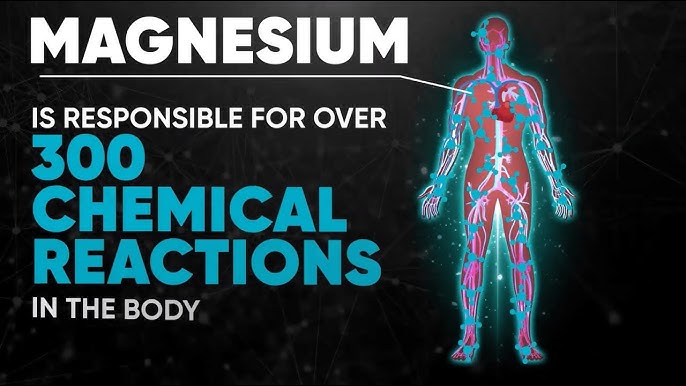
Magnesium helps 300 reactions in the body including relaxing tight muscles
| Tight muscles can be helped by magnesium

Magnesium is involved with more than 300 enzyme systems that regulate diverse biochemical reactions in the body(1). This includes muscle function. By assisting with the regulation of calcium levels in muscle cells it allows for proper contraction and relaxation. Without enough magnesium your muscles can become overly excited, which can contribute to tension, cramping or spasms.

When you have sufficient magnesium they can contract and relax more efficiently, reducing the risk of tightness. This is why taking magnesium for tight muscles can help to reduce discomfort.

Magnesium And Muscle Cramps

Magnesium deficiency is often associated with muscle cramps, especially in athletes and people who engage in regular physical activity. When magnesium levels drop too low, muscles may not fully relax, leading to the sensation of cramp or stiffness. Increasing your magnesium intake can help alleviate these this by supporting the muscles ability to relax.

If you suffer from cramps, particularly during the night, magnesium might offer some relief. Click to read about signs of low magnesium. It’s important to note, however, that it’s always best to talk to a healthcare provider if cramps persist. They could be caused by other underlying issues.

Magnesium For Tight Muscles Caused By Stress

Stress is another common contributor to tight muscles, particularly in the neck, shoulders and back. Stress can cause your body to remain in a “fight or flight” state, keeping muscles tense for prolonged periods. Magnesium has a calming effect on the nervous system which may help reduce stress levels and associated muscle tension.

Eating foods high in magnesium may support your body in managing stress and help your muscles relax more naturally.

How Much Magnesium For Tight Muscles?

For women it is recommended you get around 300mg of magnesium per day while for men it’s around 400mg (2). But be sure to check with your doctor how much is best for you personally as medications can affect or be affected by magnesium. The best way to get magnesium is through your diet from foods such as:

  • Dark chocolate
  • Avocados
  • Nuts
  • Legumes
  • Seeds
  • Whole grains
  • Fatty fish
  • Bananas
  • Leafy greens (3)

If you can’t manage it you can always try magnesium supplements. They’re relatively cheap and with several different types to try.

Do I Still Need A Massage For Tight Muscles?

Woman massaging tight shoulder muscles as magnesium is an aid not a solution
| Tight muscles can be helped by magnesium but are not a substitute for massage

Although magnesium can help relax muscles and prevent cramps, it’s important to remember that it doesn’t address underlying issues. Muscle knots, scar tissue or tissue damage will still require massage therapy which will also help to break up adhesions and relieve tight muscles. Like other supplements, magnesium can assist your treatment in the same way as stretching and corrective exercises.

Summary


Magnesium is a vital mineral that can support muscle relaxation, reduce cramps and even help manage stress-induced tension. If you’re considering trying magnesium for tight muscles however, remember that it’s no substitute for a professional massage.

Click here to find out which is the best type of magnesium for you.

How To Book A Mobile Massage Or Personal Training In York

If you would like to book a mobile massage or personal training in York please contact me on 07713 250352 or email david@massageinyork.co.uk. Includes sports massage, deep tissue massage and Swedish massage. For more information on booking click here