
Last Updated – September 2026
As a mobile sports massage therapist in York, I treat a lot of clients with elbow pain, whether it’s tennis elbow on the outside of the joint or golfer’s elbow on the inside.
These conditions are rarely caused by tennis or golf alone. They most often develop from repetitive gripping, lifting, desk work, or training that overloads the forearm muscles and the tendons that attach at the elbow. Once the tendons become irritated, simple daily tasks like lifting a kettle, using a mouse, or turning a door handle can become painful.
Many people rest the elbow or stretch the forearm and find the relief is only temporary. This is because the problem is usually driven by ongoing tension higher up the chain as well as at the elbow itself. With qualifications in sports massage and Advanced Personal Training, I take a wider approach that addresses the forearm, elbow, upper arm and shoulder together.
In this article, I explain the difference between tennis elbow and golfer’s elbow, the common causes I see, and exactly how I treat them with targeted massage at your home in York.
Table Of Contents
What Is Tennis Elbow
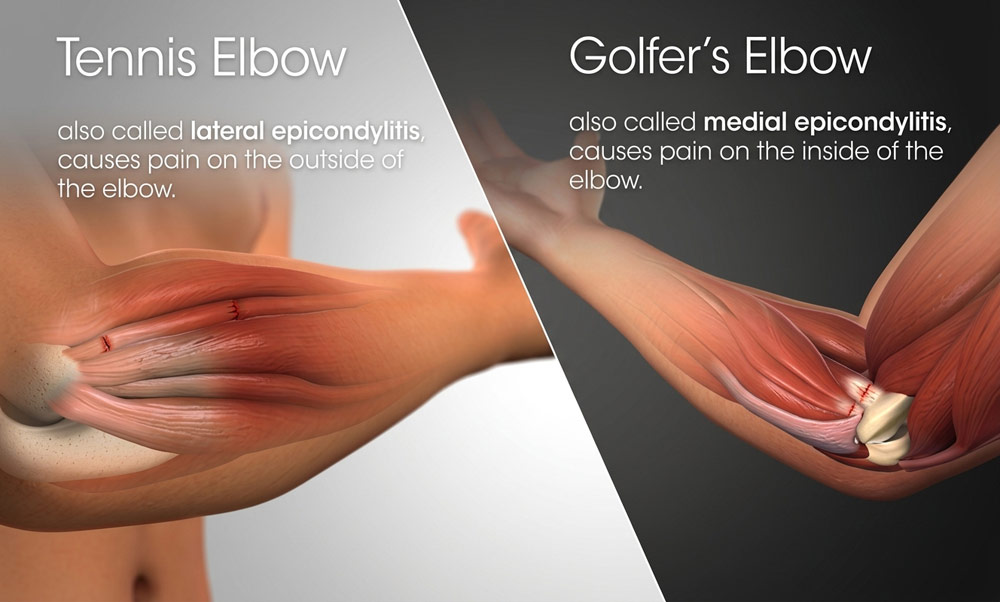
Tennis elbow is the common name for pain on the outside of the elbow. The technical term is lateral epicondylitis or extensor tendinopathy. It develops when the tendons that attach the forearm extensor muscles to the outside of the elbow become overloaded and irritated.
Despite the name, most people who develop tennis elbow do not play tennis. It is far more commonly caused by repetitive gripping, lifting, computer work, manual jobs, or training that repeatedly stresses the muscles on the back of the forearm. These muscles control wrist extension and finger movements. When they are overworked, the tendon attachment at the elbow takes the strain.
Tennis elbow can develop gradually through repeated low-level overload, or it can come on more quickly after a sudden increase in gripping or lifting. Once the tendon is irritated, even light daily activities can keep the symptoms going.
Tennis Elbow Symptoms
The main symptom is pain on the outside of the elbow, usually about 1–2 cm below the bony point. The discomfort often spreads into the forearm and can be accompanied by weakness of grip.
Common everyday triggers include:
- Lifting a kettle or cup
- Turning a door handle
- Using a screwdriver or tools
- Typing or using a mouse for long periods
- Shaking hands or carrying shopping
Many clients describe a sharp pain when they try to lift something with the palm facing down, or a dull ache that builds through the day. In more persistent cases the elbow can feel weak and the forearm muscles become tight and tender to touch.
Because the same forearm muscles influence the wrist and hand, people sometimes also notice discomfort further down the arm. In the clients I see, the elbow is rarely the only restricted area as the upper forearm, upper arm and even the shoulder often contribute to the load on the tendon.

What Is Golfer’s Elbow
Golfer’s elbow is the common name for pain on the inside of the elbow. The technical term is medial epicondylitis. It develops when the tendons that attach the forearm flexor muscles to the inside of the elbow become overloaded and irritated.
These muscles control wrist flexion and gripping. When they are repeatedly stressed through lifting, gripping, throwing, or certain training movements the tendon attachment on the inner elbow takes the strain. Like tennis elbow, most people who develop golfer’s elbow do not actually play golf. It is simply the everyday and training activities that repeatedly load the inside of the elbow that cause the problem.
Golfer’s elbow can build up gradually or appear more quickly after a sudden increase in gripping or lifting work. Once the tendon is irritated, normal daily use of the hand and wrist is often enough to keep the symptoms active.
Golfer’s Elbow Symptoms
The main symptom is pain on the inside of the elbow, close to the bony point. The discomfort frequently spreads down the inner forearm and can be accompanied by reduced grip strength.Typical triggers include:
- Lifting with the palm facing up
- Twisting movements (such as using a screwdriver or opening jars)
- Underhand throwing actions
- Heavy gripping or carrying
- Certain weight-training movements
- Prolonged mouse use or repetitive desk work
Many clients describe a sharp or aching pain when they flex the wrist against resistance, or a duller ache that builds through the day with repeated use of the hand. The forearm flexor muscles often feel tight and tender, and in more persistent cases the inner elbow can remain sensitive even at rest.
As with tennis elbow, the problem is rarely limited to the tendon itself. In the clients I treat, tension higher in the forearm, upper arm and shoulder commonly adds to the load on the inner elbow.
How I Treat Elbow Pain
Whether the problem is tennis elbow, golfer’s elbow, or a combination of both, the underlying issue is usually the same: the tendons at the elbow are being overloaded by tight, restricted muscles in the forearm and often further up the chain.
Acute Stage
If the pain has come on suddenly, the first 48–72 hours are best managed with relative rest and ice to settle the initial irritation. Pushing through this phase often prolongs the problem.
Ongoing Or Chronic Symptoms
Once the acute irritation has settled, or if the pain has been present for some time, I use targeted sports and therapeutic massage to address the real issues. I work thoroughly on the forearm muscles (both the extensors for tennis elbow and the flexors for golfer’s elbow) to reduce the constant pull on the tendon attachment. I also release the upper arm, and when needed the shoulder and upper back, because tension higher up frequently increases the load on the elbow.
Why The Wider Approach Matters
Treating only the painful spot at the elbow at best gives only short-term relief. By improving the quality and length of the forearm muscles and restoring better movement through the arm and shoulder, the tendon is placed under less ongoing stress. This is what allows the symptoms to settle more completely and reduces the chance of them returning as soon as normal activity resumes.
Many clients notice reduced pain with gripping and daily tasks within a few sessions, along with improved forearm flexibility. If symptoms are severe or not progressing as expected, I always recommend appropriate medical advice alongside the massage.
Frequently Asked Questions
It varies. Milder cases that are caught early can improve significantly within a few weeks of consistent treatment and activity modification. Longer-standing problems that have been present for months often take longer because the tendon and surrounding muscles have adapted to the overloaded state. Progress is steadier when the forearm and related areas are treated regularly rather than relying on occasional sessions.
Yes. It is not unusual for someone to develop irritation on both the outside and inside of the elbow, especially if their work or training involves a mix of gripping, lifting and computer use. In these cases I treat both the extensor and flexor groups of the forearm, as well as any related tension further up the arm, so neither side continues to overload the joint.
In some cases neck or shoulder restriction can refer symptoms into the arm and elbow, or increase the load on the forearm muscles. During the assessment I check the mobility and tension levels higher up the chain. If those areas are contributing, they are included in the treatment so the elbow pain does not quickly return.
Yes, it can absolutely help. Braces and exercises aim to protect or strengthen the area, but they don’t directly release the tight forearm muscles that continue to pull on the tendon. Many clients find that combining soft-tissue work with sensible loading produces better results than either approach on its own.
In most cases yes, but with some adjustments. Complete rest is rarely necessary and can sometimes slow recovery. I usually advise clients to reduce the specific activities that most aggravate the tendon (heavy gripping, repetitive lifting, or prolonged mouse use) while keeping the arm gently active. During the session I can give clear guidance on what is realistic for your particular situation.
It can. People whose jobs involve constant gripping, repetitive lifting, or long hours at a keyboard often need to make small changes to how they use their arms between sessions. Without those adjustments the tendon can keep being irritated even while the soft tissue is improving. I always discuss practical ways to reduce daily load so the treatment has a better chance to take effect.
Certain movements can aggravate the condition if the tendon is already irritated, particularly heavy gripping, chin-ups, or high-rep wrist work. However, completely stopping all training is rarely ideal. Once the initial irritation has reduced, carefully chosen loading exercises actually help the tendon recover. I guide clients on which movements to temporarily modify and which ones are safe to continue.
Yes. The elbow tendon is usually the painful point, but the forearm muscles are often the primary source of restriction. Even after the sharp pain settles, residual tightness can remain and needs to be addressed. Continuing to release and retrain these muscles helps prevent the symptoms from returning as soon you resume normal activity.
Summary
Tennis elbow and golfer’s elbow are overuse problems that develop when the tendons at the elbow are repeatedly overloaded. The pain is felt at the joint, but the main source is usually tight forearm muscles and tension further up the arm.
My massages focus on releasing these restricted areas so the tendon is no longer under constant strain, which produces more complete and longer-lasting relief than treating the elbow in isolation.
Book A Mobile Massage
If you would like to book a mobile massage in York please contact me on 07713 250352 or email david@massageinyork.co.uk. Includes sports massage, deep tissue massage and Swedish massage. For more information on booking click here
