Boost Your Immune System With Massage

Boost your immune system to avoid colds and flu this winter. This is something everyone would love to do but a lot of the suggested ways aren’t as easy as they sound. Some of them involve being fit and healthy in the first place. Going to the gym or for a run isn’t easy when you’re already feeling a bit under the weather. A proven way to boost your immune system naturally and with immediate results is with a massage.

What Is The Immune System

Woman Sneezing Boost Your Immune System Massage In York
| Boost your immune system with massage to help keep you healthy and fight colds and flu

To boost your immune system means to increase your body’s ability to fight off bacteria, viruses and other microbes that could cause disease. The first line of defence is known as the innate system. It includes your skin and the mucous membranes of the nose and mouth. As well as this, the acidic juices of your stomach kill germs on food. The second line of defence is the various white blood cells, the most well known of which are the lymphocytes(1). These recognise foreign particles, attack them and remain alert for their presence in the future. It is these white blood cells that need nurturing in order to keep you healthy.

Boost Your Immune System With Massage

Studies have proven that just one massage increases the number of lymphocytes in your body. It also has a positive effect on the lymphatic system as a whole.

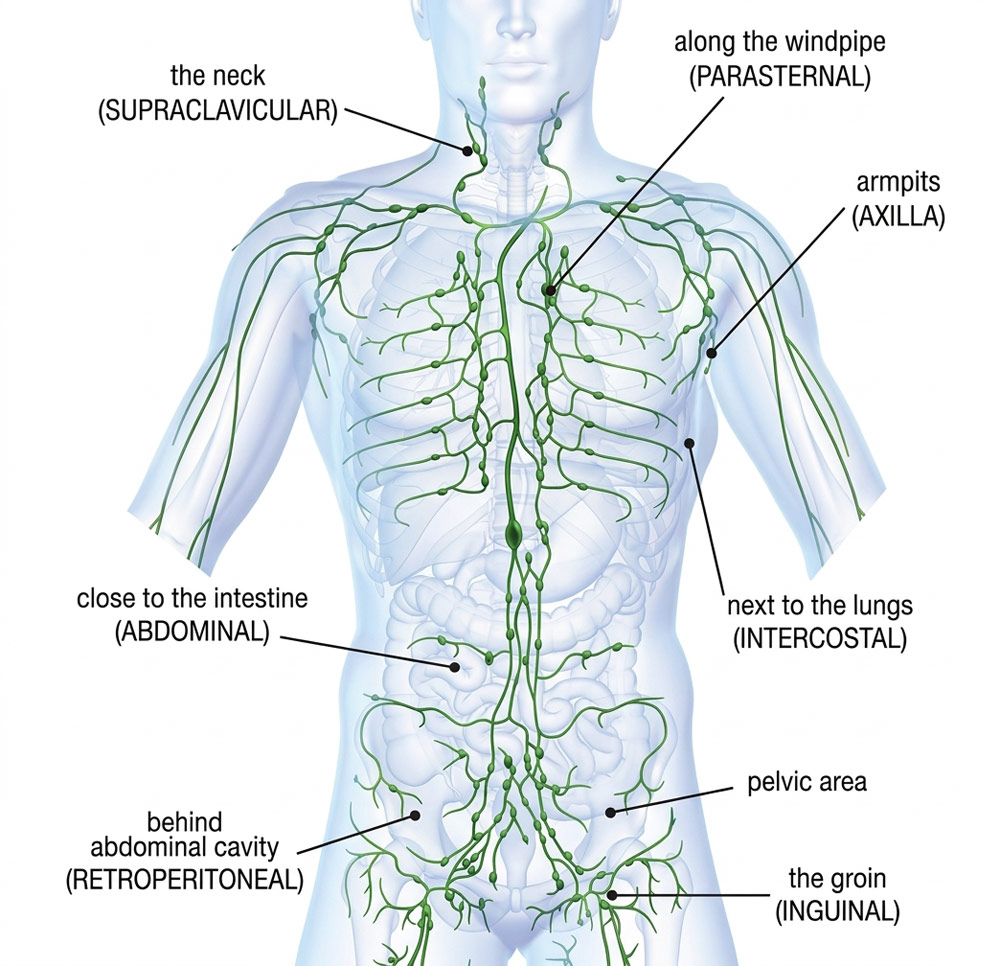
Boost Your Immune System Massage In York Lymphatic System Diagram
| The lymphatic system is spread throughout the body but concentrated in the armpit, groin and neck

The lymphatic system is a fluid-filled network which carries the white blood cells around your body. Lymph nodes are filters for the lymph fluid and are concentrated in the armpit, groin and neck. This is why “swollen glands” can often be felt under the chin when an infection is present. Having a massage helps move the fluid around the lymphatic system. For this reason it is an excellent way to boost your immune system.

Inflammation is another way your body uses to fight off infection. But chronic, long-term inflammation has been shown to have a negative effect on the immune system. As does the presence of the stress hormone cortisol. Massage is known to boost your immune system by reducing inflammation and cortisol levels. It also helps depression and anxiety. This in turn aids restful sleep, without which your body is unable to repair itself sufficiently.

Choose a relaxing Swedish massage or an invigorating deep tissue massage from a qualified massage therapist. Either will give a boost to your immune system that will help you fight off this year’s cold and flu bugs.

Book A Mobile Massage

If you would like to book a mobile massage in York please contact me on 07713 250352 or email david@massageinyork.co.uk. Includes sports massage, deep tissue massage and Swedish massage. For more information on booking click here
Calf Pain – What Causes It & How Massage Can Help

Calf pain can be caused by issues directly related to the muscles themselves, or it can be a symptom that is caused elsewhere in the body. Calf pain can also affect posture and movement which is made worse when exercising or playing sports.

What Is The Calf

Muscles Of Calf Pain Massage In York
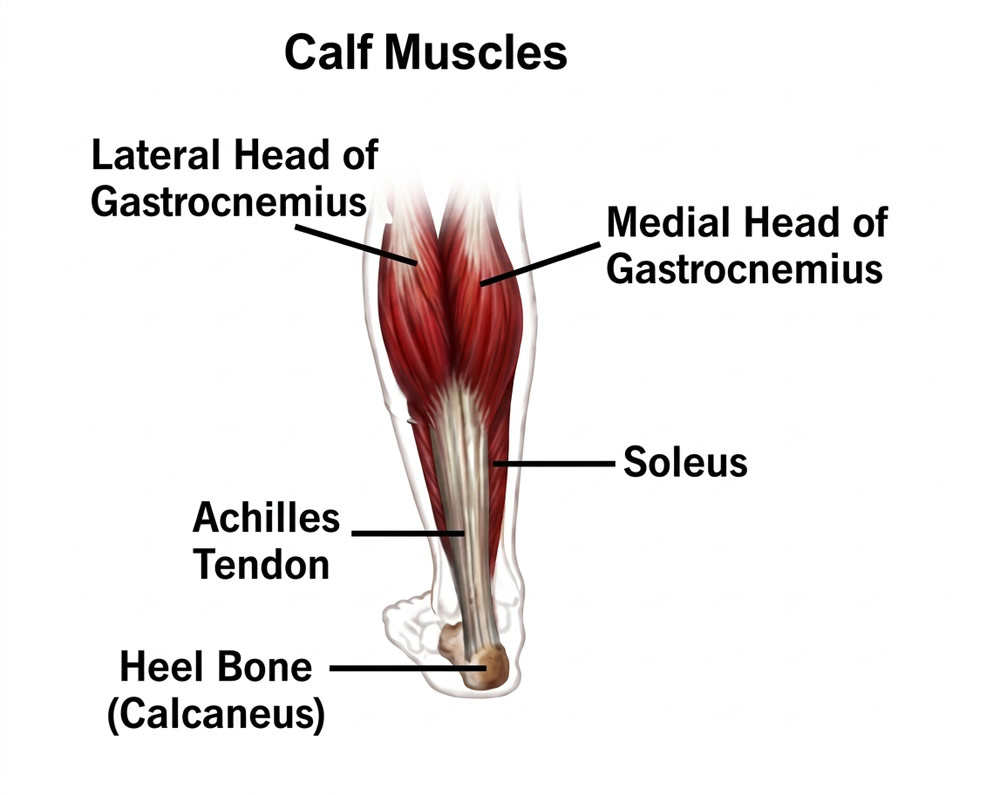
| The calf muscles are at the back of your lower leg and are used to flex your ankle

Your calf muscles are at the back of your lower leg and the two main muscles are the Gastrocnemius and the Soleus. These connect to your heel via the Achilles tendon(1). Their job is to flex your ankle joint, such as when you stand up on tip toes. Because the muscles also connect to the femur bone of your thigh they also play a part when you bend your knee. For example, when walking or running.

What Causes Calf Pain

Calf pain can have many causes but usually it involves tightness in the muscles. This is often a result of prolonged sitting, which puts them in a shortened position and reduces length. Walking can make this worse, especially wearing high heels, and jogging or sports that involve running. This leaves your calves susceptible to other causes of calf pain.

How Massage Can Help

Calf pain that is caused by tightness in the muscles can be helped with massage. It will loosen them up and increase flexibility. This will stop the problem developing into something more serious and is often all that’s needed to get rid of your calf pain.

Calf Pain From Muscle Strain Or Tear

Calf pain caused by a muscle strain or tear will come on suddenly, usually when doing something strenuous like exercise. But something as simple as using the stairs can cause injury if the muscle is already at risk. Besides sudden onset, this type of calf pain will bruise at the source and the muscle will not fully stretch until healed.

How Massage Can Help

A massage therapist can help prevent strains or tears occurring. However, if the injury has already happened, the muscle should be iced for 72 hours first. After this, massage can help to promote healing and prevent scar tissue from forming. If the injury is more serious it is best to wait a week before receiving treatment.

Calf Pain From Delayed Onset Muscle Soreness (DOMS)

Woman With No Calf Pain After Massage In York
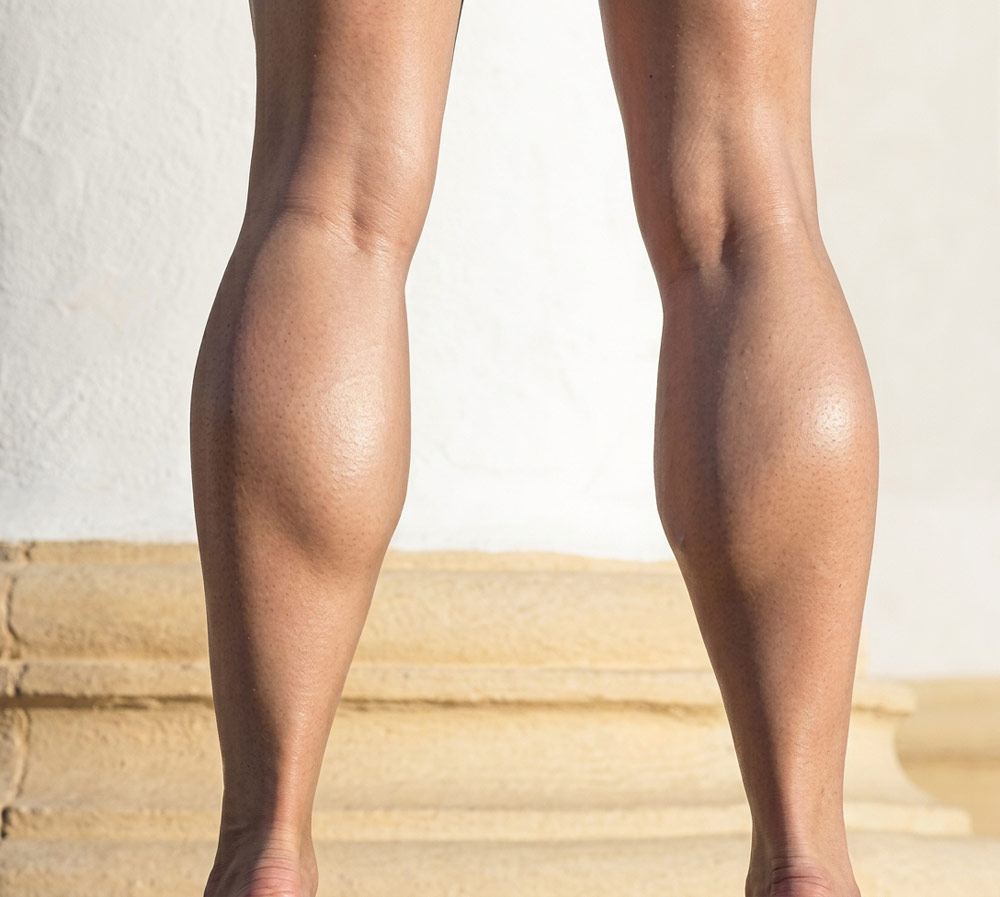
| Tight calf muscles are more likely to be sore after exercise

This type of calf pain is brought on by a level of activity the muscles are not used to. This could be starting a new exercise, suddenly increasing intensity, or going for a longer walk than normal. As the name suggests, this type of pain will not be immediate but will come on over the next 24-48 hours. After this it will start to ease off over the next few days. Unlike a strain it will be the whole muscle that is sore, rather than a specific point.

How Massage Can Help

Tight and inflexible muscles are more likely to experience delayed onset muscle soreness so massage can help prevent it. If you are already experiencing DOMS, massage improves blood flow to your calves and speeds up recovery.

Calf Pain Caused By Sciatica

Sciatica is a pain felt along the sciatic nerve, which runs from your lower back down into your lower leg. If your calf muscles are tight or inflamed they can put pressure on the nerve and cause calf pain. But it’s also possible the nerve is being affected closer to the spine. For example, lower back issues can often trap the sciatic nerve and feel like calf pain. This often leads to the symptom being treated rather than the cause.

How Massage Can Help

Many people have tightness in their calves that can be helped with massage. But the source of the pain could be the hamstrings, glutes or the lower back. If this is the case then massage in this area will treat both issues at the same time.

How Calf Pain Can Cause Other Issues

Calf pain itself could be enough to stop you doing certain activities, but if you are able to continue you could be creating other problems. For example, if you like to do squats in the gym, calf pain could affect your technique without you realising. This could mean your heels lift up off the floor as you squat, causing pain and further problems elsewhere in the body. To read more about squat technique click here.

Calf pain could also be the cause of knee pain. As mentioned earlier, your calf muscles extend behind the knee up to the femur in your thigh. So if you have pain at the back of your knee it could be caused by tight calves, which can be relieved with massage. For more on knee pain click here.

Book A Mobile Massage

If you would like to book a mobile massage in York please contact me on 07713 250352 or email david@massageinyork.co.uk. Includes sports massage, deep tissue massage and Swedish massage. For more information on booking click here
Shin Splints – How To Get Rid Of Them

What Are Shin Splints

Anatomy For Shin Splints Massage In York
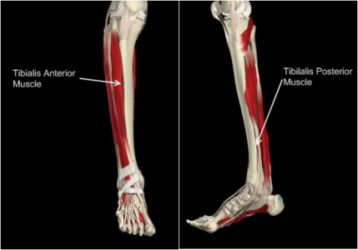
| Shin splints can be felt on the outside of your leg or the inside as a dull ache

Shin splints is a general term which usually means pain below your knee and above your ankle. If it is felt on the outside of your leg it is known as anterior shin splints. If it is the inside of your leg it is medial shin splints. Unlike a stress fracture, which is painful only at the site of the injury, shin splints are more of a dull ache which runs along the majority of your lower leg. Also it tends to feel worse the day after exercise due to inflammation. A stress fracture would feel slightly better due to being rested.

Causes Of Shin Splints

There are several potential causes of shin splints. One of the most common is an imbalance of tight and weak muscles at the front of your leg and stronger (often tight) calf muscles at the back. Beginners often develop this as they are working too hard too quickly and not allowing their body to adapt. But a seasoned runner who suddenly increases their training or includes inclines and harder surfaces can also suffer. A lack of stretching to lower leg muscles is also likely to contribute to developing shin splints.

Your running action can be a factor too(1). Tight muscles and imbalances in your body can put greater stress on one side than the other. Also a weak core and inadequate footwear, such as badly designed or worn out trainers, can contribute.

How To Get Rid Of Shin Splints

Stretch After Shin Splints Massage In York
| Stretching can help prevent problems but massage is a far more effective treatment

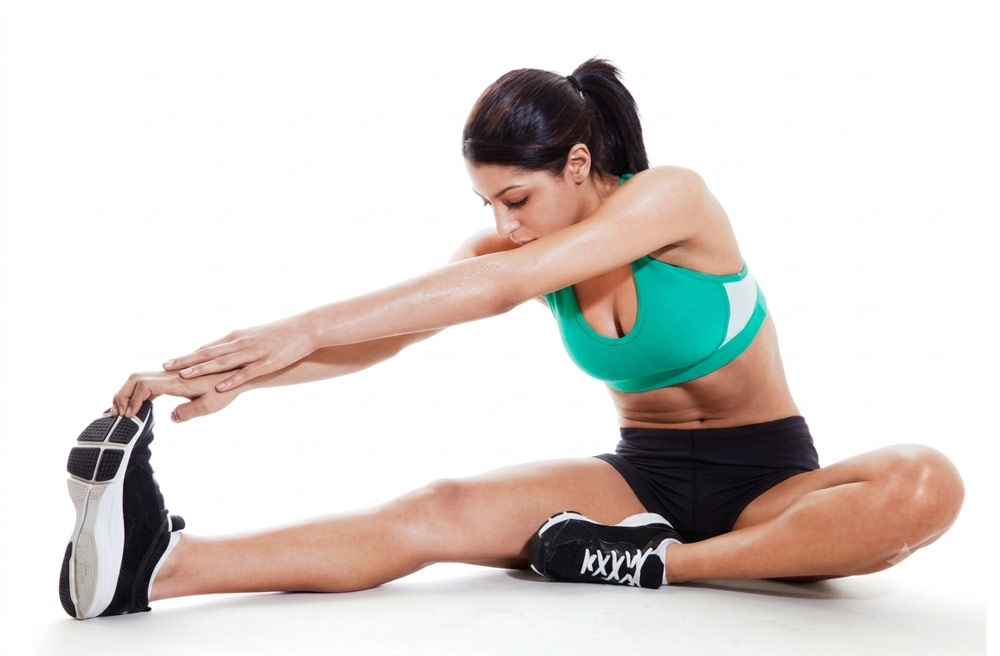
The best thing to do to treat shin splints is stop running. Or at least reduce training to a level where pain or throbbing is not felt. Instead try cycling, rowing, swimming or using a elliptical as an alternative for a while. Stretching your calf and anterior tibialis (shin) muscles is also an important part of helping things to heal. A lack of flexibility probably contributed to the problem and stretching will help to prevent it returning. And don’t forget to invest in some decent footwear that will lessen the impact, especially if running on hard surfaces.

How Massage Can Help

Given that muscle imbalances are likely to have some part to play in most occurrences of shin splints, finding out which areas are to blame is essential to treating them. Initially this can be done with a massage therapist doing a  postural analysis. This will identify which muscles are tight and which are contributing to issues with your running action. These can then be massaged to relax and lengthen them. Calf muscles will almost certainly benefit from massage as will the often neglected tibialis muscles of the shin.

Shin splints can start as a minor discomfort but if left untreated can develop in a debilitating long-term injury. Massage can help to speed up recovery and treat the underlying causes to prevent it returning in the future.

Book A Mobile Massage

If you would like to book a mobile massage in York please contact me on 07713 250352 or email david@massageinyork.co.uk. Includes sports massage, deep tissue massage and Swedish massage. For more information on booking click here
Knee Pain – Causes And Treatment

As a mobile sports and therapeutic massage therapist in York, I treat a lot of clients struggling with knee pain, whether it’s runners, lifters, people with physically demanding jobs, or those who’ve simply been dealing with niggling discomfort for months or even years.

Knee pain is one of the most common issues I see. Many people assume it’s just wear and tear or that they just have to live with it, but in my experience the majority of knee problems are caused by tight muscles, imbalances, and compensation patterns rather than the knee joint itself being damaged.

Having overcome my own long-term chronic pain and with qualifications in sports massage and Advanced Personal Training, I take a different approach. Instead of just massaging where it hurts, I look at the whole chain, including hips, glutes, quads, calves, and ankles, to find and fix the real root causes.

In this article, I explain the most common causes of knee pain I see in my York clients and how my targeted sports massage combined with corrective work helps relieve pain and improve knee function for the long term.

What Causes Knee Pain

Many people who get knee pain assume that it’s wear and tear of cartilage. This a tissue that covers the surface of joints to prevent them rubbing against each other. Or they think it’s just something that comes with getting old, such as arthritis. But there are other causes that can be due to the ligaments around the knee, or muscles that initially don’t seem to have anything to do with it.

Knee Pain Caused By Ligament Issues

Between the upper and lower leg bones sits cartilage that prevents the bones from rubbing together. To keep the joint stable, four main ligaments hold everything in place: the anterior and posterior cruciate ligaments (inside the knee) and the medial and lateral collateral ligaments (on the sides).

Ligament injuries often happen from sudden twisting, over-extension, or sharp changes in direction, which is common in sports, running, or even just stepping awkwardly. Minor sprains can heal naturally, but even mild injuries can create scar tissue that leads to ongoing pain, stiffness, and a feeling that the knee isn’t quite right.

How I Treat It

For recent ligament injuries (within the first 72 hours), I always recommend rest, ice, and avoiding aggressive massage. Once that acute phase has passed, I begin gentle but targeted work to promote healing and prevent excessive scar tissue from forming.

When treating clients with ligament-related knee pain, whether the injury is a few weeks old or several months old, I focus on the surrounding muscles (quads, hamstrings, calves, and glutes) as well as careful work around the knee itself. Scar tissue from ligament injuries can make the area feel tight and restricted, so I use specific techniques to gradually soften and mobilise that tissue without aggravating the joint.

I also look higher up the chain at the hips and glutes, because poor stability there often puts extra stress on the knee ligaments. After the massage, I give clients specific strengthening and mobility exercises to improve knee stability and help prevent the same injury from recurring.

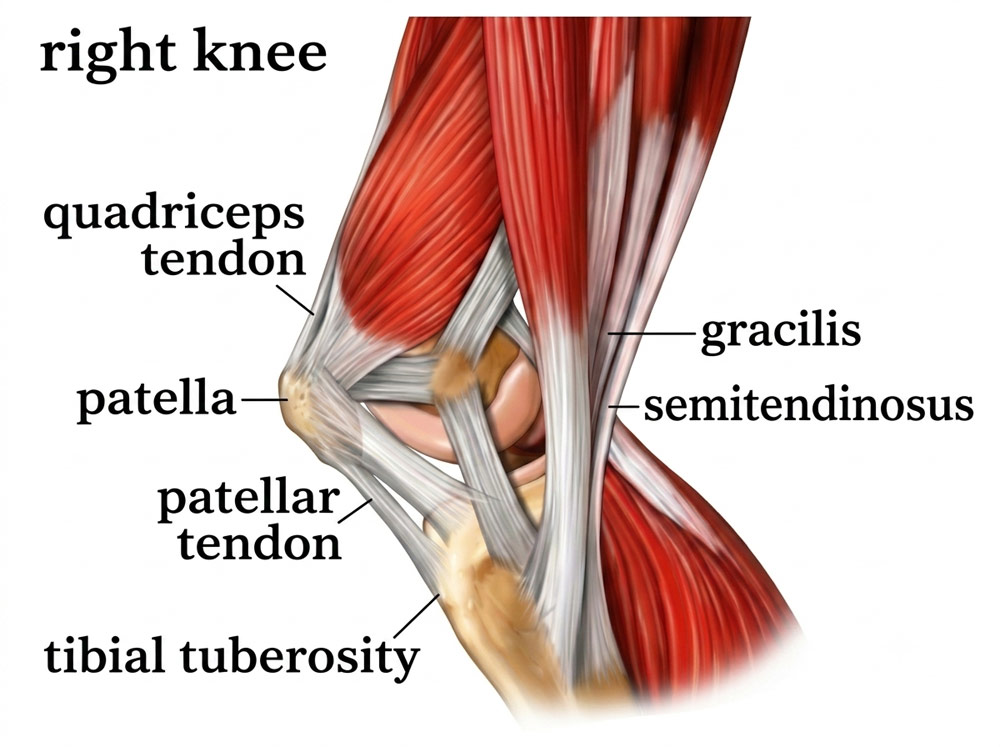
Right knee muscle anatomy diagram detailing the tendons and medial stabilizers like the semitendinosus, used for clinical assessment during a mobile sports massage session.

Knee Pain From Tight Muscles

Knee pain from muscles is actually far more common than pain from ligaments, and it often appears without any obvious injury. The main muscles involved are the quadriceps at the front of the thigh (which connect to the kneecap), the hamstrings at the back, the sartorius (which crosses the knee), and the calf muscles which can also refer pain into the back of the knee. The IT band on the outside is another frequent culprit.

This type of knee pain usually comes from tight, shortened, or overworked muscles caused by things like prolonged sitting, running, heavy squatting, poor flexibility, or old compensation patterns. Over time these tight muscles pull on the knee joint and create pain, stiffness, and sometimes clicking or grinding sensations.

How I Treat It

When a client comes to me with muscle-related knee pain, I always look at the whole chain rather than just treating the painful area.

  • If the pain is at the front of the knee, I focus on releasing the quadriceps and the tissues around the kneecap.
  • If it’s on the outside, I work deeply on the IT band and tensor fascia latae (TFL).
  • If it’s on the inside or back, I target the hamstrings, sartorius, and often the calves.

I use a combination of deep tissue massage, therapeutic techniques, and myofascial release to loosen the tight muscles, improve flexibility, and reduce the pulling sensation on the knee. I also check and treat the glutes and hips because weakness or tightness higher up the chain is a very common reason why muscle imbalances show up at the knee.

After the massage, I give clients specific stretching and strengthening exercises tailored to their particular problem (for example, quad stretches, IT band release with a foam roller, or glute activation work).

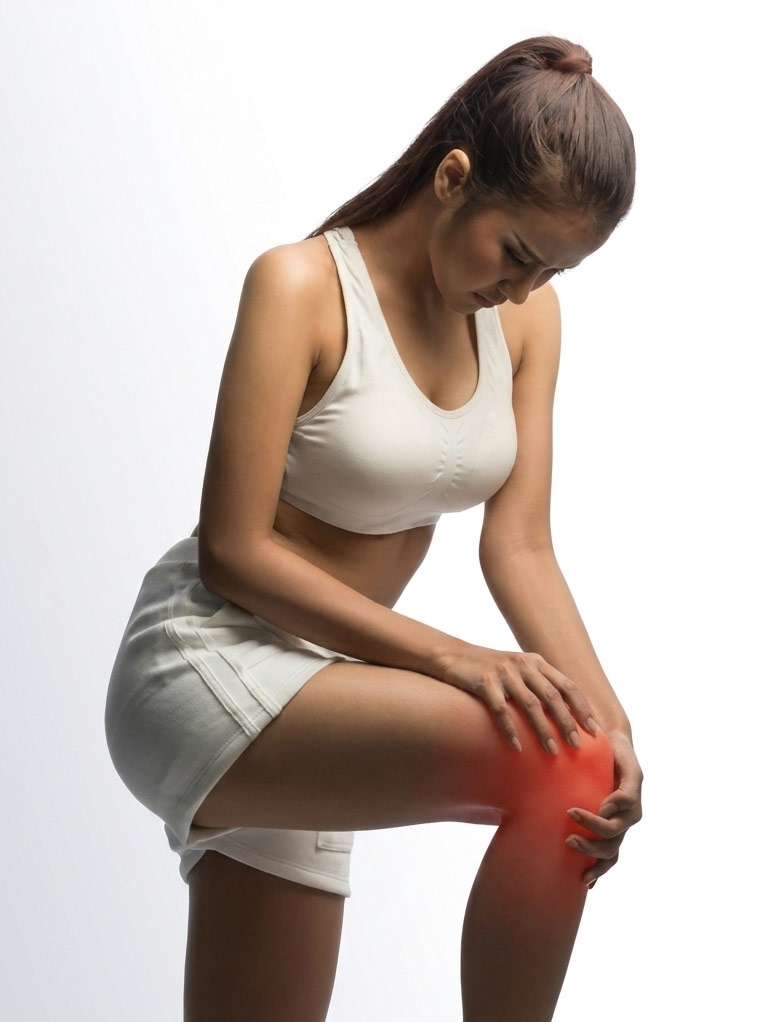
A female athlete holding her painful knee with a red inflammation overlay, illustrating the muscle imbalances and patellar tracking errors treated by mobile sports massage in York.

Knee Pain From Arthritis

Arthritis in the knee can be a very debilitating condition. It often causes pain, stiffness, swelling, clicking, or a grating sensation inside the joint. Symptoms are usually worse first thing in the morning or after periods of inactivity, but can also flare up after too much walking or standing.

While arthritis is a degenerative condition and in advanced cases may eventually need surgical intervention, many people find they can manage the pain and maintain much better mobility with the right treatment.

How I Treat It

When clients come to me with arthritic knee pain, my approach focuses on reducing pain and stiffness while improving function in the surrounding muscles and tissues. I use gentler, more rhythmic Swedish and therapeutic massage techniques combined with careful myofascial release around the knee, quadriceps, hamstrings, and calves.

The goals are to:

  • Increase blood flow to the joint, which helps remove waste products and brings fresh nutrients and oxygen to the area.
  • Reduce muscle tension and guarding around the knee, which often makes the pain and stiffness worse.
  • Improve range of movement in the knee and supporting muscles.
  • Help release endorphins (the body’s natural painkillers) to provide natural pain relief.

I also work on the hips and glutes because poor stability higher up the chain often increases stress on an arthritic knee. After the massage, I give clients gentle mobility exercises and advice on activity levels so they can stay as active as possible without aggravating the joint.

Frequently Asked Questions

Should I see a doctor before booking a massage for knee pain?

You should consult a doctor first if the pain is severe, came on suddenly after an injury, there is significant swelling, the knee feels unstable or gives way, or you cannot put weight on it. Once any serious issues have been ruled out, massage can be very effective for most muscle-related and mild arthritic knee pain.

What should I expect during your knee pain treatment session?

When I arrive at your home, we start with a detailed assessment of your knee, movement, and the muscles around it (hips, quads, hamstrings, calves, etc.). I then use targeted sports and therapeutic massage to release tight muscles and improve mobility. The pressure is adjusted to your comfort level, and I’ll explain everything as we go. After the massage I give you specific exercises and advice tailored to your particular problem.

How many sessions will I typically need?

Many clients notice meaningful improvement after 2–4 sessions. For recent muscle tightness or mild issues this is often enough. For longer-term knee pain, arthritis, or significant imbalances I usually recommend an initial course of 4–6 sessions. I’ll give you an honest recommendation after your first assessment.

Will the massage be painful?

I always work within your comfort zone. Some tight areas (especially quads, IT band, or calves) may feel intense at first, but it should feel like productive pressure rather than sharp pain. I check with you regularly and adjust pressure immediately. The goal is relief, not to push through high pain levels.

Will I be sore after the massage?

Most people feel little to no soreness the following day. You may feel a mild awareness in previously tight areas (similar to post-workout soreness) for up to 24 hours, but this usually passes quickly and is followed by improved movement and reduced knee pain.

Can you help with knee arthritis?

Yes. While massage cannot cure arthritis, it can significantly reduce pain and stiffness by improving circulation, loosening surrounding muscles, and reducing compensatory tension. Many of my clients with knee arthritis report less morning stiffness and better daily mobility after regular sessions.

Why is mobile massage particularly good for knee pain?

After treatment your knee and surrounding muscles are looser and more relaxed. Driving or sitting in traffic straight after often causes the muscles to tighten up again. Having the session at home allows you to rest properly, move gently, or apply heat if needed, which helps the benefits last much longer.

How often should I have treatment for knee pain?

This varies by person. For acute issues I often recommend weekly sessions initially. For ongoing maintenance or arthritis, many clients do well with a session every 4 weeks. During your first appointment I’ll give you personalised advice based on your condition and lifestyle.

Summary

Knee pain is rarely just a knee problem. In the majority of cases I see in my York clients, it stems from tight muscles, imbalances in the hips and glutes, restricted ankles, or old compensation patterns. Through targeted sports and therapeutic massage combined with practical corrective exercises, I help many clients reduce pain, improve knee stability, and return to the activities they enjoy, whether that’s running, squatting, walking, or simply moving without discomfort.

If you’re tired of living with knee pain, my personalised assessment and treatment plan can make a real difference.

Book A Mobile Massage

If you would like to book a mobile massage in York please contact me on 07713 250352 or email david@massageinyork.co.uk. Includes sports massage, deep tissue massage and Swedish massage. For more information on booking click here
IT Band – Is It Causing Your Lower Back Pain

As a mobile sports and therapeutic massage therapist in York, I treat a lot of clients with IT band issues that are causing knee pain, hip tightness, or stubborn lower back pain.

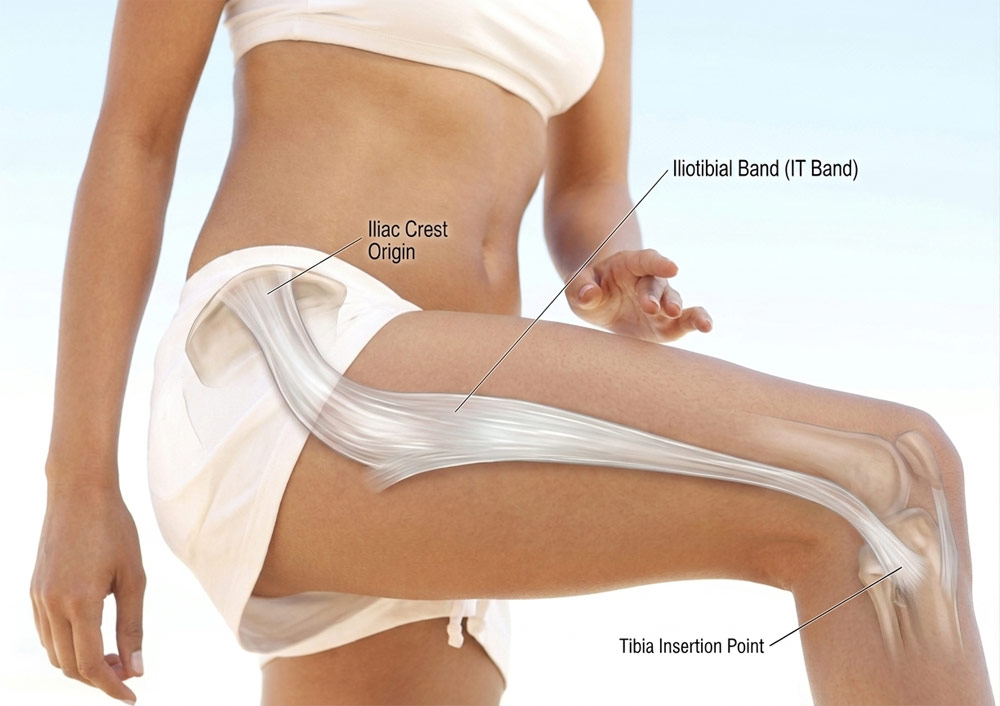
The iliotibial (IT) band is a thick band of fascia running down the outside of the thigh. When it becomes tight or inflamed, it can pull on the hip and knee, creating a chain reaction that often ends up stressing the lower back. Many people are surprised to learn their back or knee problem is actually coming from the IT band.

With qualifications in sports massage and Advanced Personal Training, and having overcome my own long-term chronic pain, I take a targeted approach that addresses both the IT band and the muscles that connect to it. In this article, I explain how a tight IT band can cause lower back pain and exactly how I treat it with sports massage and corrective work at your home in York.

How Does The IT Band Cause Lower Back Pain

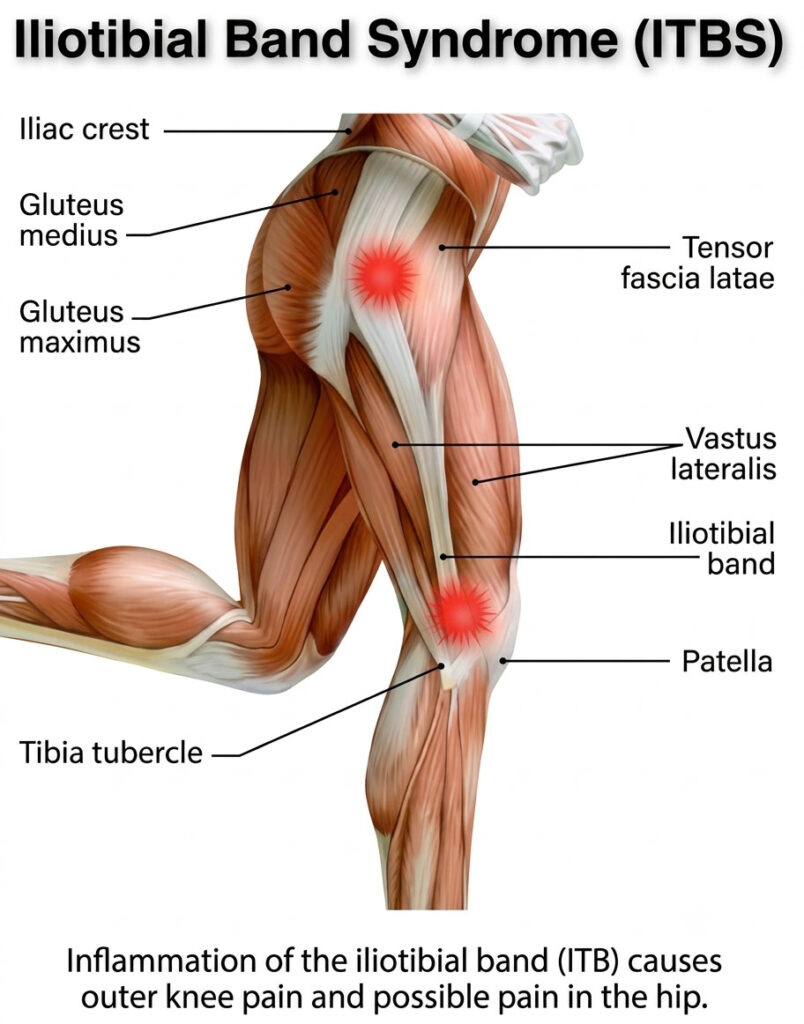
The IT band is a thick strip of fascia that runs down the outside of the thigh from the hip to the knee. It works with the tensor fascia latae (TFL) and gluteus medius to stabilise the pelvis during walking, running, and single-leg movements. It also helps control hip rotation and knee tracking.

When the IT band becomes tight or inflamed, usually from overuse in running, cycling, sudden increases in training, or poor hip stability, it can create a chain reaction that affects the lower back. A tight IT band pulls on the TFL and alters hip mechanics. This often leads to the gluteus medius becoming weak or inhibited. When the gluteus medius isn’t doing its job of stabilising the pelvis, the lower back muscles (especially the quadratus lumborum or QL) have to compensate by working harder to keep the pelvis level with every step.

The QL is not designed to handle this extra load for long periods. Over time it becomes tight, overworked, and painful. This is why many clients feel lower back pain that is worse on one side or that returns even after they stretch or massage the lower back itself.

In my experience, a lot of lower back problems are actually driven by an IT band issue, which is why treating only the lower back gives temporary relief at best. Real improvement usually comes when we address the IT band, TFL, gluteus medius, and the lower back together.

Anatomical diagram of Iliotibial Band Syndrome (ITBS) highlighting the connection between a tight IT band, hyperactive tensor fasciae latae, and the gluteus medius at the hip.

How I Treat Lower Back Pain Caused By The IT Band

When a client comes to me with lower back pain linked to a tight or inflamed IT band, I never treat the lower back in isolation, I address the whole chain.

First, I identify the main contributing factors, whether it’s repetitive running, cycling, poor hip stability, or compensatory patterns from weak glutes. Once I understand the root causes, I create a targeted treatment plan.

During the session I use deep tissue and therpeutic massage to release the tight IT band and tensor fascia latae (TFL) along the outside of the thigh. I also work on the gluteus medius and maximus because they are often inhibited when the IT band is overactive. At the same time I release the overworked quadratus lumborum and erector spinae in the lower back to reduce the compensatory tension. The goal is to restore proper hip mechanics so the IT band isn’t constantly pulling and the lower back isn’t forced to do extra work.

After the massage I show clients specific exercises and mobility drills they can do at home or at the gym, including IT band release techniques, glute activation work, and simple stretches that actually target the right areas.

Many clients notice reduced lower back tightness and better hip mobility after the first couple of sessions. With consistent treatment and the right home exercises, most see significant long-term improvement and fewer flare-ups.

Stretching and foam rolling can help maintain progress between sessions, but they are far more effective when combined with a deep-tissue massage or sports massage as on their own, they often only provide short-term relief.

Structural diagram of the IT band running from the hip crest to the knee, illustrating the lateral thigh structure responsible for pelvic misalignment and compensatory lower back pain.

Frequently Asked Questions

Can a tight IT band really cause lower back pain?

Yes, it’s surprisingly common. When the IT band is tight or inflamed it affects hip mechanics and often weakens or inhibits the gluteus medius. This forces the lower back muscles (especially the QL) to overwork to keep the pelvis stable. Many clients have been treating their lower back for months or years without much success until they come to me and we address the IT band and glute connection.

How do I know if my IT band is causing my lower back pain?

Common signs include pain or tightness along the outside of the hip or thigh, lower back pain that is worse on one side, discomfort that increases with running, walking, or cycling, or a feeling that your hip is pulling when you move. During your first session I assess the IT band, TFL, gluteus medius, and lower back together so we can see exactly what’s contributing to your pain and create the right treatment plan.

How many sessions will I need?

Many clients feel noticeable improvement after 2–4 sessions. For long-standing IT band issues or chronic lower back pain linked to it, I usually recommend an initial block of 4–6 sessions. After that, most people move to maintenance sessions once a month. I’ll give you a clear, honest recommendation after the first assessment.

Will the massage be painful?

The IT band and TFL can be quite tender when they’re tight or inflamed. I always work within your comfort level and check in regularly. Most clients describe the pressure as intense but relieving rather than sharp or unbearable. The goal is effective release without leaving you too sore the next day.

Can I continue running or training while having treatment?

In most cases yes, but with some smart modifications. I’ll give you honest advice after assessing you, such as temporarily reducing high-mileage running, avoiding certain hills, or modifying squats and lunges. The aim is to keep you active while we release the tightness and strengthen the supporting muscles so you can return to full training without the pain coming back.

What can I do between sessions to help the IT band?

I usually show clients specific IT band release techniques, glute activation exercises (such as side-lying clams and banded walks), and foam rolling methods that actually target the right areas. Reducing the main aggravating activity for a short period, improving hip mobility, and avoiding excessive sitting with poor posture also make a big difference.

Is mobile massage better for IT band and lower back pain?

Yes, for most people it is. After deep work on the IT band, glutes, and lower back, sitting in a car or driving through York traffic can quickly re-tighten the tissues and undo some of the benefits. Having the session at home allows you to rest properly, do gentle movement, or apply heat if needed, which helps the results last much longer.

Is it too late to fix this if I’ve had the pain for years?

It’s rarely too late. Even long-term IT band issues and the lower back pain they cause often respond well once we release the tight tissues and restore proper glute and hip function. I’ve helped many clients who had been dealing with the problem for years.

Summary

A tight or inflamed IT band is a surprisingly common but often overlooked cause of lower back pain. When the IT band pulls on the hip and TFL, it can disrupt pelvic stability and force the lower back muscles (especially the QL) to overwork.

My approach is to release the tight IT band and TFL, calm the overworked lower back muscles, and activate the glutes so the pelvis stays balanced. Many clients notice reduced lower back pain and better hip mobility after a few sessions, especially when they also do the simple home exercises I give them.

If you have persistent lower back or outer hip pain that hasn’t responded well to general treatment, the IT band could be the missing piece. I’d be happy to assess and treat it with a personalised mobile sports massage at your home.

Book A Mobile Massage

If you would like to book a mobile massage in York please contact me on 07713 250352 or email david@massageinyork.co.uk. Includes sports massage, deep tissue massage and Swedish massage. For more information on booking click here
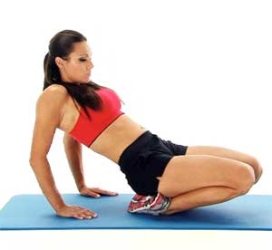
Tight Hamstrings And How They Cause Back Pain

As a mobile sports and therapeutic massage therapist in York, I see a lot of clients with recurring lower back pain that doesn’t fully go away, even after stretching, physio, or regular lower back massage.

In many of these cases, tight hamstrings are a major hidden contributor. When the hamstrings are short and tight, they pull the pelvis out of alignment and force the lower back to overwork. This is a pattern I’ve seen hundreds of times, and one I know well from when I had long-term back pain.

With qualifications in sports massage and Advanced Personal Training, I take a targeted approach that addresses both the tight hamstrings and the lower back together. In this article, I explain how tight hamstrings cause back pain and exactly how I treat them with sports massage and corrective work at your home in York.

What Causes Tight Hamstrings

Tight hamstrings rarely happen from one single event. In most cases they develop gradually from the daily habits and activities I see in my York clients. The biggest cause I come across is prolonged sitting. Whether at a desk, driving, or in the evening on the sofa, sitting keeps the hamstrings in a shortened position for hours at a time. Over months and years the muscles adapt to this position and lose flexibility and strength when stretched out.

Other common causes include:

  • Running or jogging, especially if you increase mileage quickly or don’t do enough mobility work
  • Heavy leg training (squats, deadlifts, lunges) without balancing the front and back of the legs
  • Poor posture when standing or walking
  • Previous injuries to the lower back, hips, or knees that cause compensation patterns

In my experience, the combination of sitting all day and then training hard in the evening is particularly problematic. The hamstrings never get enough time in a lengthened position to stay supple. I also see many clients whose hamstrings become tight from one-sided activities, such as always carrying a bag on the same shoulder, favouring one leg when lifting, or jogging on roads with a camber that tilts the pelvis.

Because I had and treated my own severe back pain, I’m very aware of how these patterns develop. Many clients are surprised when I point out that their lower back problem actually started from years of tight hamstrings gradually pulling their pelvis out of alignment.

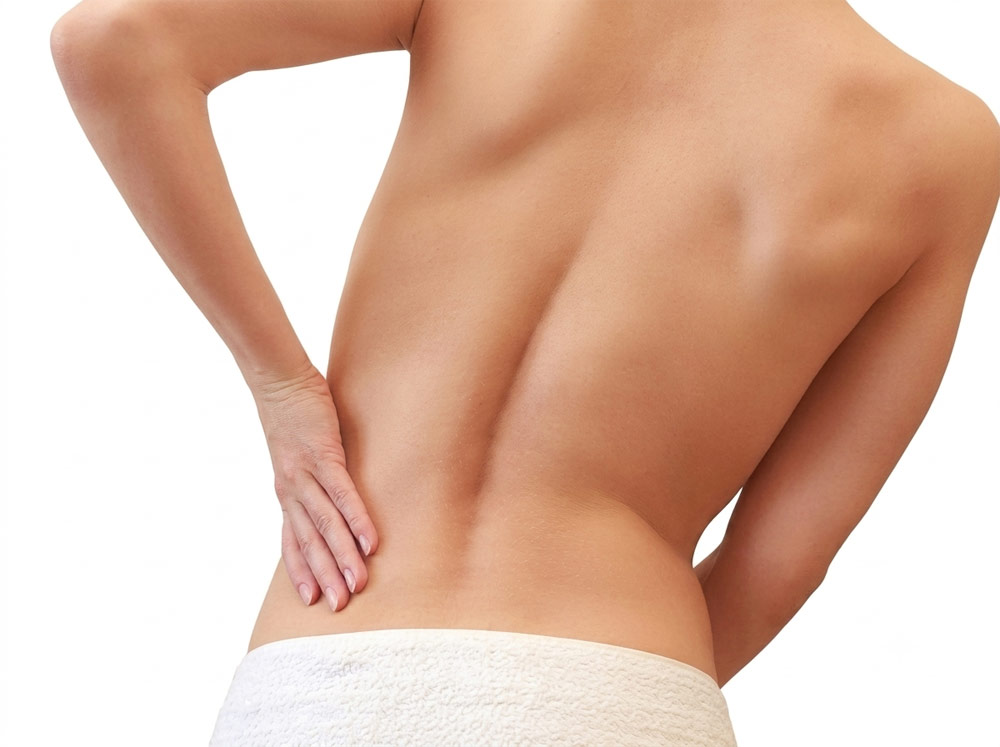
Person experiencing lower back muscle tightness before receiving a mobile sports massage treatment in York.

How Tight Hamstrings Cause Back Pain

The hamstrings connect to the lower part of your pelvis, while the muscles of your lower back connect to the upper part. Together they play a crucial role in controlling pelvic position during everyday movements, whether standing, sitting, bending forward, or squatting.

When your hamstrings are tight or weak, they pull the back of your pelvis down. This flattens the natural arch in your lower back and forces the lower back muscles (especially the quadratus lumborum and erector spinae) to work much harder to keep you upright and stable. Over time this constant compensation leads to tightness, fatigue, and pain in the lower back. Many clients I see have been dealing with recurring lower back pain for months or years without realising that tight hamstrings are a major part of the problem.

Sitting for long periods makes it worse because the hamstrings stay shortened all day. Then when you stand up or try to move properly, the pelvis can’t tilt correctly, putting even more strain on the lower back. The same thing happens during exercise, where tight hamstrings limit your range and force poor technique, which often leads to back pain after training.

In short, tight hamstrings don’t just affect the back of your legs, they disrupt the entire chain from your pelvis to your lower back. Treating only the lower back usually gives short-term relief. Real, lasting improvement comes when we address the hamstrings as well.

How I Treat Tight Hamstrings

When tight hamstrings are contributing to lower back pain, my goal is to restore proper pelvic alignment and reduce the strain on the lower back.

I start with a thorough assessment of your posture, hamstring flexibility, and how the pelvis moves. Then I use targeted sports and therapeutic massage to release the tight hamstrings, particularly focusing on the areas that are pulling on the pelvis. I also treat the lower back muscles that have been overworking to compensate, as well as the glutes which are often weak or inhibited when the hamstrings are tight.

After the massage I give you specific stretches and mobility exercises that are actually effective for your particular pattern. Many clients find that a combination of regular massage and the right home exercises gives them much better results than stretching alone.

In some cases, significant back pain can make certain stretches difficult or even counterproductive at the start. That’s why I always tailor the treatment and exercises to what your body can handle on the day. Many of my clients notice improved hamstring flexibility, better posture, and reduced lower back pain after a few sessions. The key is addressing both the tight hamstrings and the compensatory patterns in the lower back and glutes.

Runner performing a targeted hamstring mobility drill to address muscle imbalances and prevent running-related lower back pain.

Frequently Asked Questions

How do I know if tight hamstrings are causing my lower back pain?

Common signs include lower back pain that gets worse after sitting for long periods, pain when bending forward, a feeling of tightness in the back of the legs, or difficulty achieving good form during squats or deadlifts. Many clients also notice their lower back pain improves temporarily after stretching the hamstrings but returns quickly. During your first session I can assess your hamstring flexibility, pelvic alignment, and movement patterns to see how much they are contributing to your pain.

Can tight hamstrings really cause lower back pain?

Yes, very often. Tight hamstrings pull the back of the pelvis down, flattening the lower back and forcing the mucles there to work harder to keep you upright. This compensation pattern is one of the most frequent causes of recurring lower back pain I see in my clients. Many of them have been treating their back for months or even years without much success until we address the hamstrings properly.

How many sessions will I need?

Many clients feel noticeable improvement after 2–4 sessions. For long-standing tightness or chronic lower back pain linked to the hamstrings, I usually recommend an initial block of 4–6 sessions. After that, many people move to maintenance sessions once a month. I’ll give you an honest recommendation after the first assessment.

Will the massage be painful?

The hamstrings can be quite tender when they’ve been tight for a long time, but I always work within your comfort level and ask for your feedback regularly. Most clients describe the pressure as intense but relieving rather than sharp or painful. The goal is effective release without leaving you sore the next day.

Can I continue exercising while having treatment?

Usually yes. I’ll give you honest advice based on what I find during the assessment. Many clients continue training with temporary modifications (e.g. reducing heavy deadlifts or squats) while we release the tightness and improve flexibility and strength. The aim is to keep you active while fixing the underlying issue.

What can I do between sessions to help my hamstrings?

I usually show clients specific hamstring stretches and mobility drills that are actually effective, along with glute activation exercises to balance the back of the legs. Reducing long periods of sitting, taking regular movement breaks, and improving overall hip mobility also make a big difference. Consistency with the home exercises is key for long-term results.

Is mobile massage better for treating tight hamstrings and back pain?

Yes, for most people it is. After deep work on the hamstrings and lower back, sitting in a car or driving can cause the muscles to tighten up again quickly. Having the session at home allows you to rest properly, do gentle movement, or apply heat if needed, which helps the results last much longer.

Is it too late to fix tight hamstrings if I’ve had the problem for years?

It’s rarely too late. Even long-term tightness responds well to consistent release work and the right strengthening and mobility exercises. I’ve helped many clients in their 40s, 50s and beyond who had been dealing with tight hamstrings and lower back pain for years.

Summary

Tight hamstrings are a very common but often overlooked cause of lower back pain. When they’re short and tight they pull the pelvis out of alignment and force the lower back muscles to overwork.

My approach is to release the tight hamstrings, calm the overworked lower back, and strengthen the glutes so the pelvis stays balanced. Many of my clients get significant and longer-lasting relief once we address this chain properly.

If you have recurring lower back pain and suspect tight hamstrings might be involved, I’d be happy to assess and treat it with a personalised mobile sports massage at your home.

Book A Mobile Massage

If you would like to book a mobile massage in York please contact me on 07713 250352 or email david@massageinyork.co.uk. Includes sports massage, deep tissue massage and Swedish massage. For more information on booking click here