Massage Therapist In York

As a mobile sports and therapeutic massage therapist in York, I provide professional, personalised massage treatments directly at your home.

With over 10 years of hands-on, client experience, qualifications in sports massage (2005) and Advanced Personal Training (2008), and having treated my own 30+ years of chronic pain following a serious car accident, I bring a deep understanding of the body to every session.

I don’t offer generic massages. Instead, I focus on truly understanding your lifestyle, activities, posture, and specific problems so I can deliver targeted, effective treatment that addresses the root causes of tension, pain, or tightness, rather than just the symptoms.

Whether you’re dealing with sports injuries, desk-related posture issues, lower back or neck pain, post-surgery recovery, or simply the build-up of daily stress, my goal is to help you move and feel better.

In this article, I explain what it’s like to have a mobile sports massage with me, how I work differently, and why so many clients in York choose me as their regular therapist.

Why You Need Me As Your Massage Therapist

Some issues are quite straightforward. For example, tennis or golfer’s elbow is pain on the outside or inside of the forearm usually the result of repetitive strain. This causes tension and inflammation in the muscles, treated by rest and massage to the affected area.

But things can get a lot more complicated.

If you have a pain in your foot when you run, or even just when you walk, you might have plantar fasciitis. You could try stretching or rolling your foot over a tennis ball, but this is just treating the symptom. The cause of the pain is more likely to be tight muscles in your calves. But why are they tight?

As a massage therapist in York I look for the source of the issue. In the case of foot pain (plantar fasciitis) I have seen this be caused by tight calves, which in turn was caused by an incorrect walking action. This was the result of tight hip muscles (gluteus medius(1)) which also caused lower back pain, as well as neck and shoulder pain!
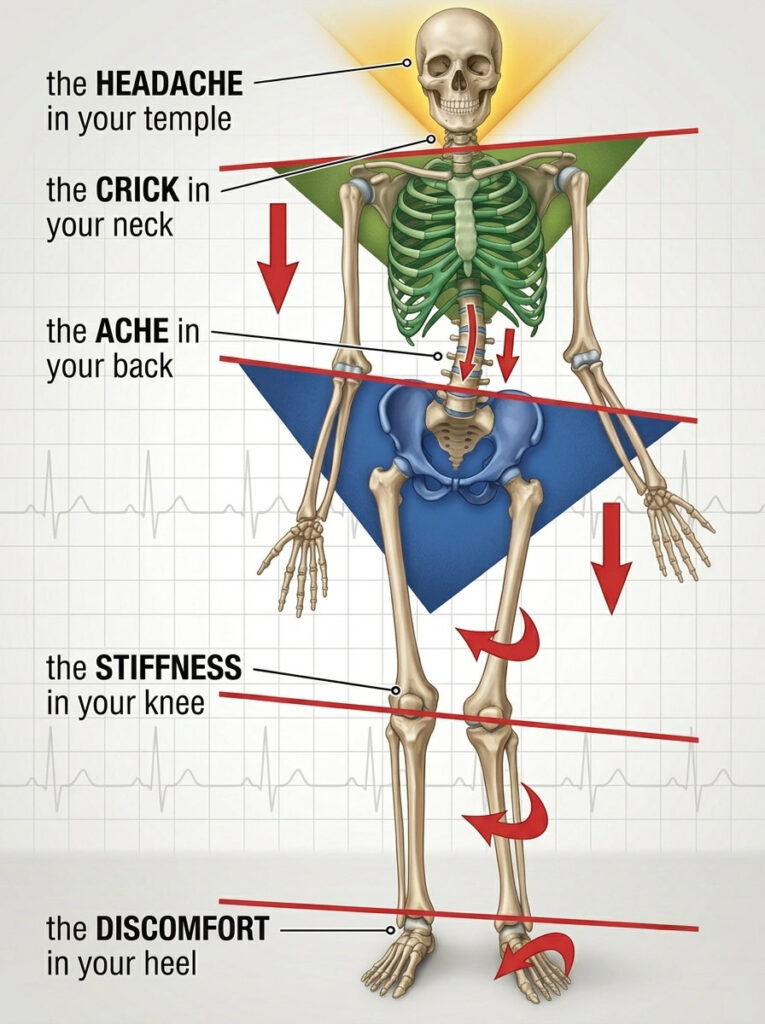
Alt Text: An anatomical diagram of the human skeleton illustrating how pelvic misalignment and kinetic chain compensation cause a chain reaction of pain, from heel discomfort and knee stiffness up to lower back aches, neck cricks, and headaches.

How I Work Differently As A Massage Therapist

I’ve been a professional massage therapist for over 10 years, but I don’t work like most therapists. After living with chronic pain for over 30 years following a car accident in 1989, and then qualifying in sports massage in 2005 and Advanced Personal Training in 2008, I developed a very different approach. I learned through my own painful experience that a standard “rub where it hurts” massage often gives only short-term relief. Real, lasting results come from understanding why the problem exists in the first place.

My Approach

I always start every session with a proper assessment. I don’t just ask you where it hurts, I look at how you stand, walk, sit, and move. I check your posture, pelvic alignment, muscle imbalances, and compensation patterns. This allows me to identify the root causes rather than just treating the symptoms.

My treatments are never one-size-fits-all. Whether you’re a desk worker with neck and shoulder tension, a horse rider with lower back and hip issues, an athlete recovering from training, or someone dealing with post-surgery restrictions, I build the session around your specific lifestyle, activities, and goals.

I combine several layers in every treatment:

  • Targeted sports and therapeutic massage to release deep tension and scar tissue
  • Soft tissue techniques to improve muscle length, blood flow, and nerve glide
  • My personal training knowledge to include corrective exercises and activation work so the improvements last longer
  • Practical advice on posture, daily habits, and movement patterns that I notice during the session

Because I’m a mobile therapist I come to your home, but this isn’t just about convenience. Treating you in your own environment gives me a much better understanding of your daily reality. This can include your sofa, office chair, bed, or car seat which all give clues about why certain areas keep tightening up. It also means you can fully relax during and after the session without having to drive, which significantly improves results.

I won’t give you the same generic massage every time. Some sessions are more clinical, others are deeper sports-style work. Some clients need a careful balance of release work and mobility. I adapt every single session based on how your body presents on the day.

This combination of thorough assessment, personalised treatment, hands-on expertise, and corrective guidance is why many of my clients have been seeing me regularly for years. They don’t just feel better for a few days — they experience real, measurable improvements in mobility, pain levels, posture, and performance.

Frequently Asked Questions

What is the difference between a sports massage and a regular relaxation massage?

Sports and rehabilitation massage is significantly more targeted and clinical than a standard relaxation massage. While I still provide excellent relaxation, the main focus is on identifying and correcting specific muscle imbalances, tightness, scar tissue, and compensation patterns that cause pain or limit movement. I combine deep tissue and remedial techniques with movement assessment and corrective exercises (drawing from my Advanced Personal Training background). This approach aims for longer-lasting results and improved function rather than just short-term relief.

How far do you travel for mobile sports massage in York?

I cover the majority of York and surrounding villages. This includes York city centre, Acomb, Holgate, Fulford, Bishopthorpe, Copmanthorpe, Poppleton, Haxby, Strensall, Dunnington, and many more areas. If you’re unsure whether I cover your specific location, feel free to contact me and I’ll confirm availability straight away. Most areas within a reasonable distance from central York are covered without additional travel fees.

What should I wear for a sports massage session?

I recommend wearing comfortable clothing that allows easy access and movement, such as shorts and a t-shirt or sports bra. During the treatment you will be properly draped with towels for privacy and warmth at all times. Only the area being treated is exposed. Your comfort and modesty are always my top priority throughout the session.

Will the sports massage be painful?

I always work within your comfort level and regularly ask for your feedback. Some areas that are particularly tight or have built-up tension may feel intense at first (often described as nice pain), but it should never be sharp or unbearable. If any area feels too much, I adjust the pressure immediately. The goal is effective release and relief, not to push through pain.

How often should I have a sports massage?

It depends on your current condition, activity level, and goals. Many of my clients start with weekly sessions when they have significant pain, tightness, or are recovering from injury or intense training. This allows us to make consistent progress, properly release deep tension, and correct movement patterns. Once the main issue has improved and they are feeling much better, most clients then move to monthly maintenance sessions to stay on top of tension and prevent problems from building up again.

Others prefer to have a block of weekly or fortnightly sessions when they feel they need it (for example during heavy training periods, after competition, or when desk work has left them very tight), then pause and rebook another block when they feel the need again.

Is mobile sports massage at home as effective as clinic treatment?

For most cases it is equally effective and for many clients it actually works better. The quality of the treatment depends primarily on the therapist’s skill and experience, not the location. Being treated in your own home often allows deeper relaxation because you’re in a familiar environment. There’s also no drive home afterwards, which prevents the muscles from tightening up again straight after treatment. Many clients report feeling noticeably better the following day because they could rest properly.

Do I need to provide any equipment or towels?

No, you don’t need to provide anything. I bring a professional portable massage table, fresh towels, oil, and all necessary equipment. Some clients prefer to use their own towels for personal preference and that is completely fine.

Can you help with specific conditions like back pain, neck pain, sciatica or sports injuries?

Yes. I have extensive experience treating common issues including chronic lower back pain, neck and shoulder tension, sciatica, hip and knee problems, sports injuries, and post-surgery recovery. As well as general muscle tightness from desk work or training. My approach combines hands-on soft tissue work with postural assessment and corrective exercises to address both the symptoms and the underlying causes.

Book A Mobile Massage

If you’re looking for a mobile massage in york and would like to book please contact me on 07713 250352 or email david@massageinyork.co.uk. Includes sports massage, deep tissue massage and Swedish massage. For more information on booking click here

Sports Massage For Neck And Shoulders

As a mobile sports and therapeutic massage therapist in York, I treat a lot of clients suffering with tight, painful necks and shoulders, especially desk workers, drivers, and weight trainers.

After living with chronic neck and shoulder pain myself for over 30 years following a car accident, I learned that standard massages that just focus on the sore bit usually only provide short-term relief. The pain almost always comes back because the real underlying causes aren’t properly addressed.

In this article, I explain the most common issues I see in my York clients and how my personalised approach, combining targeted sports massage with movement pattern correction from my personal training background delivers much longer-lasting results.

Whether your neck and shoulder pain comes from poor posture, long hours at a desk, stress, heavy training, or old injuries, I focus on finding and fixing the root mechanical problems rather than just treating the symptoms.

What Is A Neck And Shoulder Sports Massage

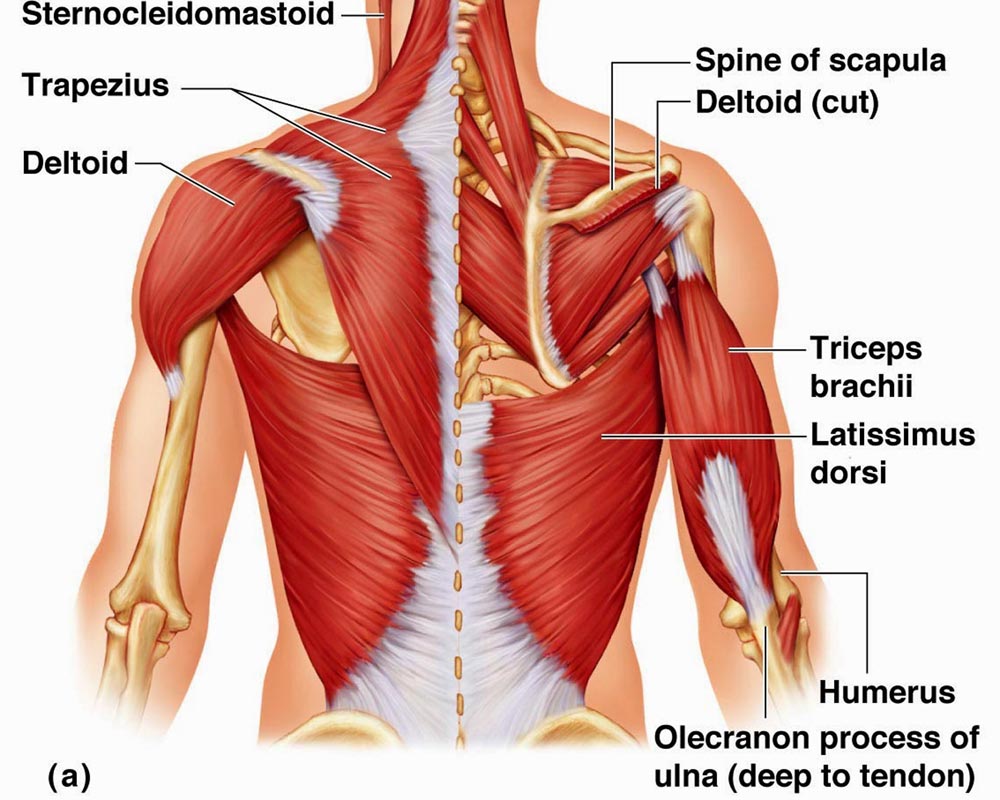
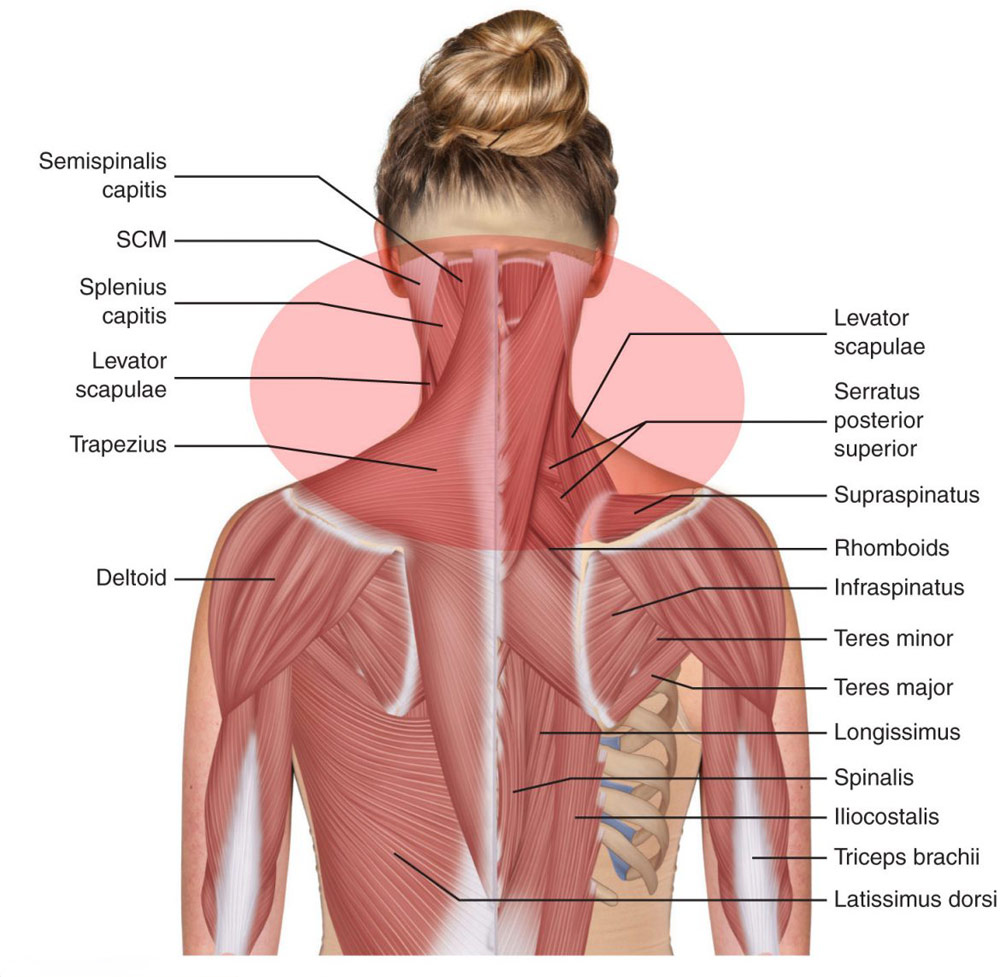
Although everybody is different, a neck and shoulder massage usually involves me treating the same muscles. These are the trapezius in your upper back, the deltoid muscles of your shoulders and the muscles in your neck. You might also require some massage work to the rhomboid muscles between your shoulders blades and your rotator cuff muscles. Or even the erector spinae which run along each side of your spine. Each of my massages is unique to you, however.

Anatomical diagram of neck and shoulder muscles, including the trapezius and levator scapulae, used in clinical sports massage in York.

Why Have A Sports Massage?

Whether you are sitting or standing, at home or at work, you are frequently looking down at a screen. This could be your laptop, your phone, your ipad or your TV. This puts an unnatural strain on the muscles of your neck and shoulders which can lead to stiffness and poor posture. Combining this with stress and heavy lifting or exercise can leave you in constant pain that goes on to cause other problems, such as headaches, jaw pain, insomnia, or it could progress into lower back problems too.

Other common causes of pain or discomfort I see include poor posture, which often comes from sitting incorrectly or for long periods, and stress or anxiety, which can cause prolonged shrugging of shoulders and jaw clenching. As well as this, untreated injuries, whether recent or long-term, can result in tightness and inflammation which can be treated by me massaging your muscles to loosen them up to relax tension and correct imbalances (1).

How I Fix Headaches With A Sports Massage

While there are many things that can trigger a headache, one of the most common I see is tight muscles in your upper back, shoulders and neck which in turn can cause tension across your scalp and forehead. The usual culprits for this are poor posture and stress. By massaging your neck and shoulders I relax the tight muscles in your neck allowing your head to be held in the correct position. This has also been shown to help reduce the severity and intensity of tension headaches and migraines, or even prevent them altogether.

Sports Massage For Stress And Anxiety

Different people hold stress and anxiety in different parts of their body, but muscles in the jaw, shoulders and neck are among the most affected. This is because it is a natural response when under pressure, such as in a stressful or anxious situation, to shrug your shoulders. If this happens a lot it results in tight, shortened muscles which never properly relax and can cause chronic pain and increase your risk of injury. A neck and shoulder massage can help by softening the muscles and removing stored tension, which gives an overall feeling of calmness and relaxation.

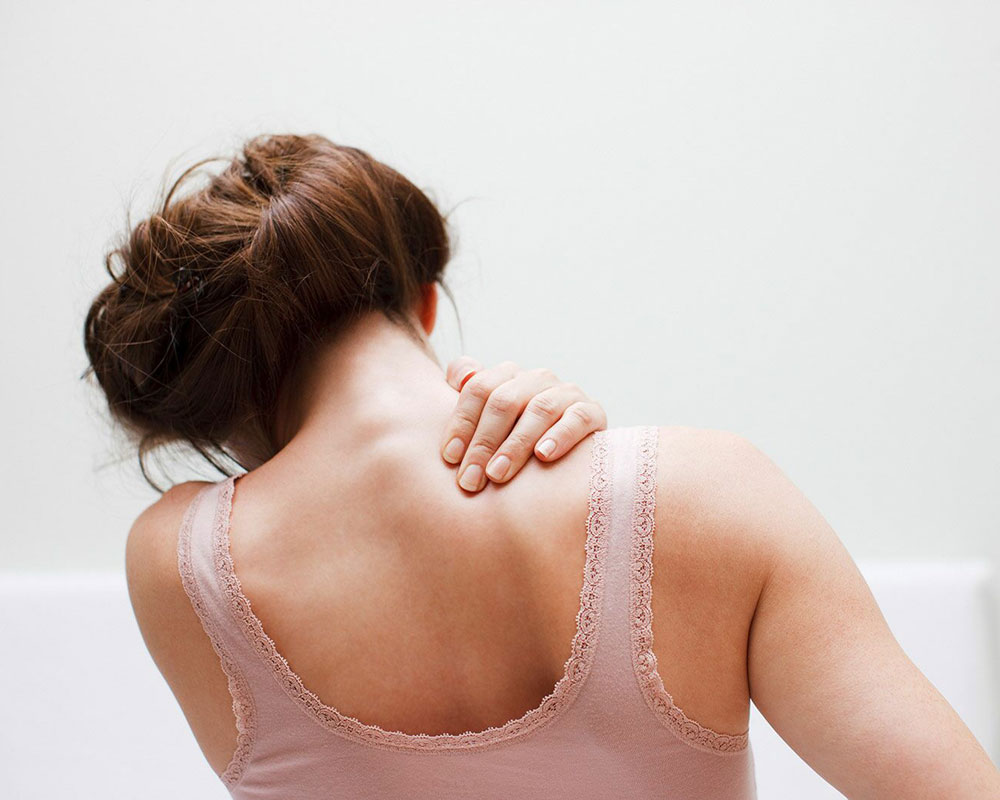
A person clutching a tight, painful neck and shoulder, illustrating the chronic tension often treated with remedial massage in York.

Neck And Shoulder Massage For Jaw Pain

Another common response to stress I see, besides shrugging your shoulders, is to clench your jaw or even grind your teeth. You might not even be aware that you are doing it but whether it’s caused by teeth grinding from stress, tightness in the neck or an imbalance in the muscles of your jaw, jaw pain is most often felt in the joint just in front of your ears. A neck and shoulder massage can help by reducing stress in your body and relaxing tension in your muscles, which in turn can reduce the damage done by clenching your teeth and can even prevent you from doing it at all.

How I Can Improve Your Posture

Poor posture in the upper body is usually the result of too much computer or phone use, prolonged sitting or standing, or pain resulting from injury. But whatever the original cause, an untreated poor posture can very often get worse and even cause issues elsewhere. If you are looking down at a phone or ipad a lot you are weakening the muscles at the back of your neck and shoulders. If you work with a desktop computer you are more likely to be shortening those muscles and causing tension. Either way, the result will be a change from the natural curvature of your neck and upper back. This can cause pain, such as in the neck, shoulders or jaw, headaches, or even issues with the lower back. A neck and shoulder massage can relax tight muscles and correct imbalances to improve posture, all while reducing stress and tension.

A woman suffering from a tension headache caused by neck and shoulder dysfunction, a common condition treated with mobile remedial massage in York.

Frequently Asked Questions

Can neck and shoulder massage help with chronic headaches?

Yes, and for many of my clients, it’s the main reason they book. Most tension headaches aren’t actually in your head they are referred pain from muscles in your neck and shoulders. Once they get tight they can cause issues further along the chain. The main culprit is the trapezius muscle. This is the large, diamond-shaped muscle that runs from the base of your skull, out to your shoulders, and down your back. Because this muscle attaches directly to your skull, that tension travels upwards, often resulting in a dull, aching pressure or a pulling sensation at the back of the head. By carefully releasing the trigger points in your traps and relaxing those tiny muscles at the base of your skull I can reduce the severity of headaches or even prevent them altogether.

How does your personal training background help with neck and shoulder problems?

Some people are surprised that I’m an Advanced Personal Trainer as well as a massage therapist, but the two work very well together. Massage is great for fixing the symptom (the tight muscle), but my PT background helps me find the cause (the bad movement habit). During our session, I’m looking at how you naturally hold yourself. Is one shoulder higher than the other? Are your shoulder blades “winging” out? I don’t just want to rub the muscle, I want to give you simple, practical tips on how to sit or move differently so that your body doesn’t tighten up again.

I’ve had this pain for years, is it too late to fix?

I get asked this a lot, usually by people who feel they’ve tried everything. But I can tell you from personal experience that it’s never too late. I had chronic lower back pain for over 30 years following a car accident in 1989. The body is incredibly good at healing if you show it that it’s safe to do so and give it the assistance it needs. Whether you’ve had your own big event or if your issue has been decades in the making, we can work together to “un-learn” those old patterns of tension. Because I spent decades figuring out how to fix my own back, I use that same approach to find out why your neck and shoulders are stuck and get them moving properly again.

Why do you sometimes suggest massaging the chest when my pain is in my neck?

Because my intention is to not just treat your current pain but to prevent it returning in the future I look at the body as a series of connected chains. Chronic neck and shoulder pain is frequently a result of tight chest muscles (pectorals) physically pulling the shoulders forward and down. Because most of us spend our lives reaching forward whether to type, drive, or eat, these muscles become short and overactive.
This creates a constant state of tension where your neck and upper back muscles are forced to strain just to keep your head upright against that forward pull. If I only massage your back, I am treating the part of the body that is being pulled while ignoring the part doing the pulling. By releasing the tension in your chest, we remove that forward pressure, allowing the muscles in your neck and shoulders to finally relax and hold their natural position.

Can neck and shoulder massage help with TMJ or jaw pain?

It definitely can. The jaw and the neck are much closer neighbours than most people realise. If you’re someone who clenches your teeth when you’re stressed or grinds them at night, you are keeping the muscles in your face and neck in a state of constant tension. That jaw tension travels straight down into the sides of your neck and across your shoulders. Often, a stiff neck that won’t go away is actually being held in place by a tight jaw. And this also works the other way, where tight neck and shoulder muscles travel up the chain to cause jaw pain.

How many sessions will I need?

Because everyone’s body is different, I don’t give a standard answer. I’m always honest about what I see during the first session. For a recent injury or a sudden kink in the neck, 2–3 sessions are often enough to get you back to normal. For chronic pain you’ve had for years, I usually recommend a starting block of 4–6 sessions. This gives us enough time to move beyond the surface tension and start changing those deep-seated habits and compensation patterns.Once you’re feeling significantly better, many clients choose to book regular maintenance sessions to keep the pain from returning.

Book A Mobile Massage

If you would like to book a sports massage for neck and shoulders in York please contact me on 07713 250352 or email david@massageinyork.co.uk. Includes sports massage, deep tissue massage and Swedish massage. For more information on booking click here

Benefits Of Massage – 9 Ways It Benefits Health

The benefits of massage have been known for at least 5,000 years. This is when evidence shows the practise first emerged in India, Egypt and China(1). But they include a lot more than simple relaxation and below are just some of the many health benefits of massage.

Benefits Of Massage #1 – Relaxation

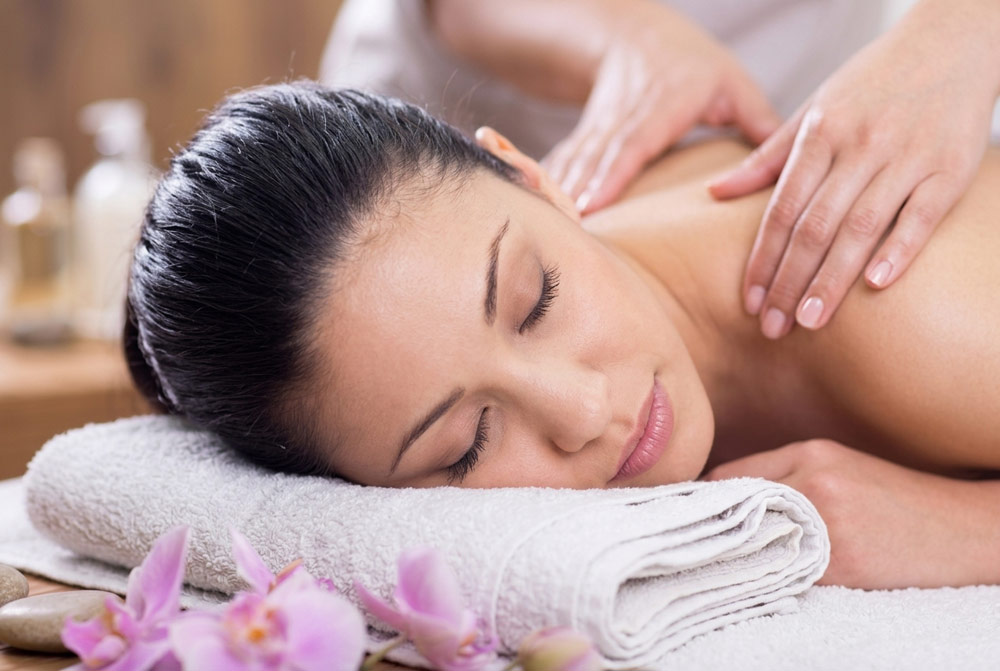
Woman Having Relaxing Massage - Benefits Of Massage In York
| A Swedish massage is mainly used for relaxation of the muscles and to help relieve stress and anxiety

This is probably what people first expect when they get a massage. Usually it involves a gentle, full body, Swedish massage but can include aromatherapy, which is the use of essential oils. Some examples are lavender, lemon or tea tree, but there many others and each adds further benefits to the massage.

Benefits Of Massage #2 – Rehabilitation

Rehabilitation uses deep tissue or sports massage to help recovery from injury. It works by stretching out muscles or tendons to increase blood flow and aid healing. The techniques used are very similar to those for relaxation but the emphasis is generally rescricted to one body part.

Benefits Of Massage #3 – Treatment Of Back & Neck Pain

You don’t need to have strained a muscle or tendon for it to cause pain and discomfort. Sitting at a desk all day, on your feet with poor posture or sleeping on an unsupportive mattress can all cause pain in your back, neck and shoulders. This could be sharp and sudden, an ongoing ache or a combination of the two. Whichever it is, the problem is muscles that have become shortened or tight and is best treated with a deep tissue massage.  This will loosen and stretch affected areas before they become more serious and long term.

Benefits Of Massage #4 –Prevention Of Migraines & Tension Headaches

Woman With Neck Pain - Benefits Of Massage In York
| Migraines and tension headaches are often caused by tension in the muscles of your neck and shoulders

If you have ever suffered a tension headache or migraine you will know how painful and debilitating they can be. But they often have the same causes. These include poor posture, working at a computer, or stress and anxiety. In turn this causes shrugged shoulders and jaw clenching which can lead to muscle tension in those areas. It has been proven that these can initiate tension headaches and contribute to migraines, which can be treated with a massage.

Benefits Of Massage #5 – Relief Of Stress, Anxiety & Depression

If you suffer with stress or anxiety, massage can help to release the tension stored in muscles. This will leave you not only physically relaxed but also mentally relaxed. If depression or low mood is more the issue, a similar but slightly more invigorating massage can help improve this. As well as raising energy levels.

Benefits Of Massage #6 – Improve The Immune System

The circulatory system carries blood around the body to provide nutrients, but there is also a lymphatic system. Among other things this carries lymphocytes to fight infection. A massage can improve the circulation of both and help restore the immune system after illness, such as colds and flu.

Benefits Of Massage #7 – Increased Range Of Movement

The problem could be painful or restricted movement when playing sports, or just when going about daily activities. Either way, massage can help remove knots and tightness that just stretching alone will not solve. These might be from a previous injury or just from having a poor posture but once dealt with, regular stretching and massage can prevent them returning.

Benefits Of Massage #8 – Improve Athletic Performance

Woman Doing Sit Up - Benefits Of Massage In York
| A sports massage can help performance and reduce injuries

A massage prior to physical activity can help to warm up muscles and prevent injury. A massage afterwards can help soothe tired muscles, increase blood flow and increase muscle growth. It can also help prevent (DOMS) Delayed Onset Muscle Soreness. A massage at any time is proven to improve performance and results.

Benefits Of Massage #9 – Treat Insomnia

Insomnia effects everyone at some time in their life and is often caused by the same things. Inability to get to sleep or frequent waking throughout the night can be due to anxiety or stress, while waking much earlier than usual and unable to get back to sleep is often linked to depression. Both of these can be relieved by a relaxing massage that helps rid the muscles of tension.

Book A Mobile Massage

If you would like to book a mobile massage in York please contact me on 07713 250352 or email david@massageinyork.co.uk. Includes sports massage, deep tissue massage and Swedish massage. For more information on booking click here

How Often Should You Get A Massage

How often should you get a massage is a common question I get asked as a massage therapist. But there isn’t a simple answer. It depends whether it’s a sports massage or something lighter and for what reason. Most people that have massages would probably like at least one every week, but cost is obviously an important factor. By timing the massages you get correctly however, you can maximise the benefits they give you.

How Often Should You Get A Massage For Relaxation

How Often Should You Get A Massage For Stress
| Stress and anxiety can cause muscle tension which can lead to pain and even injury

A massage to help you relax, ease stress and anxiety and increase your overall wellbeing is very soothing to your body. Tension is lost from muscles, circulation is increased and the nervous system is calmed. Because of this there is no limit on how often you should have one, other than your level of stress. If it normally isn’t an issue for you but you’ve had a busy week or two, try once or twice a week until you feel more relaxed. It might only take a couple of sessions to get you back to feeling like your old self.

If you regularly have a stressful job and a hectic home life however, it could take longer. Stress is cumulative and can build up for weeks, months or even years. Because of this it could take a few massages to ease out all of that stored tension. After which, a regular maintenance massage a couple of times a month will help keep your body relaxed and healthy.

How Often Should You Get A Massage For An Injury

If you have an injury or are recovering from surgery, sports massage and stretching is ideal rehabilitation. It helps prevent the formation of scar tissue which would otherwise increase recovery time and restrict your range of movement. Plus massage increases blood flow to the area which helps to provide sufficient oxygen and other nutrients to promote healing(1). If that wasn’t enough, it also reduces pain naturally, without the need for medication.

A massage for an injury or after surgery is best done as an intensive, short-term treatment. Once or ideally twice a week treatment for four to six weeks. If this is to be done alongside other rehabilitation or stretching exercises you should first check that this okay. As healing and recovery progresses, massage frequency can be reduced to once a week or even once every two weeks. Depending on the cause of the injury, other muscles might benefit from massage to prevent future occurrences. For example, your slipped disc could be the result of long hours spent sitting at a desk which lead to tight back muscles and poor posture. Future back problems could be prevented by loosening those muscles with regular massage and stretching.

How Often Should You Get A Massage For Chronic Pain

How Often Should You Get A Massage For Chronic Pain
| Chronic pain is unlikely to heal without treatment such as massage 

Acute pain is that is felt at the time of an injury, such as a muscle strain or a tear, and is usually a sharp sensation. Chronic pain tends to be more of a dull ache or throb that persists for more than a few weeks. It can be the result of an injury that is developing or has developed scar tissue as it heals. But it is more likely to do with overly contracted muscles that cause tension and shortening. This means they can never properly relax. An example of this could be neck and shoulder pain from stress or working at a desk. Or it could be lower back pain from prolonged sitting or standing. These can go on to cause other issues such as headaches, migraines, sciatica and more.

Deep tissue massage or sports massage can be very beneficial in releasing muscle tension that is the cause of chronic pain. Initially one or two sessions a week is usually recommended which can become less frequent as things improve. However, research has shown that two or three sessions a week for the first four weeks is most effective(2). Overall the amount of sessions will be about the same, but cost and available time is a factor.

How Often Should You Get A Massage For Sport Or Exercise

Sports massage before competition or exercise has been shown to increase performance, reduce injuries and improve recovery time. Research has also shown that it reduces inflammation and stimulates the growth of new mitochondria(3). This means you’re a lot less likely to suffer from delayed onset muscle soreness (DOMS).

For best results, two or even three sports massages a week are recommended if time and your bank balance permits. If not, try to get at least one a week to reduce the chance of any developing knots becoming strains or tears. In the off season or during lighter training periods, you could instead have a Swedish massage once a week. Your nervous system, lymphatic system and circulatory system will thank you for the extra attention.

Book A Mobile Massage

If you would like to book a mobile massage in York please contact me on 07713 250352 or email david@massageinyork.co.uk. Includes sports massage, deep tissue massage and Swedish massage. For more information on booking click here

Massage For Neck Pain – Get Relief Fast

Neck pain is one of the most common reasons people in York contact me for treatment. Many clients arrive with the same story: constant tightness across the shoulders and base of the skull, sharp pain when turning their head, frequent tension headaches, reduced range of motion, and that heavy, restricted feeling that gets worse as the day goes on. Some have lived with it for months or years. Others notice it getting gradually worse from desk work, driving, phone use, or working out.

I qualified in sports massage in 2005 and Advanced Personal Training in 2008 after having spent decades managing my own chronic pain issues. I learned that standard neck massages often deliver only short-term relief and the pain usually returns because the real underlying problems are not being addressed.

In most cases, the neck pain is not just coming from the neck itself. It is often the result of muscle imbalances, poor posture, tight chest and shoulder muscles pulling the head forward, weak deep stabilisers, and compensation patterns that develop over time.

In this article, I explain the most common causes of neck pain I see in my York clients. As well as how my personalised approach, combining targeted sports and rehabilitation massage with movement assessment and corrective work, helps many people achieve noticeably better and longer-lasting relief compared to generic treatments.

What Causes Neck Pain

When you feel soreness in the back of your neck, your hand instinctively goes to rub the painful area. While several muscles make up the back of your neck, one in particular is usually the cause of your problems. Your trapezius, which starts at the base of your skull, runs down your neck, out to your shoulder blades and then extends down to mid-back alongside your spine. When it’s functioning correctly it holds your head and neck upright and your shoulders back. But if you spend a lot of time sitting at a desk, or standing while looking down, this usually isn’t the case. Getting a massage for neck pain can fix this but the treatments are slightly different.

Anatomical diagram highlighting the posterior neck and shoulder muscles, including the trapezius and levator scapulae, for mobile remedial massage treatments in York.

Neck Pain Caused By Sitting

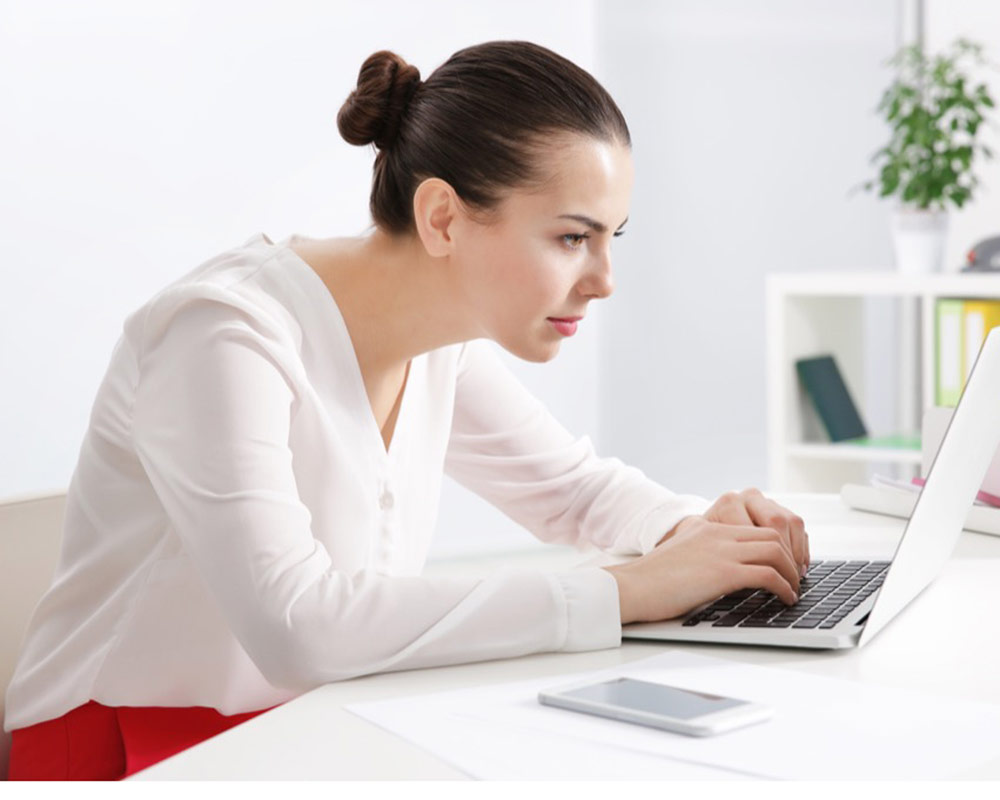
Unless you maintain a good posture, sitting at a desk and staring at a computer screen will cause you to slump forward with rounded shoulders. This is especially the case if you are reaching forward to use a mouse or type on a keyboard. Plus in this position you have no option but to tilt your head up to look at the screen. This is known as forward head posture(1) which can eventually cause a neck hump if not corrected. I’ve had clients in their 20’s already showing signs of this. Besides the obvious neck pain, common symptoms include headache or migraines, TMJ disorder / bruxism and upper back pain.

How I Treat It

If I was giving a massage for neck pain of this type I would concentrate on relaxing your trapezius, which is the muscle that extends up to the top of your neck / base of the skull area and down to your mid back. I would also lengthen the muscles in this area to help improve flexibility and mobility in your upper back and neck.

A female office worker experiencing postural fatigue and desk-related neck stiffness, a common condition treated with mobile sports and remedial massage in York.

Neck Pain Caused By Mobile Phone Use

Neck pain from mobile phone use, such as messaging or being online, comes from looking down too much. This also applies to jobs such as hairdresser, dentist or cashiers. The problem is made even worse because most people don’t tilt their head to look down, they extend their neck. This is known as anterior head syndrome or text neck(2). Common symptoms include a stiff neck, upper back pain, especially between the shoulder blades, and difficulty looking upwards.

How I Treat It

My massage for neck pain of this type would also again relaxing the muscles of your trapezius. Flexibility here isn’t the issue though. Instead it is the muscles at the front of your neck / upper chest that will require an improvement in mobility and flexibility.

A young woman looking down at her smartphone, demonstrating the anterior head syndrome and cervical strain commonly known as text neck.

How I Treat Neck Pain In General

When a client books a session for neck pain, I never start by just massaging the neck. Neck pain is rarely an isolated problem, it’s usually the result of multiple contributing factors. These can include posture, muscle imbalances, tight chest and shoulders, weak deep stabilisers, and compensation patterns built up over years.

My Assessment Process

During your mobile session at home, I begin with a detailed assessment. I observe how you hold your head and shoulders, check your range of movement, test muscle tightness, and identify which movements or positions trigger your pain. I also discuss your daily habits such as desk work, driving, phone use, training, stress levels, and sleeping position, as these factors almost always play a major role.

This assessment allows me to build a clear picture of why your neck is painful, rather than just treating the symptoms.

The Treatment

The massage portion of the session is highly targeted and includes:

  • Release of your upper trapezius, levator scapulae, and suboccipital muscles of your upper back and neck that commonly become overworked and tight
  • Work on the scalenes and sternocleidomastoid muscles of your neck that often contribute to tension headaches and restricted movement
  • Deep release of your chest (pectorals) and front of the shoulders, which pull your head forward and overload your neck
  • Soft tissue work on your jaw and base of your skull when tension headaches are involved

I combine therapeutic and sports massage techniques with slow, sustained pressure and gentle movement to improve tissue quality and restore better range of motion. Because I’m also an Advanced Personal Trainer, I can include specific activation exercises for your deep neck flexors and scapular stabilisers after the massage. These exercises are simple but highly effective at preventing the neck pain from returning quickly.

Why Having Treatment at Home Makes a Big Difference for Neck Pain

Treating you at home is particularly beneficial for neck issues. After the session your muscles are looser and your nervous system is calmer. You don’t have to get straight into a car and drive, which often re-tightens the exact muscles we’ve just worked on. Many clients report they wake up the next morning with noticeably better movement and less stiffness because they could rest properly afterwards.

Long-Term Results

My goal is not just short-term relief. By combining thorough soft tissue work with movement correction and practical advice on posture and daily habits, many clients experience significant and lasting improvements. They report less daily tightness, fewer tension headaches, better range of motion, and an overall feeling that their neck and shoulders are finally working properly again.

Frequently Asked Questions

How is your treatment for neck pain different from other therapists?

I don’t just massage the painful area, I assess your whole body. This includes your posture, mobility, chest tightness, shoulder position, and daily habits. I combine targeted therapeutic and sports massage with specific activation exercises for the deep neck flexors and scapular shoulder stabilisers. Because I also have an Advanced Personal Training background, I can give you practical exercises that help maintain the improvements between sessions. My clients get better and longer-lasting results because I treat the cause, not just the symptoms.

How long does it usually take to get relief from neck pain with massage?

Many clients feel some relief after the first session and a noticeable reduction in tightness and aching. For neck pain that has built up over months or years, I usually recommend a course of 3–6 sessions. The early sessions focus on releasing the main areas of tension, while later sessions work on correcting posture and muscle imbalances for longer-lasting results. I’ll give you a realistic expectation during your first session based on what I find.

Why does my neck pain keep returning even after previous massages or stretches?

This is extremely common. Most standard massages and basic stretches only treat the tight spots temporarily. The pain usually returns because the root causes (forward head posture, tight chest and shoulders, weak deep neck flexors, poor upper back mobility, and daily habits) are not being properly addressed. I focus on releasing overworked muscles while activating and strengthening the weak stabilisers. As well as practical advice on posture and movement.

Can you help with neck pain caused by desk work or long hours on the computer?

Yes, this is one of the most common causes I treat. Prolonged sitting and screen use typically leads to forward head posture, tight chest muscles, and weak deep neck flexors. I focus on releasing the overworked posterior neck muscles, opening the chest and front of the shoulders, mobilising the upper back, and teaching simple resets and strengthening exercises you can do during the workday.

Can neck massage help with tension headaches and migraines?

Yes, because a lot tension headaches and migraines are linked to tight suboccipital muscles at the base of the skull, upper trapezius, levator scapulae, and jaw tension. When these areas are properly released and overall posture improves, many clients experience a significant reduction in both the frequency and severity of headaches.

Is it too late to do something about long-term chronic neck pain?

It’s rarely too late. Even if you’ve had neck pain for many years, the body can still respond very well to the right combination of targeted soft tissue work, mobility work, and corrective exercises. I’ve helped many clients who had been suffering for decades once we properly addressed the muscle imbalances and postural issues.

Will the massage be painful?

I always work within your comfort level and encourage your feedback. Some areas (particularly the upper trapezius and suboccipitals) can feel intense when very tight, but it should never be sharp or unbearable pain. Most clients describe it as “nice pain” that brings relief as the muscles release. I will immediately adjust if anything feels too strong.

Why is mobile massage better for neck pain?

After a neck treatment your muscles are looser and your posture feels improved. But driving home can quickly undo much of that benefit by forcing you back into poor posture. With a mobile service you can stay relaxed at home, do the gentle mobility work I recommend, apply heat if needed, and allow the benefits to settle in properly. Many clients tell me they wake up the next day feeling looser and with noticeably less stiffness.

How often should I have treatment for neck pain?

For acute or severe neck pain, weekly sessions for the first 3–4 weeks often produce the best results. Once the pain has significantly reduced, clients can move to fortnightly or monthly maintenance sessions to keep the area mobile and prevent flare-ups. I will always give you honest, personalised advice based on your specific situation and how your body responds to treatment.

Summary

Neck pain can significantly affect your daily life, sleep, concentration, and overall wellbeing. The good news is that with the right approach, many people experience meaningful relief and improved mobility. In this article, I’ve covered the most common causes of neck pain I see in my York clients and how my personalised sports and therapeutic massage approach helps many clients achieve longer-lasting results rather than short-term relief. All by focusing on both the tight muscles and the underlying imbalances.

If you’re tired of living with neck tightness, headaches, or restricted movement, feel free to get in touch. I offer mobile treatment at your home in York and surrounding areas.

Book A Mobile Massage

If you would like to book a mobile massage in York please contact me on 07713 250352 or email david@massageinyork.co.uk. Includes sports massage, deep tissue massage and Swedish massage. For more information on booking click here

Pregnancy Massage – Benefits Of Prenatal Massage

Pregnancy massage, otherwise known as prenatal massage, has been proven to offer numerous physical and emotional benefits. The body makes some dramatic changes in a very short time. These include weight gain, postural changes and an influx of hormones. So it’s not surprising that most pregnant women get a few aches and pains along with general feelings of stress and fatigue. Pregnancy massage can help to relieve all of this and more. This can help you to get a good night’s sleep when you need it most.

Pregnancy Massage For Lower Back Pain

Bad Back Pregnancy Massage
| Pregnancy massage can help with lower back pain and sciatica

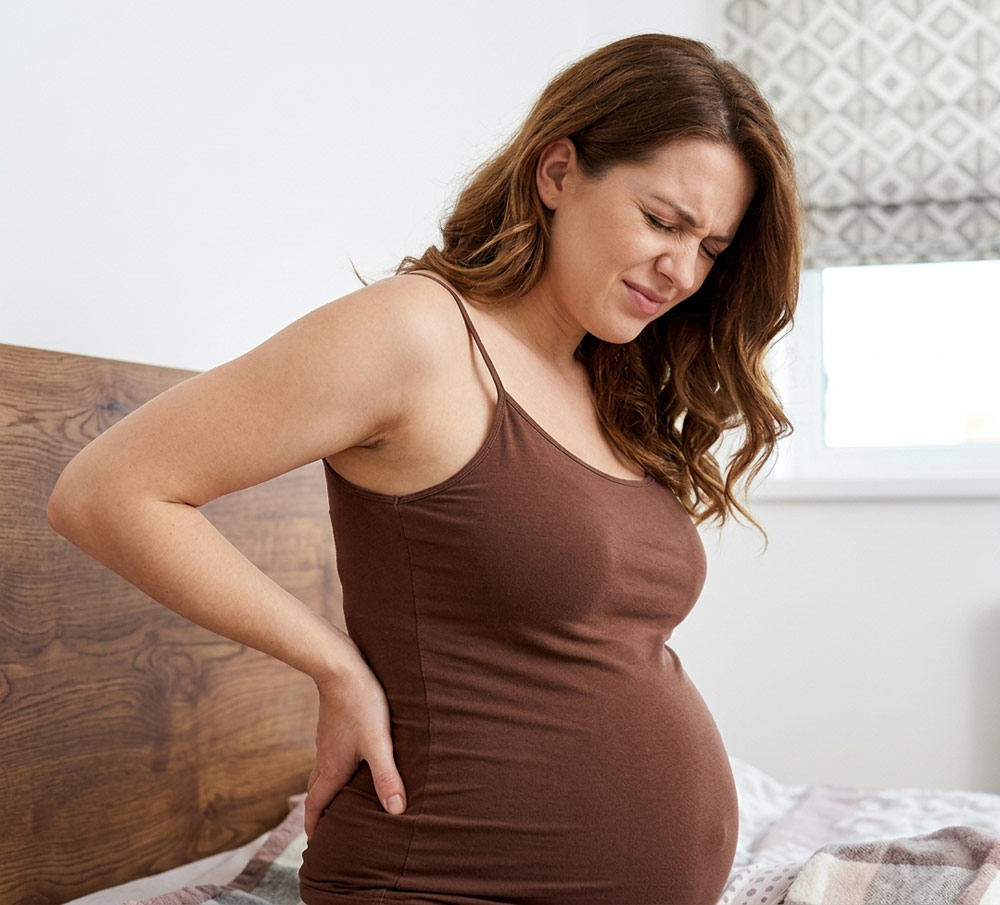
As a massage therapist, one of the most common complaints during pregnancy I hear is lower back pain or sciatica. This is due to your growing baby affecting your centre of gravity, leading to muscular strain and discomfort. This puts pressure on muscles that are having to work in a way they weren’t really designed for. The result is lower back pain which can lead to pressure on the sciatic nerve that runs down your leg. This is known as sciatica and is especially likely if you already had lower back issues to begin with.

Click here for more information on lower back pain

Pregnancy Massage For Upper Back And Shoulder Pain

Although upper back and shoulder pain can occur during pregnancy, they are less likely to be from postural issues. Instead the general stress and anxiety of aches and pains, your changing body and increasingly interrupted sleep are probably the cause. If left untreated this can lead to headaches and even migraines. And the cause is tension in the muscles of your shoulders and neck extends across your scalp and forehead.

Click here for more information on upper back and neck pain

Pregnancy Massage For Hormone Regulation

Pregnancy causes changes in the release of many hormones, notably one called Relaxin(1). This hormone is responsible for relaxing your muscles so that you are flexible enough for giving birth. But it can also cause pain in some or all of your joints. Massage increases circulation and has an overall anti-inflammatory effect that can help to reduce the discomfort.

Pregnancy massage also lower stress hormones such as cortisol which commonly rise during pregnancy. This can help reduce anxiety and depression, improve mood and increase sleep quality. It also stimulates the release of serotonin and endorphins which promote an overall feeling of relaxation and wellbeing.

Other Benefits Of Pregnancy Massage

Happy Woman After Pregnancy Massage
| Pregnancy massage stimulates the release of feel-good hormones such as serotonin

Increases Blood Flow – Blood volume can increase up to 60% during pregnancy and massage improves blood flow back to the heart. It also increases blood flow to the uterus and placenta.

Removes Toxins – Increased blood flow from massage provides more nutrients to mother and baby. It also stimulates the lymphatic system which helps to remove toxins from the body.

Helps Ease Many Common Issues – Stiffness, tension, carpal tunnel syndrome, headaches, heartburn, acid reflux, varicose veins, hip pain, constipation, IBS and more.(2)

Important

If you are in any doubt, please check with your doctor before you book a pregnancy massage. Especially if you are experiencing any complications.

Book A Mobile Massage

If you’re looking for a massage in york and would like to book please contact me on 07713 250352 or email david@massageinyork.co.uk. Includes sports massage, deep tissue massage and Swedish massage. For more information on booking click here

Shoulder Pain Caused By The Rotator Cuff

There are several muscles that can cause shoulder pain, but tightness or injury to your rotator cuff is one of the most common. Accurate diagnosis of the specific rotator cuff muscles involved is key to optimizing your individual treatment plan however. Otherwise it could be doing more harm than good.

What Is The Rotator Cuff?

Rotator Cuff Shoulder Pain - Massage In York
| Issues with the muscles of your rotator cuff can lead to shoulder pain

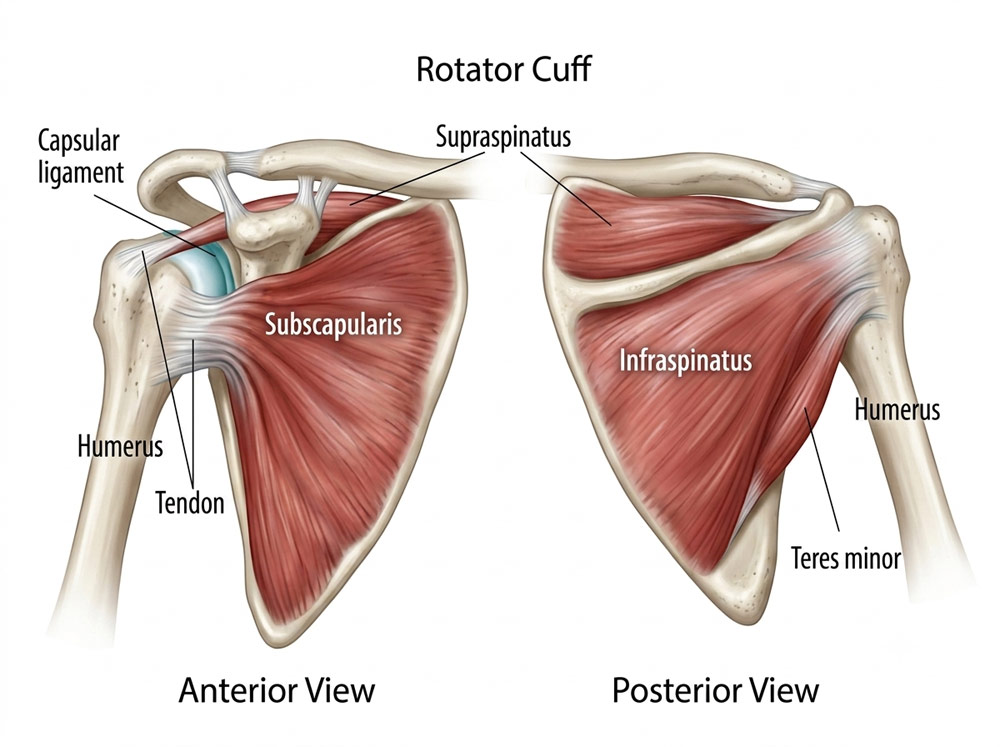
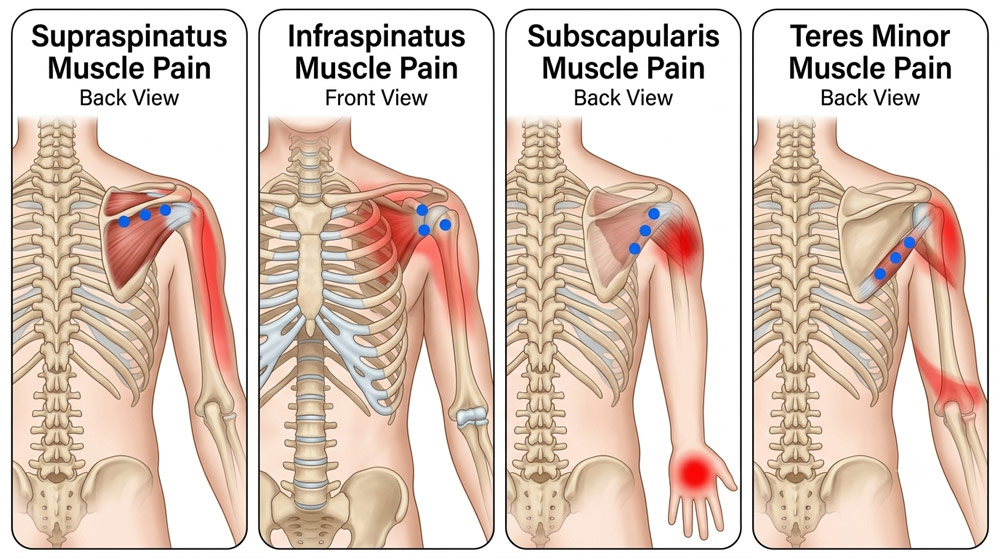
Several muscles and tendons make up the rotator cuff. They connect your upper arm (humerus) to your shoulder blade (scapula). The tendons provide the stability and hold the arm in place and the muscles cause it to rotate.

The main muscles of your rotator cuff are the Teres Minor, the Infraspinatus and the Supraspinatus(1). These externally rotate your arm. The Subscapularis internally rotates your arm.

How The Rotator Cuff Can Cause Shoulder Pain

Types Of Rotator Cuff Shoulder Pain Massage In York
| Massage therapy offers relief for inflammation and tightness in the rotator cuff muscles.

Repetitive strain injuries from sports or work can cause rotator cuff problems and shoulder pain. As a result, inflammation of your muscles or tendons can trap nerves. This type of shoulder pain is often sharp and sudden and your arm may feel weak.

Shoulder pain from a tear or strain usually happens during sports, a fall or from weight training. Tears or strains can compromise shoulder stability, potentially causing the arm to drop in a manner similar to a fractured collarbone. This is due to the damaged rotator cuff muscle no longer being able to hold the joint in place.

Initial diagnosis of damaged muscles involves a test of the flexibility in your shoulder and the internal and external rotation of your arm. This can help identify which of the rotator cuff muscles is causing your pain. For example, your subscapularis can be checked using the “lift off” test.

Prevention And Treatment of Rotator Cuff Shoulder Pain

Keeping the rotator cuff flexible with regular stretching can prevent shoulder pain and injuries. Repetitive movements, sports and weight training all contribute to tightness and shortening of the muscles. This can lead to chronic pain that could progress to a condition known as frozen shoulder. Weight training with proper technique and not exceeding comfortable range of motion can prevent rotator cuff injuries. This is especially important when strength training.

Deep tissue massage can help to loosen up tense muscles in your rotator cuff which will help to relieve shoulder pain and prevent injury. If injury has already occurred, sports massage can speed up rehabilitation time. A massage therapist can also help to maintain proper range of motion to avoid further problems in the future.

Other Causes Of Shoulder Pain

Shoulder pain often involve rotator cuff issues, but there are other potential causes. At the front of the shoulder and around the top of the arm, several muscles and tendons come together and attach to the radius bone. Many everyday activities, such as using a computer or driving, put these muscles into shortened positions. Over time this can lead to a lack of flexibility, especially if combined with sports or weight training.

The deltoid muscles in the shoulder can be a common source of pain. Particularly the anterior deltoid at the front. Raising the arm up and forwards is when this will become apparent, as well as when performing a front raise exercise. Similar to this, the pectoral muscles of the chest also attach to the radius bone in the arm and can become inflexible in the same way as the deltoid(2). This pain can often be felt doing exercises such as the bench press as even with good technique it puts a lot of stress on the chest/shoulder area.

Massage to the deltoids, pectorals and other muscles that are tight and inflexible can relieve shoulder pain. It can also decrease the time it takes to recover from injury and help to prevent them occurring in the first place.

Book A Mobile Massage

If you would like to book a mobile massage in York please contact me on 07713 250352 or email david@massageinyork.co.uk. Includes sports massage, deep tissue massage and Swedish massage. For more information on booking click here

Cellulite – What Is It And How To Get Rid Of It

There are a lot of myths around cellulite. These include how it is caused, how it is prevented and how to get rid of it. But there are things you can do to minimise its appearance without resorting to risky surgery or expensive creams.

What Is Cellulite?

Woman With Cellulite - Massage In York
| Cellulite affects far more women than men but has little to do with being overweight

Cellulite is nothing more than fat beneath the skin which is pushing against connective tissue. It affects 90% of women compared to only 10% of men. This is due to the structure of collagen fibres in the lower body and its appearance has little to do with being overweight. Slim people can show it but being overweight does increase the amount you might have. And although perfectly harmless and natural it is not what most people want to see when they look in the mirror. This is why there is so much talk about how to prevent it.

Cellulite is divided into 4 different grades:
Grade 1 – No visible cellulite even when skin is pinched.
Grade 2 – No visible cellulite when lying down or standing.  When skin is pinched an orange peel texture can be seen.
Grade 3 – Cellulite is visible when standing, but may disappear when lying down.
Grade 4 – Visible cellulite when standing and lying down.

What Causes Cellulite

Although cellulite doesn’t mean there is anything wrong there are certain things that can increase its appearance. For instance, the more fat there is on a body, the more likely it is that cellulite will be visible. But there are specifics that are also believed to contribute:

Genetics
Certain genes may make some people more prone to having cellulite than others. These include gender, race, metabolism and poor circulation

Hormones
Hormones such as oestrogen, insulin, noradrenaline, prolactin and thyroid-related hormones are all though to play a role in the presence of cellulite.

Diet
A diet that is high in fat, carbohydrates or salt and low in fibre is likely to cause more cellulite. Likewise, processed foods and artificial sweeteners, additives, too much sugar and not drinking enough water.

Lifestyle
Smokers, people who do little or no exercise and those who sit or stand in one position for long periods are thought to be likely to have cellulite. It is also more likely to appear with the release of hormones that are related to stress and anxiety.

Treatment

Although there are numerous treatments that are meant to remove and prevent cellulite, a lot of them are expensive and don’t actually work. However, there are a few things that can and all of them will also improve your general health.

Exercise

Any activity that gets you moving will also get the blood moving around your body. But ideally it should be something that gets you out of breath. This will in turn reduce the effects of stress and anxiety which then lowers production of stress hormones linked to cellulite. It will also help to lower the amount of body fat present in general. Click here for mobile personal training.

Diet

A healthier diet low in processed foods, fat and carbohydrates and high in fibre is another change that will help to reduce fat and improve health. As will drinking at least 2 litres of water a day.

Reduce Stress

Even more effective than treating the stress in your life is to avoid it in the first place. If the source is your job or your daily commute this might not be possible, so try learning some better ways of dealing with it.

Massage

Woman With No Cellulite - Massage In York
| A massage therapist can help with many of the causes of visible cellulite

A massage is beneficial as it helps with many of the causes already mentioned. It lowers stress and anxiety stored up in muscle tension which reduces stress hormones related to cellulite. It increases blood flow and helps with lymphatic system drainage, which in turn helps with water dispersion and removal of toxins. And it can help with fat breakup so areas are less concentrated and therefore less visible. Combined with the other suggested treatments there is plenty that can be done to help you remove excess cellulite(1).

Book A Mobile Massage

If you would like to book a mobile massage in York please contact me on 07713 250352 or email david@massageinyork.co.uk. Includes sports massage, deep tissue massage and Swedish massage. For more information on booking click here

Postnatal Massage – Benefits Of Massage After Pregnancy

Massage after pregnancy, otherwise known as postnatal massage, can provide many benefits to your body and mind. During pregnancy you could develop upper and lower back pain, neck and shoulder stiffness and general body aches. And although this is an exciting time it can also be very stressful, which only adds to feelings of fatigue. Postnatal massage can help with a variety of issues to help your mind relax and your body recover faster.  Read on to discover just some of the benefits of postnatal massage from a qualified massage therapist.

Postnatal Massage For Muscle Pain Relief

Postnatal Massage In York
| Postnatal massage can help with upper or lower back issues. As well as many other aches and pains that might have developed during pregnancy.

Even if you didn’t have any lower back pain before pregnancy, you will probably develop some after nine months of having a baby bump. As the weeks pass and the extra weight you’re carrying increases there are two main things that will happen. The first is that your posture will change so you find yourself leaning back slightly as you walk. This can put your hips out of their correct alignment. And the second is that you’ll find it increasingly difficult to bend forward or sit in anything but a posturally incorrect way. Both will cause or exacerbate lower back pain.

Upper back pain, such as in your neck and shoulders, can also occur during pregnancy. But holding your baby, especially while breastfeeding, can cause even more problems. Then there are general aches and pains that develop from trying to get through your day without making things worse.

Massage can help to relieve muscle tension, correct postural imbalances and ease any strains and sprains you might have. Click here for more information on lower back pain or here for upper back pain.

Postnatal Massage For Anxiety And Depression

Even the easiest of pregnancies can be a stressful time, especially as the big day approaches. And this doesn’t change once your baby is born. Interrupted sleep, aches and pains, life changes and the constant anxiety of worrying about your baby can all take their toll. The stress hormones released by your body can make things feel even worse and this is proven to reduce the quantity and quality of breast milk(1).

Similarly, postnatal depression or “baby blues” is experienced by around half of new mothers to some degree. But this has also been shown to improve from the benefits postnatal massage can provide.

Click here for more on how massage can help with anxiety.

Postnatal Massage For Improved Sleep

Sleeping After Postnatal Massage
| Massage after pregnancy can help to relieve pain, reduce anxiety and promote relaxation

If a bad back and general aches and pains don’t interrupt your sleep when you’re pregnant, your baby bump probably will. And feeds throughout the night once your baby is born are only going to add to your fatigue. Therefore it’s vital that when you do have the opportunity to finally get some sleep it should be deep and uninterrupted.

Massage after pregnancy can help to relieve pain, reduce anxiety and cause the release of hormones that promote relaxation. In turn this increases the quality of your sleep and the benefits this provides. Click here for more on how massage helps you sleep.

Other Benefits Of Postnatal Massage

Toning And Weight Loss – As massage improves circulation it helps flush out toxins and excess water. It can also improve the appearance of overall muscle tone.

Reduce Stretch Marks – Improved circulation to the skin can restore elasticity and reduce the appearance of stretch marks.

Restore Flexibility – Regular postnatal massage can actively enhance your flexibility, restoring and even surpassing your pre-pregnancy range of motion.

Important

If you are in any doubt, please check with your doctor before you book a postnatal massage. Especially if you had a Cesarean section in order to make sure you have had sufficient time to heal.

Book A Mobile Massage

If you would like to book a mobile massage in York please contact me on 07713 250352 or email david@massageinyork.co.uk. Includes sports massage, deep tissue massage and Swedish massage. For more information on booking click here

Pain Relief Massage

As a mobile sports massage therapist in York, I help many people who are struggling with ongoing pain and muscle tension.

Whether it’s stubborn lower back pain, tight neck and shoulders, aching hips, knee discomfort, or general muscle tightness that just won’t go away, I see these issues every day. Many of my clients have tried stretching, painkillers, physios, chiropractors or the occasional massage, only to find the relief doesn’t last. After many years of practical experience, and having overcome my own long-term chronic pain following a serious car accident, I’ve learned that effective pain relief massage is about much more than just treating where it hurts. The best results come from understanding why the pain is there in the first place, whether it’s from poor posture, repetitive strain, old injuries, or muscle imbalances.

In this article, I explain how my personalised approach to pain relief massage works and the common issues I treat in York. Plus why so many local clients choose me for regular treatment in the comfort of their own home.

How Does Massage Treat Pain

Your muscles and tendons are in use whether you are sitting at a desk or having a workout. And although lifting weights is more likely to result in a strain or injury, all can cause problems. Sitting, especially for long periods, shortens your hamstrings, calves and the muscles at the top of your legs. It also affects your lower back, neck and shoulders, especially if you have a lot of stress. This can also result in issues with your posture that leave you prone to tight muscles and knots, or it could come over time from the same repetitive movements leaving you with painful inflammation. If left untreated you could develop chronic aches, pains, strains and even trapped nerves.

A pain relief massage works by relaxing tight muscles, easing areas of tension, and helping to reduce inflammation(1). However, in my experience, the original issue is very often elsewhere in the body. This is why simply treating the painful area usually only gives limited or temporary benefits.

Instead, I focus on finding and treating the root causes, whether that’s muscle imbalances, compensation patterns, tight hips affecting the lower back, or poor posture from daily habits. This combined approach is what helps many of my clients get longer-lasting or even permanent results rather than temporary comfort.

So let’s look at some of the most common complaints I see and how I treat them.

Close up of back and shoulder muscle tension, illustrating the areas addressed during a remedial lower back pain massage.

Lower Back Pain And Sciatica

Although lower back pain and sciatica are not necessarily the same thing, they usually have similar causes. One of them is a slipped disc, which should always be initially dealt with by a visit to your doctor. By lifting something too heavy with improper form, you may have strained your back, leading to this pain, especially if you relied on bending at the waist instead of engaging your legs and core. Or it might have come on due to poor posture, weakened muscles or a muscle imbalance.

How I treat It

When treating lower back pain, I don’t just focus on the lower back itself. I work on the muscles that run along either side of the spine (the erector spinae) to release deep tension and reduce inflammation in that area. However, in my experience, one of the most common and often overlooked contributors to lower back pain is tightness in the glutes. Many clients are surprised to learn that tight glutes (especially the gluteus medius and maximus) frequently pull on the pelvis and refer pain into the lower back. In many cases it can even run down into the sciatic nerve. By properly releasing the glutes along with the lower back muscles and addressing any related hip or pelvic imbalances, I’m able to provide much more effective and longer-lasting relief than just working on the back alone.

Tight Neck And Shoulders

There are two common causes of neck and shoulder pain. The first is poor posture from looking down at a screen or phone, especially while seated, as this puts your entire spine in an unnatural position, lengthening and weakening your trapezius and the muscles of your neck. The trapezius muscle extends across to your shoulders and down past your shoulder blades, where it can also cause pain. If you are sitting while watching TV or looking up at a computer monitor, this shortens the muscles instead. The result is usually pain, stiffness or knots, and it can even lead to headaches or migraines.

The other common cause of neck and shoulder pain is stress or anxiety. This can cause you to shrug your shoulders, clench your jaw or grind your teeth. Many people have this along with poor posture, which can lead to a lot of pain that causes headaches, migraines and poor sleep.

How I treat It

When treating neck and shoulder pain, I focus on three key things.

First, I work on reducing inflammation in the overworked and weakened muscles so they can regain proper strength and function. Second, I release the chronically tight muscles (particularly the upper trapezius, levator scapulae, and suboccipitals) to ease pain and help restore better posture. Third, I address the deep tension that often builds up from stress and anxiety, which many people hold in their neck and shoulders without even realising it.

By combining these elements (reducing inflammation, releasing tightness, and easing stress-related tension) I’m able to help clients achieve noticeable relief and improved mobility, not just short-term comfort.

A woman holding her neck in discomfort, highlighting the tight upper trapezius muscles treated with sports and remedial massage in York.

Glute Hip Pain

If you have pain in your buttocks, also known as your glutes, it can often lead to pain elsewhere. This is because the buttocks are actually 3 different muscles known as the gluteus maximus, gluteus medius and gluteus minimus. These three muscles work together to lift your torso after bending forward at the waist. Walking, especially uphill, and jogging can lead to tight muscles, inflammation and even knots in your buttocks. But if you spend a lot of time sitting down they become shortened and weak due to the position you are in. This means that they have to work harder just to do their job, so other muscles have to assist them, which can result in lower back pain, pain in your hips or pain in your hamstrings.

How I treat It

When treating buttock (glute) pain and tightness, I start by releasing the superficial tight areas, knots, and any built-up inflammation in the gluteus maximus. This often brings quick relief, especially if the glutes have become shortened and overworked from sitting, running, or heavy lifting. I also focus on lengthening the tightened muscles to restore better mobility.

If there is deeper tension or referral pain (commonly felt in the lower back or down the leg), I carefully target the piriformis muscle and other deep hip rotators that are beneath the main glutes. These deeper muscles are frequently overlooked but are a very common hidden cause of glute pain and sciatica-like symptoms.

By working through both the superficial and deeper layers, I provide more complete and longer-lasting relief than just treating the surface muscles.

Pain Relief For Calves

Limited flexibility in your calf muscles, particularly the gastrocnemius and soleus, is a common cause of calf pain. These are at the back of your lower leg and can become tight and sore even from a sedentary lifestyle. Long periods sitting down puts your calves in a shortened position which can lead to pain in your feet. Ill-fitting or unsupportive footwear can also be a contributing factor. Exercise, running or walking uphill can make things worse and result in knots, inflammation or even strains. Issues that cause calf pain can also affect your walking action which can lead to developing pain in your shins. If left untreated this could go on to cause shin splints which can be a chronic and painful condition.

How I treat It

When treating calf pain and tightness, I start by focusing on reducing inflammation and increasing flexibility in the calf muscles. In many cases, there are also specific areas of greater tension or knots (trigger points) within the calves that are causing pain. These tight spots often refer pain to the ankle, knee, shin, or even the feet. By carefully releasing these deeper areas of tension, I relieve not just the calf pain, but also the related discomfort in the ankle, shin, and knee that many runners experience.

This targeted approach helps restore better muscle function and flexibility, which is especially important for runners and people who spend a lot of time on their feet.

A close-up of hands massaging a tight, painful calf muscle, highlighting the area treated for shin splints and calf strains in York.

Frequently Asked Questions

How long does a pain relief massage session last and how often should I have one?

I offer 60, 90, and 120-minute pain relief massage sessions. Most clients start with 60 minutes, but I recommend 90 minutes if you have multiple problem areas or long-standing tension.
For noticeable results, many clients begin with weekly sessions for the first 3–4 weeks. Once the main pain and tension have reduced, some move to maintenance sessions every 4 weeks. During your first session I will assess your body and give you honest, personalised advice on the best frequency for your specific situation.

What’s the difference between a pain relief massage and a normal relaxation massage?

A relaxation massage is mainly for stress relief and general wellbeing. My pain relief massage is more clinical and targeted. I focus on finding and treating the specific muscles causing your pain, releasing deep tension, and reducing inflammation. I also use on my Advanced Personal Training background to include corrective exercises so the results last longer. This is why many clients get significantly better and longer-lasting relief.

Will the massage be painful?

No, as I always work within your comfort level. Some areas that are very tight or inflamed may feel intense at first (often described as nice pain), but it should never be sharp or unbearable. I check with you regularly throughout the session and will immediately adjust the pressure if needed. Most clients are surprised by how little my massages hurt.

Can you help with chronic long-term pain or is it only for recent injuries?

I regularly help clients with chronic, long-term pain, sometimes that they’ve had for many years. Whether it started from an old injury, poor posture, repetitive strain, or a past accident. I treat it by focusing on releasing tightness and correcting the movement patterns that keep the pain going. Many clients who had given up hope of improvement notice real progress after a few sessions.

Is mobile pain relief massage as effective as going to a clinic?

In my experience, it is often more effective for pain relief. You’re in your own familiar environment, which allows deeper relaxation. There’s no stressful drive home afterwards that can quickly re-tighten the muscles I just worked on. Many clients report waking up the next morning with noticeably less pain and stiffness because they could rest properly after treatment.

What conditions or areas of pain do you commonly treat?

I treat a wide range of pain issues including lower back pain, neck and shoulder tension, sciatica, hip and glute pain, knee pain, calf and shin pain, headaches, and general muscle tightness. I also help with pain related to old injuries, poor posture, desk work, sports, and post-surgery recovery. During your first session I’ll assess your body and focus on the areas causing you the most problems.

Do I need to be in severe pain to benefit from a pain relief massage?

No. Many of my clients come because they have a constant dull ache, stiffness, or tightness that affects their daily life, sleep, or ability to exercise. Early intervention often prevents small problems from becoming chronic, severe issues. If something just doesn’t feel right or keeps coming back, it’s worth getting it treated.

How soon after a session will I feel the benefits?

Many clients feel some relief immediately after the session. However, the full benefits often become more noticeable within the next day or two as inflammation reduces and muscles loosen. Some people feel a bit of soreness the following day (similar to DOMS after a workout), which usually settles quickly and is followed by improved mobility and reduced pain.

Summary

With the right treatment, almost any muscle in the body can benefit from a targeted pain relief massage — not just the areas I’ve mentioned in this article. Even if the original issue was a slipped disc, broken bone, surgery, or an old injury, the surrounding muscles and soft tissue often become tight, inflamed, and restricted over time. This secondary tension is frequently what keeps the pain going long after the initial problem.

I treat pain by focusing on releasing these tight, overworked muscles and addressing the compensation patterns that develop. This helps reduce pain, improve mobility, and allows many of my clients to sleep better and quickly return to the daily activities they enjoy.

Book A Mobile Massage

If you would like to book a mobile massage in York please contact me on 07713 250352 or email david@massageinyork.co.uk. Includes sports massage, deep tissue massage and Swedish massage. For more information on booking click here